

Is there snow in Peru? Yes — in the Andes above 13,800 ft. See where, when, and how to plan your trip to the snow-capped peaks in 2027.
Is there snow in Peru? We hear a lot of stories about the high altitude of Cusco and the Andes in general. However, there is little information about actual snow! You have quite possibly heard that Cusco gets cold, especially at night! Imagine yourself holding a warm, steaming mug of muña tea as you gaze at the mountains. The sun is just touching the peak of a mountain that looks like it has been dusted with powdered sugar. The silence is all-encompassing, broken only by the occasional crackle of logs in the fireplace. Isn’t it strange that it is so chilly, yet there is no sign of snow! Many travelers come to us with a constant question: Is there snow in Peru? Does it snow at Machu Picchu? Keep reading to find out all about that question… Is there snow in Peru? Where are the tropical glaciers Peru?
As your trusted travel agency in Peru, we will guide you through the secrets of the Andes. I can guarantee you that the answer is not just a “yes,” but an invitation to discover one of the most dramatic and exclusive landscapes in South America. Peru is a country of contrasts: from lush jungles to desert beaches, but it is in the heart of the Andean mountain range where eternal ice guards the stories of gods and emperors. If you seek the privilege of touching snow under the tropical sun, this guide was made especially for you.
Where Does it Snow in Peru? The White Snow Peaks of The Andes
Snow in the Andes, Peru. Sounds like par for the course, right? You will not see snow on the streets of Lima, or in the Plaza de Armas of Cusco. Then, there is Machu Picchu ….. forget it! Anyone wondering if it does snow at Machu Picchu, the answer is categorically no! (Apart from a few extremely rare historical exceptions, that is). The Inca city has quite possibly never seen snow! To find snow, you need to go up. Snow in Peru lives above 15,700 feet (4,800 meters) in the heights of the mountain tops, where the weather has its own ideas and cannot be predicted by mere mortals!
Cordillera Blanca | Huaraz
The name says it all: “The White Range.” Located in the Ancash region, it is the highest tropical mountain range in the world.
- The Setting: Peaks like Huascarán (22,204 ft / 6,768m) and Alpamayo are covered in perpetual ice.
- The Experience: Here, snow is guaranteed. It is a mountaineer’s paradise.
Cordillera de Vilcanota | Cusco
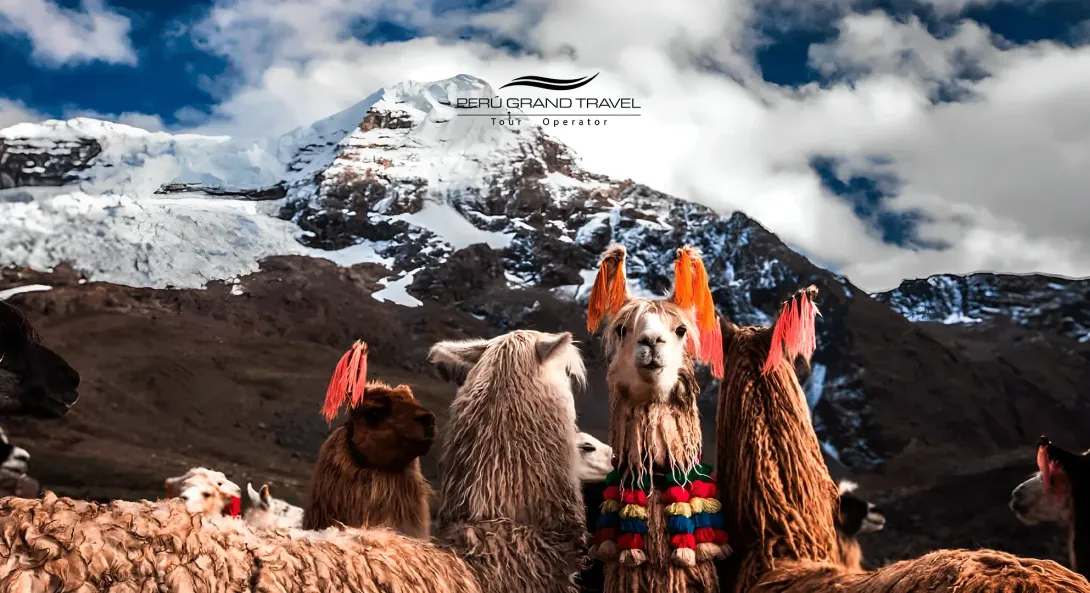
South of Cusco, the Ausangate peak reigns supreme.
- The Setting: A sacred mountain (Apu) that watches over the entire region. So yes, Ausangate snow is definitely a thing, as the altitude reaches over 5000 metres!
- The Experience: Trails like the Rainbow Mountain (Vinicunca) or the 7 Lagoons route take you so high that you can walk on fresh snow, especially during the rainy season.
La Rinconada | Puno
The highest city in the world (16,700 ft / 5,100m). Here, snow is a constant neighbor, covering tin roofs and gold mines.
To better understand how the climate varies in these regions, I recommend reading our pillar guide on the Best Time to Visit Peru.
DID YOU KNOW?
Tropical Snow:Peru holds 71% of the world’s tropical glaciers. Tropical glaciers Peru are vital freshwater reserves and represent one of the rarest landscapes on the planet.
When is there snow in Peru? The Paradox of the Seasons
Here is the surprise: snow in Peru does not typically fall during the “winter.” In the Andes, seasons are defined by rain and drought, not by temperature.
The Dry Season -Winter: From May to October
- The Climate: Sunny days and freezing nights.
- The Snow: It is there, on the peaks and glaciers, shining under a deep blue sun. However, it rarely falls as new snow where you walk. This is the perfect time to see the snow-capped mountains from afar with crystal clarity.
The Rainy Season | Summer: November to April
- The Climate: Clouds, rain, and instability.
- The Snow: This is where the magic (and the challenge) happens. What is rain in Cusco (11,150 ft / 3,400m) turns into snow above 13,800 ft (4,200m).
- The Moment: If you hike to the Rainbow Mountain in January or February, there is a high chance of finding the stripy mountain covered in a white blanket. So the rainy season at high elevation is usually the best time to see Ausangate snow. After all, that is where Rainbow Mountain is found. Ask the locals: Is there snow in Peru (in Quechua, of course). They will tell you all the of the time! Ask them, Does it snow at Machu Picchu and you may hear a stifled giggle!
To plan your visit, check the month-by-month details in our article on the Climate in Cusco.
GRAND ADVICE
The Cold Fronts: Occasionally, cold fronts from Antarctica hit southern Peru between May and August. On these rare days, it can snow at lower altitudes, covering the Andean landscapes in white for a few hours.
Does Peru have snow-covered mountain ranges in winter?
Yes, and they are the backbone of the country. The Andean winter (June–August) is the most visually stunning time. The sky is a profound blue, and the snow-covered ranges stand out on the horizon like sleeping giants.
- Salkantay: On the Salkantay Trek, you sleep at the foot of this white giant. The first morning, watching the sun hit the ice, is a spiritual experience.
- Veronica | Wakay Willque: Visible from Ollantaytambo, this pyramid-shaped snow peak is the guardian of the Sacred Valley.
If you enjoy hiking with these views, explore our options for Treks in Peru.
What is winter like in Peru? Is there snow in the cities?
Many international travelers ask us: “What is winter like in Peru? Does it snow in the middle of the street in Cusco?” The honest answer is: rarely.
Cities like Cusco and Puno get very cold, with temperatures dropping below freezing in the early morning, but “urban” snow is a rare event that happens maybe once a decade. Piuno and Lake Titicaca are extremely cold, but is there snow in Peru in Puno?
The Peruvian winter is dry. The stone floors of Cusco shine under the strong midday sun, but as soon as the sun sets, the cold cuts like a blade. It is the perfect moment to wear your baby alpaca wool poncho and savor a sophisticated dinner at one of the city’s many world-class restaurants. The snow, in fact, is kept safe on the stone sentinels surrounding the cities: the Apus.
GRAND ADVICE
Don’t let the sun fool you. In Cusco, the shade is cold and the sun burns. Use layers! The “onion” system is your best friend to tackle the unpredictable weather on the treks in Peru.
Are there ski resorts in Peru? Is there snow skiing in Peru?
Many ask: “Can I go skiing in Peru?” The honest answer is: Not in the traditional sense. There are no ski resorts in Peru with chairlifts and hot chocolate at the base. The snow here is steep, technical, and high-altitude.
- The Past: People used to ski on the Pastoruri Glacier, but global warming has caused the ice to recede. Today, it is a site for visitation and climate reflection.
- The Present: Peru is a destination for mountaineering and ice climbing, not recreational skiing. It is for those who want to use crampons and ice axes, not skis.
Where to see snow in winter? At the highest points of the trails, such as the Salkantay Pass (15,090 ft / 4,600m) or the Punta Olímpica viewpoint in Huaraz.
To learn how to prepare, check the clothing tips in our Classic Machu Picchu 5-Day, which covers various altitudes.
What kind of travel experience is seeing snow in Peru?
Seeing snow in Peru is so much more than a change in the weather; It is an experience of Adventure and Contemplation. Is there snow in Peru? There is, if you look hard enough!
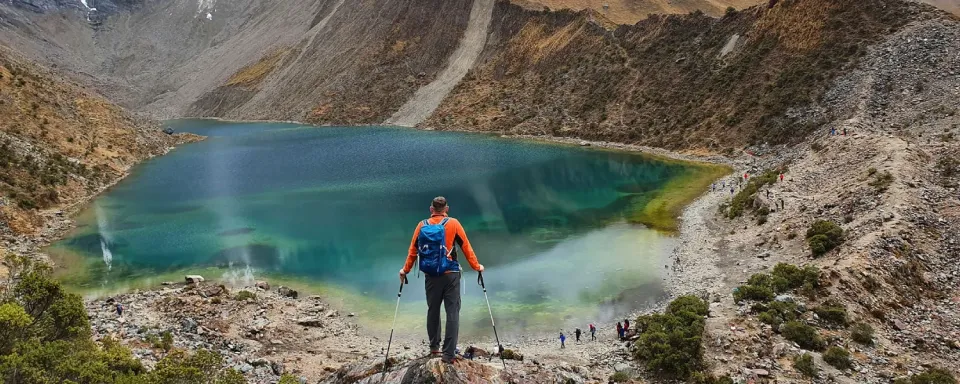
- For the Adventurer: It means overcoming the cold and the altitude. Reaching Humantay Lake and touching the icy water melted from the glacier is a moment of pure connection with nature.
- For the Photographer: The contrast between the red earth of the Andes, the deep blue sky, and the white snow creates photos that look like paintings.
- For the Dreamer: It is the chance to see landscapes that few imagine exist in tropical South America.
Recommended Experiences:
- Salkantay Trek: Sleep in glass domes under the stars and wake up to a view of the snow.
- Pastoruri | Huaraz: Walk on a real glacier (accessible, but high altitude!).
Destination Data: Planning Your Snow Quest
To find the “white gold” in the Andes, you need proper logistics.
Altitude and Climate | In Snow Zones
- Minimum Altitude for Snow: 13,800 ft – 15,700 ft (4,200m – 4,800m).
- Climate: Windy and cold. UV radiation is extreme due to the reflection off the snow.
Clothing Recommendations | The Layering System
Do not underestimate the Andean cold.
GRAND ADVICE
How many days to stay? To include a visit to the snow (like Humantay or Rainbow Mountain), you need at least 5 days in your overall itinerary (including Cusco and Machu Picchu).
For details on entry requirements, read our guide on Travel Documentation for Peru.
Verdict: Come to Peru for adventure and dramatic landscapes. Head south if you want to ski.
Frequently Asked Questions | FAQ
Does it snow in Cusco?
In the city of Cusco (11,150 ft / 3,400m), it is actually extremely rare, happening perhaps once a decade. However, in the surrounding mountains, snow is common. The issue is that when it gets cold enough to snow, it is the dry season, which runs from May to September
What is the coldest city in Peru?
Cerro de Pasco and Puno (Juliaca) are known for intense cold due to their high altitude and winds.
What is the coldest month in Lima, Peru?
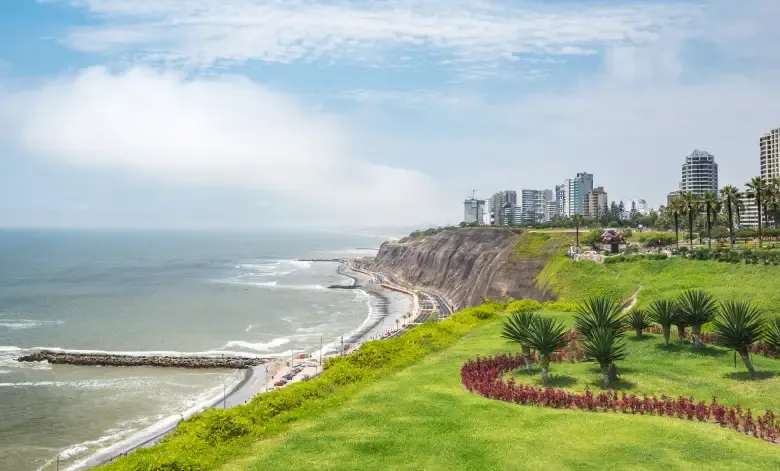
August is generally the coldest and wettest month in Lima, with temperatures around 15°C (no snow, just fog).
Does it snow at Machu Picchu?
Machu Picchu is in the high jungle (7,900 ft / 2,400m), so it is warmer than Cusco. It rarely gets very cold, and it never snows at the archaeological site. It is simply too low and too warm. You can expect a tropical rain shower or two, though!
Is there altitude in Peru?
Yes! Altitude is the main factor for the trip. Cusco, Puno, and Huaraz are all above 3,000m. Acclimatization is essential.
Can I touch snow in Peru without long treks?
Yes! The Pastoruri Glacier, near Huaraz, is accessible via a short, easy walk. It is the ideal place for those who want the ice experience without the effort of major trails.
Is it dangerous because of the altitude?
Altitude demands respect, not fear. With proper acclimatization (spending your first days in Cusco or Huaraz resting) and constant hydration, you will enjoy the snow-capped peaks without issues. At Peru Grand Travel, we always carry oxygen and provide medical support to ensure your safety.
Can I see snow on the Inca Trail?
It’s rare for snow to fall on the classic Inca Trail, but at the Warmiwañusca pass (4,200m), you might encounter hail or a thin layer of snow if you travel between December and March.
Is it worth visiting during the North American/European winter (Dec/Jan)?
Although it is the rainy season, this is when the landscape is at its greenest and the mountains receive fresh snow. If you don’t mind the occasional rain, you will see Peru at its most vibrant.
The White Secret of the Andes
So, Is there snow in Peru? You already know the answer, but seeing it with your own eyes is an experience words can barely describe. In 2026, the invitation is open. Let the snow-capped peaks purify your gaze and the Andean culture warm your heart.
Whether exploring the treks in Peru or enjoying a Classic 5-day Machu Picchu tour, the presence of eternal ice will be the backdrop to some of the best memories of your life.
At Peru Grand Travel, we aren’t just an agency; we are the hosts who ensure every detail—from breakfast to the mountain peak—is impeccable. Because you don’t just deserve a trip; you deserve the privilege of experiencing Peru.
Ready to feel the cold of the Andes and the warmth of our hospitality? Contact us today and let’s design your journey for 2026!