

Torn between Laguna 69 vs. Laguna Parón? Dive into our expert comparison on difficulty, altitude, and photos to choose your perfect Huaraz adventure.
I still remember the first time I stood at the edge of an Andean lake. The water wasn’t just blue; it was a defiant, glowing turquoise that seemed to vibrate against the backdrop of the white, jagged peaks of the Cordillera Blanca. I sat on a granite rock, the morning frost still clinging to my boots, and sipped hot coca tea while the silence of the mountains enveloped me.
Huaraz is the undisputed trekking capital of Peru, but for most travelers, a major dilemma arises: Laguna 69 vs. Laguna Parón. Should you push your lungs to the limit on a steep ascent or opt for a scenic drive to a massive glacial reservoir? As your “Anfitrión Cosmopolita,” I’ve navigated both paths, and I can tell you that while they share the same mountain range, their spirits are entirely different. Choosing between Laguna 69 vs. Laguna Parón is about deciding what kind of “Explorer” you want to be today. Let’s explore the giants of the Andes.
Why should you trek in Peru’s Cordillera Blanca?
Before we dissect the Laguna 69 vs. Laguna Parón debate, we must address the canvas itself. The Cordillera Blanca in Huaraz is the highest tropical mountain range in the world.
While Cusco holds the archaeological heart of the Incas, Huaraz holds the wild, untamed nature of the continent. Trekking here is not just a walk; it is a communion with glaciers. When our guests from the US or the UK ask, “Is there snow in Peru?”, we point them here, where the ice caps touch the sky year-round.
Understanding the magnitude of this region is crucial. I invite you to explore our pillar guide detailing the most stunning lagoons to visit in Huaraz to see how these two heavyweights fit into the broader picture.
DID YOU KNOW?
The Naming Mystery: Why “69”? It lacks the poetic indigenous names of other lakes. It was simply the 69th lake cataloged in a massive governmental inventory of the Huascarán National Park’s water sources. Sometimes, history is just paperwork!
What kind of photos will you take? | The Visual Duel
In the era of visual storytelling, the aesthetic payoff is a major factor in the Laguna 69 vs. Laguna Parón decision.
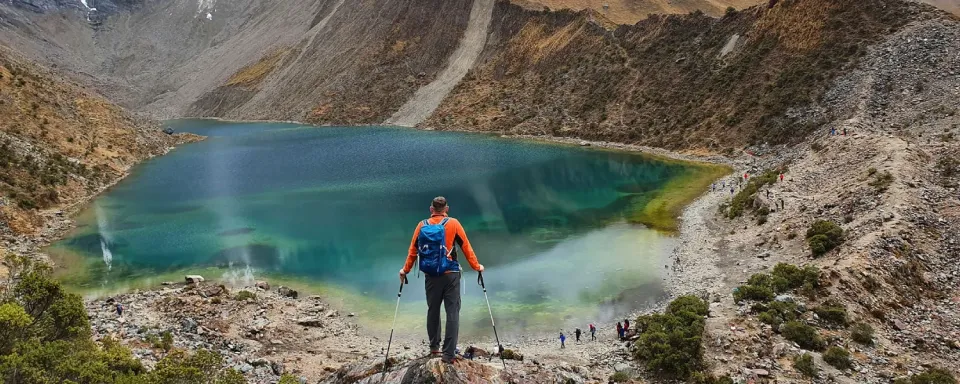
Laguna 69: The Dramatic Trophy
- The Shot: A vivid, electric turquoise pool sitting directly beneath the imposing, snow-covered face of Chacraraju mountain.
- The Vibe: It is the classic “I conquered the mountain” photo. You will look tired, flushed, and incredibly triumphant. You earn every pixel of this picture.
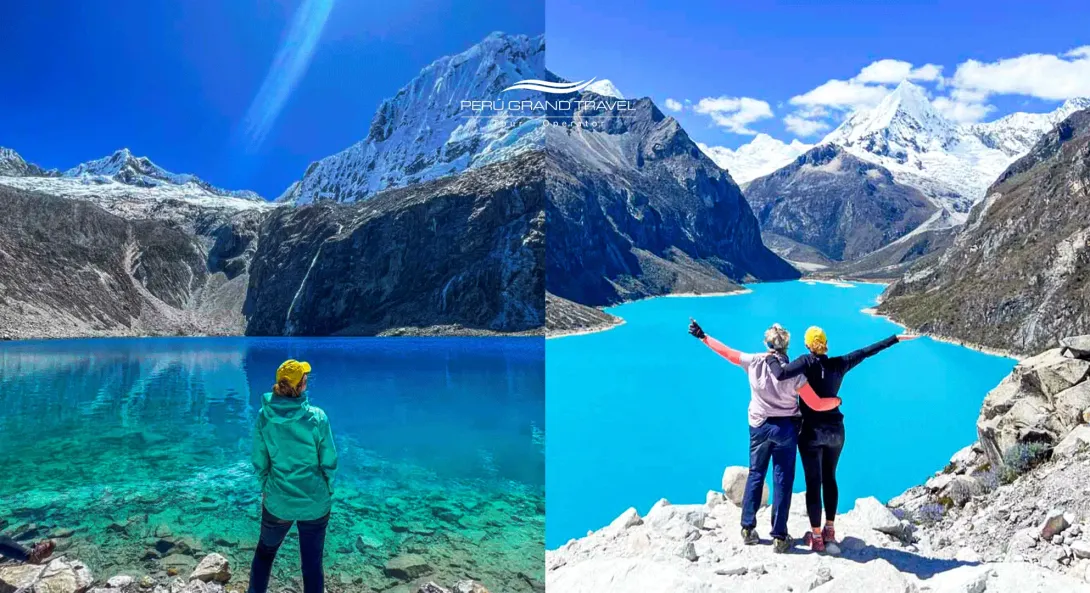
Laguna Parón: The Expansive Masterpiece
- The Shot: The largest lake in the Cordillera Blanca. The water is a lighter, opaque powder-blue (due to glacial flour). It is framed by the perfect pyramid peak of Artesonraju (famously known as the Paramount Pictures logo mountain).
- The Vibe: Sweeping and serene. You can take photos from the shore or hike up for 45 minutes to the mirador (viewpoint) for a top-down shot that looks like a drone took it.
Where are they located, and how do you get there?
Both lakes are located within the majestic Huascarán National Park, but they sit in different valleys, requiring distinct logistics.
Getting to Laguna 69
- Location: In the Llanganuco Valley.
- The Drive: From Huaraz, it takes about 3 hours by winding mountain roads to reach the trailhead at Cebolla Pampa.
- The Accessibility: The vehicle drops you off, and from there, it is just you and the mountain for the next 3 to 4 hours of pure hiking.
Getting to Laguna Parón
- Location: Above the town of Caraz.
- The Drive: A 3 to 4-hour drive from Huaraz, traversing a very narrow, dizzying dirt road through a steep canyon.
- The Accessibility: The vehicle drives all the way to the lake. You step out of the car, and the lagoon is right there. This is a game-changer for those who prefer to save their knees.
For a broader understanding of what else you can do in this region before or after your trek, check out our guide on the best things to do in Huaraz.
Why is each destination famous? | The core of Laguna Parón vs. Laguna 69
When clients ask us to compare Laguna Parón vs. Laguna 69, the answer lies in understanding how you want to experience the Andes.
Laguna 69: The Test of Endurance
It is famous because it is hard. It is a rite of passage for backpackers and trekkers in South America. The fame comes from the physical journey: hiking past waterfalls, crossing freezing streams, and finally cresting the last hill to see the neon blue water. It is a full-day athletic endeavor.
Laguna Parón: The Accessible Giant
Parón is famous for its sheer scale and the iconic mountains that surround it. It is the sophisticated choice for those who want maximum visual impact with minimum physical exhaustion. It is also famous because you can kayak on the lake, offering a tranquil perspective from the water itself.
ADVICE GRAND
For the UK/US Traveler: If you are accustomed to well-paved, oxygen-rich hiking trails in the Rockies or the Scottish Highlands, be warned. The trails here are raw, and the altitude changes everything. Do not underestimate the mountain.
What are the specific altitude and physical demands?
This is where the Laguna 69 vs. Laguna Parón debate is won or lost for most travelers. We must talk about altitude.
To understand how altitude works in this specific city and how to prepare, please read our dedicated article: How High Is Huaraz, Peru?.
The Laguna 69 Challenge
- Trailhead Altitude: ~3,900m (12,795 ft).
- Lake Altitude: ~4,600m (15,091 ft).
- The Hike: 14 km (8.7 miles) round trip. It involves a punishing 700-meter vertical ascent. The final hour is known as the “zig-zag of tears.” It is strenuous.
The Laguna Parón Leisure
- Lake Altitude: ~4,200m (13,779 ft).
- The Hike: Zero kilometers to see the lake (the car parks there). If you choose to hike to the viewpoint (mirador), it is a steep, rocky 45-minute scramble up 150 vertical meters. Challenging, but very short.
Data about the destination: Weather, Clothes, and Logistics
To ensure your experience is nothing short of grand, preparation is key. Knowing when to travel to Peru dictates the weather you will face.
For a comprehensive guide on the “Onion System” and surviving Andean climates in style, refer to our essential What to wear in Peru guide.
Laguna 69 vs Laguna Paron: The Ultimate Summary
To distill this down for the cosmopolitan traveler, here is the executive summary of Laguna 69 vs. Laguna Parón.
- Choose Laguna 69 if: You are physically fit, fully acclimatized (at least 3 days in Huaraz), love a challenging hike, and want the satisfaction of earning one of the most vibrant turquoise lakes in the world. It is an active achievement.
- Choose Laguna Parón if: You want to see massive, iconic mountains, prefer a relaxing day without a grueling hike, want to kayak, or are traveling with family or older individuals who cannot manage a 14km high-altitude trek. It is a scenic luxury.
Both destinations are stellar examples of why the Cordillera Blanca is featured heavily in our Treks in Peru portfolio.
Frequently Asked Questions | FAQ
1. How hard is the hike to Laguna 69?
It is physically demanding. The combination of the steep ascent (700m elevation gain) and the high altitude (ending at 4,600m) makes it a strenuous hike even for fit individuals. Acclimatization is mandatory.
2. Can you do Laguna 69 by yourself?
Yes, the trail is well-marked and heavily trafficked in the high season. However, arranging transport (colectivos) can be stressful. We highly recommend booking a tour so you can focus on the hike, not the logistics.
3. Is Laguna 69 worth it?
Absolutely. The sense of accomplishment, coupled with the surreal beauty of the lake hanging directly beneath the Chacraraju glacier, makes the physical suffering completely worthwhile.
4. How long does it take to hike Laguna Paron?
You do not have to hike to see the lake, as vehicles drive right to the shore. If you wish to hike to the viewpoint (mirador) for the famous overhead photo, it takes about 45 minutes of steep, rocky scrambling.
5. Why is Laguna Paron so blue?
The distinct powdery, opaque blue color comes from “glacial flour”—fine rock dust created by the grinding of the glaciers above, which remains suspended in the water and reflects the sunlight.
6. Can I do both lakes in one day?
No. They are located in entirely different valleys, and the driving times alone make combining them impossible. You must dedicate one full day to each.
7. Is there an entrance fee?
Yes, you need to pay the Huascarán National Park entrance fee (approx. 30 Soles for a day or 60 for a multi-day pass).
8. Which one is more “Instagrammable”?
Laguna Parón is generally easier to photograph because the “Mirador” gives you a high-angle view of the whole lake. However, the turquoise of Laguna 69 is often described as more “neon.”
Choose Your Own Andean Masterpiece
My friend, the debate of Laguna 69 vs. Laguna Parón is not a competition; it is a choice of how you wish to converse with the mountains.
Do you want to speak to them through the rhythm of your heartbeat and the sweat on your brow? Then 69 awaits. Do you wish to sit in quiet contemplation, humbled by their sheer, accessible scale? Then Parón is calling.
At Peru Grand Travel, we believe that true luxury is having the choice and executing that choice flawlessly. Whichever lagoon you choose to visit, we ensure your transport is safe, your guides are knowledgeable, and your oxygen is ready if needed.
Are you ready to witness the blue ice of the Cordillera Blanca?
Contact us today, and let us design your perfect high-altitude itinerary.
For more inspiration on these natural wonders, return to our main guide: Lagoons to visit in Huaraz.