

I had wanted to visit Humantay Lake for a long time. I had seen photos of its turquoise water beneath a snow-covered mountain, but I kept wondering about the climb. Would I be able to make it?
In October 2026, I traveled with Peru Grand Travel and chose to ride a horse uphill. I had never ridden before, so the trip would bring two firsts: seeing Humantay Lake and experiencing the trail on horseback.
The day surprised me in several ways, from breakfast in Mollepata to my first glimpse of the lake. I also learned something I hadn’t given much thought to: riding uphill doesn’t mean the walk down will be easy.
Leaving Cusco
Our trip began at our hotel in Cusco, about 11,155 feet above sea level (3,400 meters).
As we left the city, the streets gave way to open views and mountains. I wanted to keep looking out the window, but our guide suggested getting some rest before breakfast.
Our first stop was Mollepata. From there, we would continue to Soraypampa and begin the trail.
A Breakfast Stop in Mollepata That Surprised Me
Mollepata sits at roughly 9,515 feet above sea level (2,900 meters).
From outside, the restaurant looked like a simple local home. Once I stepped inside, I realized there was much more to it.
Clay pots caught my attention first. Our guide explained that pots like these were traditionally used to make chicha, a local drink. These particular ones were on display.
The dining room also held traditional Andean tools and objects. Warm light came through, and the windows looked out over the valley.
Breakfast included scrambled eggs, chopped fruit, and other choices. I remember papaya, oranges, and melon. Before we left, our guide also suggested a cup of muña tea, made from an aromatic Andean plant.
It was a lovely start to the day. From the outside, I would never have guessed what was waiting inside.
Arriving in Soraypampa
After breakfast, we continued to Soraypampa, around 12,795 feet above sea level (3,900 meters). This was where we started walking.
The mountains felt much closer now. Along the way, there were several places where I wanted to stop and take photos.
We walked for about 30 minutes on a stretch that felt fairly level to me before reaching the main climb. We passed a small water channel, a bridge, and a sign for the Salkantay route.
There were also native Andean plants, including queuña trees.
On some parts of the trail, there was very little wind, and I felt warmer than I had expected. It reminded me of a sheltered valley. I had pictured feeling cold throughout the trip, but that wasn’t my experience that day.
Why I Chose to Ride a Horse
I wanted to reach the lake, but I knew walking uphill could be challenging for me. After I talked with our guide, he suggested considering a horse.
I had never ridden before, but I decided to try.
I paid 80 Peruvian soles for the uphill ride, which took about 30 minutes. That was the price during my October 2026 visit, and it covered the ascent only.
If you’re interested in this option, ask your travel agency before the trip or speak with your guide during the tour. Confirm the price, availability, and exactly which part of the route is included.
For me, it was one of the best decisions of the day.
My First Time on Horseback
The horses moved at a steady pace. As we climbed, I could look around and enjoy an experience that was completely new to me.
At one point, we stopped so they could drink water. That pause also gave me time to take in the surroundings.
We passed people who were already returning from the lake. Seeing them made me even more eager to get there.
At one point, I told our guide that I wanted to walk. He suggested staying on the horse for the climb and walking on the way back.
Later, I understood his advice. Even after getting off the horse, I still needed to move slowly and take my time.
The Last Few Steps Before the View
The horse didn’t take me to the water’s edge.
After getting off, I walked about 16 feet—roughly five meters—to the upper part of the trail. There was a small stand selling drinks and candy. I hadn’t expected to find one there.
I still couldn’t see the lake, but the snow-covered mountain already looked impressively close.
About another 10 feet, or three meters, brought me to the view I had seen so often in photos.
Those distances are my own estimates from that day. Where the horse ride ends may differ on another visit.
Seeing Humantay Lake in Person
Humantay Lake sits at approximately 13,780 feet above sea level (4,200 meters).
To put that elevation into perspective, the summit visitor center on Pikes Peak in Colorado is at 14,115 feet. Humantay Lake is only about 335 feet lower. This compares their elevations, rather than the difficulty of visiting each place.
Before the trip, I had imagined that the lake might be frozen. With a snowy mountain right behind it, I expected to see ice on the water.
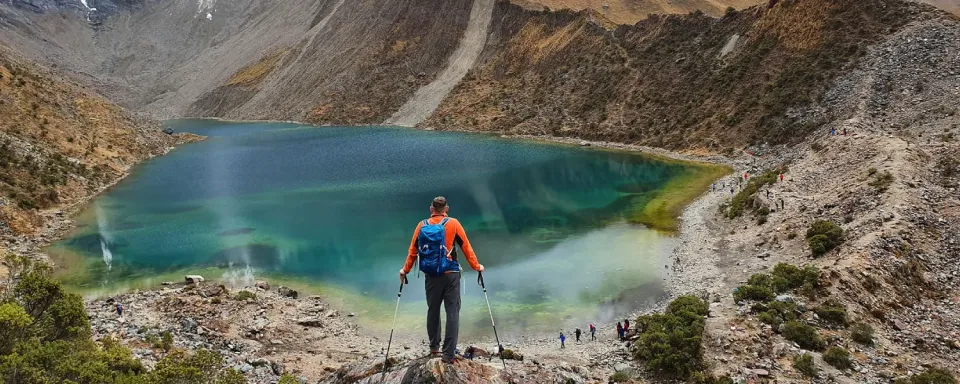
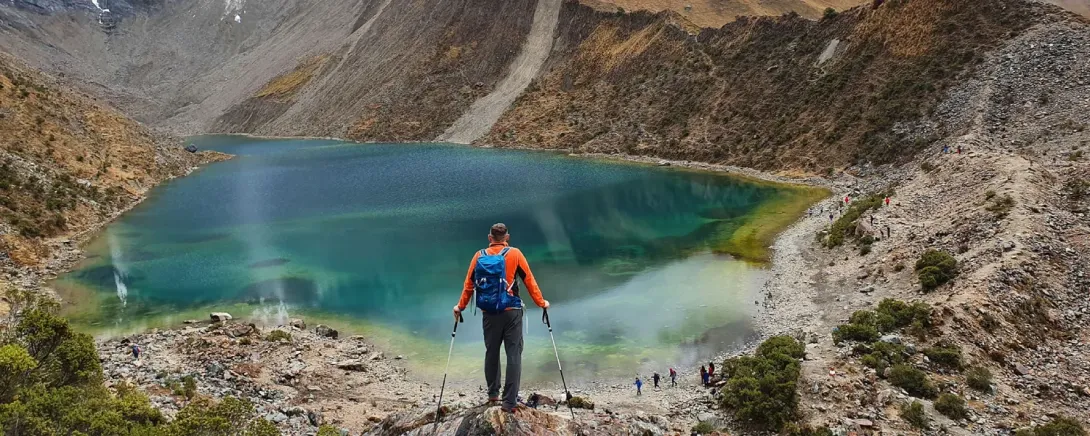
During my visit, though, the lake wasn’t frozen. The water was very cold, and the mountain rose behind it, filling much of the view.
Sometimes I felt the wind. At other moments, the air felt pleasantly warm. That mix of snow, cold water, and comfortable stretches of weather surprised me.
I also noticed a difference from my visit to Rainbow Mountain, or Vinicunca: I didn’t see llamas or alpacas along this route. Here, my attention stayed on the mountains, plants, and anticipation of reaching the lake.
When I finally saw Humantay, I felt happy that I had made it. Photos had given me an idea of the place, but being there felt very different.
Walking Down Was More Challenging Than I Expected
We returned on foot along a different trail. It was shorter, but also quite steep.
At first, I thought the descent would be easy. Then I started feeling the effort in my calves and knees. I had to watch where I stepped and control my pace.
That is something I wish I had understood before the trip: riding uphill saves some effort, but the descent still matters.
Before our visit, the Peru Grand Travel advisor had recommended spending at least three days in Cusco to adjust to the elevation before a demanding hike. That was the advice we received; people adjust at different rates.
I also wish I had prepared my legs better for steep slopes. Next time, I would think about both the climb and the walk down when planning a hike.
Dry Season vs. Rainy Season at Humantay Lake
I visited in October, a transition month when the weather can change. Another visit may look and feel different.
Mountain Views
The dry season, generally May through September, often offers better chances of clear mountain views. October can mark the transition toward wetter weather. Cold temperatures and wind are still possible during the dry months.
During the rainy season, roughly November through April, clouds may hide parts of the snowy peaks.
Trail Conditions
Our guide explained that the trail usually has less mud during the dry months, although the slopes still require care.
When it rains, some sections can become slippery. This can affect your walking pace and the conditions for horseback riding.
Check the trail conditions before leaving and follow your guide’s instructions.
Would I Choose the Horse Ride Again?
Yes. It helped me complete a climb I had been worried about and gave me the chance to try something new.
I enjoyed the mountains, the ride, and the excitement of getting closer without being able to see the lake just yet. I also appreciated our guide’s advice and the chance to move at my own pace.
The walk down took effort, but reaching Humantay was a wonderful moment.
If I booked another Peru travel package that included Humantay Lake, I would choose the horseback ride uphill again. It became one of my favorite memories of the trip.
If you’re considering a similar itinerary, ask your travel agency whether the horse ride can be arranged and if it costs extra. For me, it was well worth adding to the experience.
Frequently Asked Questions
How much did the horse ride cost?
I paid 80 Peruvian soles in October 2026. That covered the uphill ride only. Confirm the price before booking.
How long was the ride?
My ride took about 30 minutes. Timing can vary with the route and conditions.
Did the horse take you to the lakeshore?
No. I got off near the upper part of the trail and walked a few more steps to the lake viewpoint.
Had you ridden a horse before?
No, it was my first time. If you’re also new to riding, mention that before arranging the service and ask what instructions and equipment are provided.
How did you get back down?
I walked down a shorter, steeper trail. I felt the effort in my calves and knees.
How can I arrange a horse?
Ask your travel agency before the trip or speak with your guide during the tour. Confirm availability, price, and the section of the trail included.