


Shared Group Trek
Shared Group Trek
Shared Group Trek
Salkantay SKY Trek 4 days

Duration
4 Days / 3 Nights

Difficulty
Moderate

Max altitude
~4,200 m / 13,780 ft

Tour type
Shared Group Trek

Best season
Apr – Oct (dry season best)

Language
English / Spanish
Discover a natural paradise that comes out to meet you with this fascinating Salkantay trail 4 days. The effort will be more than rewarded as we marvel at the beautiful turquoise waters of the Humantay Lagoon. The ascent to the highest point at 4629 meters above sea level will awaken all our senses as we enjoy the view of the Apu Salkantay, the second highest snow-capped mountain in Cusco.
The scenery around us will change from imposing mountains to a tropical forest with abundant vegetation. On the way to Aguas Calientes, we will be accompanied by a beautiful landscape with streams and mountains and we will end this unforgettable adventure with a visit to the extraordinary Machu Picchu.
Overview
Overview
After acclimatizing in Cusco, your Salkantay adventure begins early, with departure at around 4:00 AM. This 4-day trek combines some of the most distinctive landscapes of the Andes with the challenge of reaching Machu Picchu.
On the first day, you’ll hike to Soraypampa and Humantay Lake. After the hike, you’ll spend the night in the domes at Soraypampa. The second day brings one of the biggest challenges of the journey: reaching Salkantay Pass at 15,190 feet (4,630 meters), where you’ll have views of snowcapped Salkantay Mountain and the surrounding peaks.
One of the unique aspects of this tour is how the landscape changes during the descent. Little by little, you’ll begin to see cloud forests and rivers while the climate becomes warmer and more tropical. Eventually, you’ll reach the Santa Teresa Valley, an area where you can learn about part of the local coffee production process.
After several days of hiking, you’ll enjoy a well-deserved rest in Machu Picchu Pueblo. The following morning, you’ll take a guided tour of the Machu Picchu citadel, built during the Inca period, before returning to Cusco.
This experience gives you the opportunity to discover the natural diversity of this region of Peru, traveling from high-altitude mountain landscapes to warmer, tropical environments as you make your way toward Machu Picchu.
Itinerary
Itinerary
Day 1: Cusco - Mollepata - Challacancha - Soraypampa - Laguna Humantay - Sky Camp
We will depart at approximately 4:00 AM in the morning for a two-hour trip to Mollepata village for a quick breakfast. Our transportation will include cozy blankets in case you need to take a nap after breakfast. After breakfast, we will continue for another hour until we reach the trailhead in Challacancha.
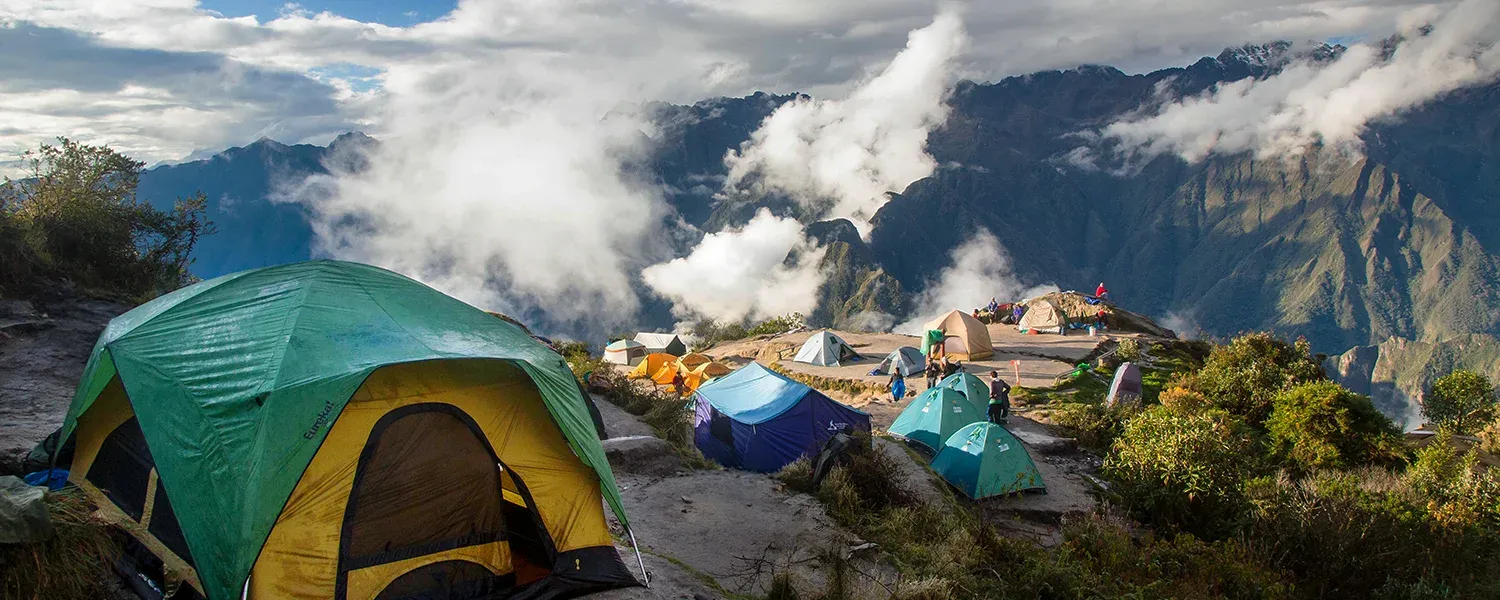
Before we start our hike, you will meet the porters and cooks who are part of our team and do a final check of your luggage. Then, we will begin our relatively easy three-hour hike to Soraypampa (3,900 m / 12,795 ft), where we will find our first campsite. Along the way, you will enjoy beautiful glaciers and a deep valley. You will also see an Inca canal that runs alongside most of the trail and is still used by local farmers today. This section is 7 km / 4.35 miles long.
When we arrive at Soraypampa, you will have time to settle into our cozy igloo-style Sky Camp and enjoy lunch with our chefs. You’ll be amazed by their talent in the midst of the mountains. After lunch, we will start our afternoon hike to Humantay Lake.
When we return to camp, you will have time to enjoy dinner while watching the sunset behind the mountains. It’s hard to describe the energy of the mountains, but inner peace is as close as you can get to describing it. You’ll be able to gaze at the stars.
- Difficulty: Moderate to challenging Hike
- Distance: 10 km (5-6 hours)
- Initial Elevation: 3,800 m / 3,800 ft / 12,467 ft
- Maximum Elevation: 4,200 m
- Camp Elevation: 3,900 m
- Overnight: Sky Camp
- Meals included: Lunch and dinner
Day 2: Soraypampa - Abra Salkantay - Huayracmachay - Chaullay - Collpapampa (Mountain Sky View)
The impressive Abra Salkantay and descent to the tropical forest. You will wake up to the first rays of the day and see Apu Salkantay while enjoying a energizing coca tea. Then, you will take a nutritious breakfast before setting out on the 7 km hike for approximately three hours to the highest point on the route, Abra Salkantay (4,630 m / 15,190 ft). It’s a challenging climb along the “Snake’s Path,” so named for its winding route.
Upon reaching the summit, you will have a breathtaking view of the surrounding valleys, as well as a stunning view of the Salkantay mountain, located right in front of you (6,271 m / 20,574 ft), considered one of the highest peaks in the Cusco region and known as an Apu.
You will also be able to observe the mountains: Humantay, Tucarhuay, and Pumasillo. After taking in the views and resting, you will begin your descent (7 km / 4.35 miles) to our lunch spot at Huayracmachay (3,850 m). This section of the trail is rocky and steep, but you’ll have spectacular views of the surrounding valley.
After lunch, you will enter the edge of the tropical forest, also known as the “cloud forest.” Along the way, you’ll appreciate the tropical vegetation and witness how the Andes give way to Amazonian environment quickly.
After a long day of hiking, you’ll be happy to arrive at Collpapampa for an overnight stay. Finally, we’ll serve a hearty dinner before resting in our exclusive Mountain Sky View.
- Difficulty: Challenging Hike
- Distance: 22 km (10 hours)
- Initial Elevation: 3,900 m
- Maximum Elevation: 4,630 m
- Camp Elevation: 2,950 m
- Accommodation: Sky View
- Meals included: Breakfast, lunch, and dinner
Day 3: Collpapampa | La Playa - Hidroeléctrica - Aguas Calientes
Today, we’ll wake you up at 6:00 AM for a nutritious breakfast. Then, we’ll start our five-hour hike through the impressive Santa Teresa valley until we reach La Playa. Along the trail, you’ll be able to appreciate the recent and lush landscape surrounded by rivers, wild orchids, and many coffee, banana, and avocado plantations; you’ll also have the opportunity to taste passionfruit.
We’ll pass through a small village called Collpapampa and continue to the base of the mountains to cross over to the other side of the valley. In this tropical stretch, we’ll see waterfalls, birds, fruit-bearing trees, flora, and fauna.
When we arrive at La Playa, it will be time for our last lunch prepared by our talented chefs while we relax and watch a coffee demonstration. After taking a moment to rest, we’ll embark on our private transportation that will take us to the train station in Hydroelectric, from there, we’ll hike surrounded by lush vegetation and linked by the Urubamba River. However, you have the option to take the train to Aguas Calientes if you feel exhausted at this point. Amidst the tropical paradise, you’ll see beautiful plantations, as well as a vast variety of birds, including the forest chicken. After three hours of hiking, we’ll arrive in Aguas Calientes, from there, we’ll take you to your hotel to relax in your comfortable room with private bathroom, hot shower, WiFi, breakfast, and luggage storage. In the evening, we’ll meet up for dinner at a prestigious restaurant before returning to the hotel.
- Difficulty: Challenging Hike
- Distance: 27 km (8-9 hours)
- Initial Elevation: 2,950 m
- Maximum Elevation: 2,950 m Aguas Calientes
- Elevation: 2,000 m”
- Overnight: Hotel in Aguas Calientes
- Meals included: Breakfast, lunch, and dinner
Day 4: Machu Picchu – Cusco (2h30m Tour)
In the morning, according to the scheduled time, our guide will pick you up at your hotel to go to the bus station where you will climb 400m along a winding path for 20min to reach the incredible wonder of the world “The Historic Sanctuary of Machu Picchu”, also known as “The Lost City of the Incas”. Upon arriving at the Machu Picchu citadel with our guide, we will pass through the entrance and begin the tour of the entire citadel. For around 2h 30m we will visit the main places in Machu Picchu.
We return to the town of Aguas Calientes in the afternoon, where you will have free time to enjoy lunch in one of the many restaurants (lunch not included). After lunch, we will take the train to Ollantaytambo (depending on train departure time availability). The return will follow the same route as the departure. Upon arrival in Ollantaytambo, the train representative will be waiting to take you to the bus heading to your hotel in Cusco.
- Overnight: Hotel in Cusco (at your own expense)
- Meals: Breakfast
Included
What's Included
Day 1
- Snack-every day (tea, coffee, popcorn, cookies)
- Guided visit Cusco - Mollepata - Challacancha - Soraypampa - Laguna Humantay
- Professional Guide
- Breakfast, lunch, dinner, Oxygen ballon
- Assistance
Day 2
- Snack-every day (tea, coffee, popcorn, cookies)
- Guided visit Soraypampa - Abra Salkantay - Huayracmachay - Chaullay - Collpapampa
- Professional Guide
- breakfast, lunch, dinner, Oxygen ballon
- Assistance
Day 3
- Snack-every day (tea, coffee, popcorn, cookies)
- Guided visit Collpapampa - La Playa - Hidroeléctrica - Aguas Calientes
- Professional Guide
- Breakfast, lunch, dinner, Oxygen ballon
- Assistance
Day 4
- Bus from Águas Calientes – Machu Picchu
- Entrance Tickets to Machu Picchu
- Professional tour Guide
- Guided Tour Machu Picchu
- Bus Machu Picchu – Águas Calientes
- Train Águas Calientes – Ollantaytambo (PERURAIL or INCARAIL)
- Transfer Train Station – Hotel Cusco
- Assistance
Hotels
- 1 night Sky camp with breakfast, lunches and dinner
- 1 night Sky View with breakfast, lunches and dinner
- 1 night Hotel in Aguas Calientes with breakfast
- 24-hour assistance
Not Included
- Drinks except those mentioned in the itinerary
- Meals except those mentioned in the itinerary
- Snacks except those mentioned in the itinerary
- Phone calls
- Extra spending money
- Tips/gratuities
- Travel insurance
- Train ticket from Hidroelectrica to Aguas Calientes USD 45,00 per person
- Sleeping bag, add USD 25.00 (nikko brand to -10 degrees celsius)
- Walking sticks add USD 10.00 per each one
Optional Services
- Entrance to Huayna Picchu mountain or Machu Picchu mountain: USD 80.00 per person (must be booked in advance)
- Return Train VISTADOME/360° with panoramic views, typical dance show (Aguas Calientes - Ollantaytambo) - Upgrade service: USD 65,00 per person
Pricing
| Hotel Category | Travelers | Single |
|---|---|---|
| Group | Price per person | $699.00 |
What to Bring
- Passport with at least 6 months validity
- Light daypack
- Refillable water bottle
- Toilet paper
- Sunscreen and sunglasses
- Insect repellent
- Sunhat
- Clothing for hot and cold weather conditions
- Long-sleeved shirts, (due to there being mosquitos in Machu Picchu)
- Rain gear or poncho
- Extra memory stick and additional batteries
- Walking shoes/boots
- Extra Cash in soles and small denominations if possible
- Camera
- Personal medications (for headaches, anti-inflammatory´s etc).
FAQs
FAQ Salkantay SKY Trek 4 days
How many people have died on the stairs of Death in Peru?
Despite its dramatic nickname, there's no official public record of exact deaths on the so-called "Stairs of Death" on Huayna Picchu. It sounds scary, but this is actually a regulated hiking trail that thousands of visitors climb safely every year. That said, the steps really are steep and narrow in some sections, cut straight into the mountainside centuries ago, so it's important to take your time, watch your footing, and follow the safety instructions given by park staff.
How common is altitude sickness at Machu Picchu?
the altitude sickness is actually less of an issue at Machu Picchu than in Cusco. That's because Machu Picchu sits at around 7,970 feet (2,430 m.s.n.m.), while Cusco is much higher, at about 11,150 feet (3,400 m.s.n.m.). Some travelers might still feel mild symptoms like a headache, tiredness, or shortness of breath when they first arrive, especially if they've flown straight in from sea level. Giving yourself a day or two in Cusco to acclimatize before doing anything strenuous makes a big difference.
Can a 70 year old do the Salkantay Trek?
Yes, absolutely — there's no strict age limit for the Salkantay Trek. Plenty of active older travelers complete it successfully every year, as long as they prepare properly and take acclimatization seriously. It's worth keeping in mind that this isn't a casual walk: the trek involves several long hiking days and climbs above 15,000 feet (4,600 meters) at its highest point. Anyone older, or with an existing health condition, should check in with a doctor before booking the trip.
Is the Salkantay Trek harder than Kilimanjaro?
They're tough in different ways. Salkantay tops out at about 15,190 feet (4,630 meters) at Salkantay Pass, and it takes several days of hiking through changing mountain terrain to get there. Kilimanjaro goes much higher — 19,341 feet (5,895 meters) — which makes altitude a bigger factor on that climb. In the end, how hard either trek feels also comes down to things like the route you choose, the weather on the day, how fast you go, and how well you've acclimatized.
How difficult is the Salkantay Trek?
It's considered a challenging, high-altitude hike — not something to underestimate. The toughest part is usually the push up to Salkantay Pass, at roughly 15,190 feet (4,630 meters), where the air gets noticeably thinner and every step takes more effort. You won't need any technical climbing skills or ropes, but you should be ready for steep uphill sections, long days on the trail, weather that can shift quickly, and the physical demands of high altitude. Building up your fitness beforehand and taking acclimatization seriously will make the whole trip much more enjoyable.
Which is better, Inca Trail or Salkantay?
It really depends on what kind of adventure you're after. The Inca Trail is famous for walking through actual Inca ruins along the way and arriving at Machu Picchu through the Sun Gate at sunrise — a pretty unforgettable moment. The Salkantay Trek, on the other hand, is more about dramatic mountain scenery, taking you through everything from high alpine landscapes near Salkantay Mountain down into warm, misty cloud forest. One practical difference: the Inca Trail has a limited number of permits released each year, so it books up fast, while Salkantay is generally easier to plan and offers more flexible dates.
Can a beginner do the Salkantay Trek?
Yes, a beginner can absolutely take on the Salkantay Trek with the right preparation — but don't go in thinking it'll be an easy first hike, because it's genuinely demanding. You don't need any technical mountaineering background, but building up your stamina beforehand, practicing walking both uphill and downhill on longer routes, and giving your body time to adjust to the altitude will make a huge difference in how you feel on the trail.
How hard is it to climb Huayna Picchu?
Huayna Picchu is short in distance but intense while it lasts. The trail winds through narrow paths and steep stone staircases, with some sections where the drop-off beside you is impossible to ignore. No technical climbing gear or experience is required, but it can feel genuinely challenging if you're not comfortable with heights or have any mobility limitations. Take it slow, use the handholds and cables installed along the trickier parts, and stick to the safety guidelines — the view from the top is worth the effort.
RECOGNITION
Awards & Certifications
Recognition that comes from the travellers who chose our Peru travel packages, and from the bodies that audit how our Peru travel agency works — from TripAdvisor to ISO quality and environmental standards.





This is more than a vacation—it is an immersive, emotion-filled voyage through nature, culture, and ancient mysteries. Reserve your grand Peru adventure today and create memories to cherish for a…
$2,655
With expert local guides and top-tier service every step of the way, your dream adventure is fully taken care of. Book today and secure your spot on this unforgettable journey!
$1,456
Discover Peru in 10 days, traveling from Lima to Cusco and Puno while experiencing the country through its food, history and local culture.Start in Lima with a Peruvian food experience, then fly to…
$1,270