

Looking for where to buy Peruvian pisco? From vineyards in Ica to US retailers. Discover how to choose the best bottle and avoid imitations.
There is a moment that happens to almost everyone the first time they try real pisco in Peru. This is usually in a vineyard somewhere outside Ica, with dust on your shoes, and a glass held up to the light like you’re checking for something. It actually clicks that this isn’t just another clear spirit. Pisco is grape brandy, distilled once, from fresh grape must, with nothing added after. No water to bring the proof down, no barrel time, no sugar to round the rough edges off. Whatever comes off the still is, more or less, what ends up in your glass.
It is legally protected too! Only five coastal regions get to call what they make authentic Peruvian pisco. Lima, Ica, Arequipa, Moquegua, and Tacna, under a Denomination of Origin. People here take it genuinely seriously, not just a label but something inspectors actually check on. It gets confused with Chilean pisco constantly, probably because of the shared name, but they are not at all the same drink. Chilean pisco is usually double-distilled, cut with water, sometimes aged, which is where that yellowish color comes from. Peruvian pisco stays clear. Single pass through the still, then nothing touches it after. If you actually care about getting the real thing, that is the detail to hold onto. Pisco shops in Peru will be more than happy to show you the difference!
Where to Find Pisco in Peru: Vineyards and Pisco Shops
So, where to buy Peruvian pisco, or where to find Peruvian pisco if you want to phrase it that way, assuming you’re actually here. The best move, hands down, is a bodega, somewhere out in Ica or Lunahuaná. Make sure you taste before you commit to anything. You’ll find small-batch stuff and mosto verde bottlings that supermarkets never see. Honestly, meeting whoever actually runs the still, that part sticks with you longer than the bottle does most of the time. If a vineyard visit isn’t on the itinerary, that’s fine too. Peruvian pisco shops in the bigger cities cover most of what you would want anyway. Honestly, most pisco shops in Peru worth visiting are clustered in Lima and Cusco regardless. Specialized shops in either city are really the next best thing after a bodega.
Pisco Shops in Cusco
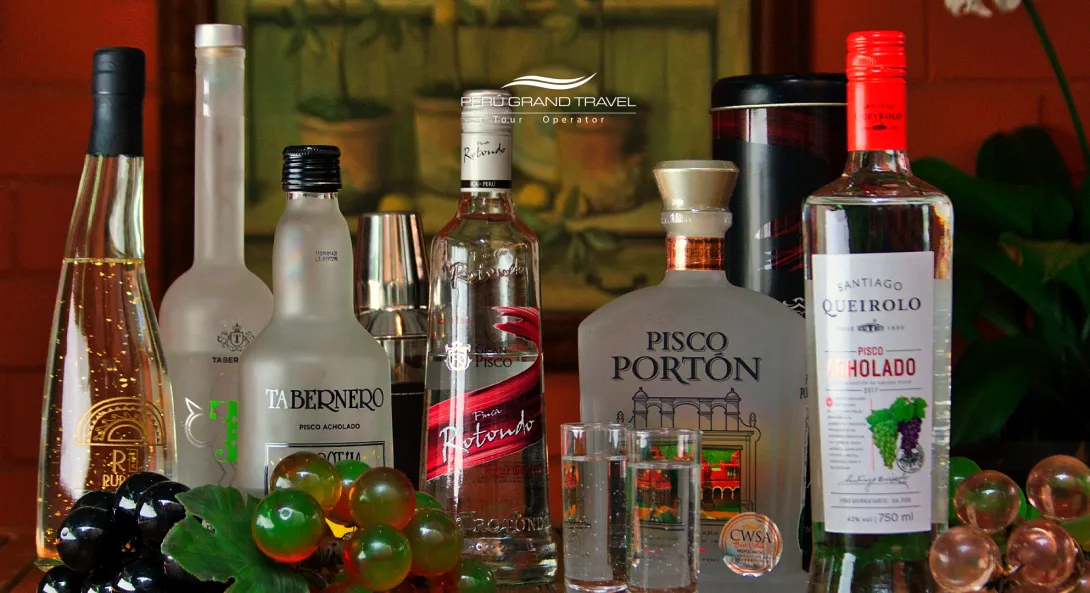
El Pozito and Almendariz are the two names that come up most and are pisco shops in Cusco. Staff there actually know their Quebranta from their Italia and can point you to the good stuff without much prompting. Airport duty-free works if you are desperate. Jorge Chávez has decent brands, Portón, Cuatro Gallos, but you will pay more for less choice. Backup plan, not a first choice.
DID YOU KNOW?
Purity Law: Peruvian Pisco is one of the few spirits in the world that forbids the addition of water after distillation. Every drop in the bottle comes directly from the still.
Airports and Duty-Free Shops
Convenient? Yes. The best variety? Not always.
While the Jorge Chávez Airport offers top brands like Portón or Cuatro Gallos, the prices are higher. Use this as a last resort if you didn’t manage to find where to buy Peruvian pisco during your trip.
Finding Pisco Back in the US
Back in the States and missing your Pisco Sour? Not the end of the world. Total Wine, BevMo! They carry BarSol and Macchu Pisco fairly reliably. Drizly and Astor Wines ship to a lot of states if you’re willing to poke around a bit. Depends on your state’s liquor laws, honestly, but most cities with any real cocktail bar scene will have something Peruvian on a shelf somewhere. Worth checking the label too. Not everything called pisco abroad is actually Peruvian. Look for “Product of Peru” specifically. That’s your confirmation you’re getting the unaged, DO-protected version and not something adjacent to it. Budget $30 to $60 for something good, which sounds like a lot next to a bottle of vodka until you remember nothing’s been diluted to stretch it further. Random bit of trivia. Pisco actually had a real moment in San Francisco during the Gold Rush. Apparently it was one of the most popular spirits in the city for a while, and the Pisco Punch at the Bank Exchange Saloon became its own small legend.
IMPORTANT FACT
Read the Label: Not all “pisco” sold abroad is Peruvian. Check for “Product of Peru” to ensure you are getting the unaged, pure spirit protected by the Denomination of Origin.
Where Can You Find it Internationally, and How Much Does It Cost?
In the US or Europe, expect to pay between $30 and $60 USD for a high-quality bottle. Popular brands available abroad include Pisco Portón, Campo de Encanto, and Barsol. While it may be slightly more expensive than a standard vodka, remember that you are paying for an artisanal product that hasn’t been diluted with water.
DID YOU KNOW?
During the San Francisco Gold Rush in the mid-1800s, Pisco was the most popular spirit in the city! It arrived via trade ships from the Peruvian coast and gave birth to the famous “Pisco Punch” at the Bank Exchange Saloon.
What Is the Best Peruvian Pisco to Buy?
When asking where to buy Peruvian pisco, the next logical question is which one?
We don’t talk about brands as much as we talk about grapes and style.
The “best” is subjective, but quality is objective.
How to Choose Authentic Peruvian Pisco
Discovering where to find authentic Peruvian pisco really just comes down to reading the bottle right. Picking a bottle once you are standing there staring at a shelf, a few things actually matter. Pisco shops in Peru are generally proud of their national product and will be happy to help! It should be brilliant, clear, and never cloudy. The smell should be fruity, not something closer to rubbing alcohol. Balance is important, with no single note steamrolling everything else. Three styles worth knowing, apart.
- Puro, single grape variety, most honest expression of whatever that grape actually tastes like.
- Acholado, blended, built for balance. This is your cocktail pisco.
- Mosto Verde, the fancy one, distilled from partially fermented must, smoother, more velvety, usually meant for sipping rather than mixing into anything.
Label-wise, it needs to say Pisco and Peru outright. Alcohol has to sit between 38 and 48 percent, or it is not legally pisco at all, and the grape, Quebranta, Italia, Torontel, whatever it is, should actually be printed rather than left vague. One rough test once you are drinking it: If you can sip it without reaching for a mixer to cover up a burn, you picked well. Good pisco warms your chest. It’s not supposed to scrape your throat.
If You Can’t Find It
Can’t find any? Singani’s the closest thing. A Bolivian grape spirit, a touch more floral but built on roughly the same idea. Unaged white brandies and eau de vie share that fruit-forward quality. Grappa comes up a lot too, though it’s usually pomace rather than juice, which tends to make it rougher around the edges. Tequila blanco can work in a cocktail purely for texture, unaged and spirit-forward like pisco is, even though the flavor’s nothing alike. If it’s specifically a Pisco Sour you’re after and none of this is around, smooth white tequila or a rum-brandy mix gets you in the neighborhood, though it’s really more of a tribute at that point than the real thing. Nothing quite replicates that particular aromatic profile since it only comes from a single distillation of fresh grape juice, which doesn’t really happen anywhere else quite the same way.
Is It Stronger Than Vodka or Tequila?
Stronger than vodka or tequila? Usually, yeah, even though it doesn’t always feel like it going down. Vodka and tequila sit around 40% ABV typically. Pisco ranges 38 to 48%, with a lot of the good stuff landing around 41 or 42 specifically to hold its structure together. Since nothing gets added after distillation, the alcohol’s fully integrated with the flavor oils, so it tastes smoother and fruitier. While quietly being just as strong or stronger. Easy spirit to underestimate for exactly that reason, more than one traveler has learned that the hard way at dinner.
Beyond the Pisco Sour
Most people only know pisco through one cocktail. Good cocktail, but really just the entry point. A Chilcano’s what you will actually see locals ordering on a random Tuesday. This is pisco, ginger ale, a squeeze of lime, over ice. It is lighter than a Sour and honestly maybe a better first try if you’re doing this somewhere casual. There is the Capitán too, less common outside Peru. This is pisco and sweet vermouth, more like a Manhattan than anything citrusy, worth asking for if it’s on a menu.
The grape matters more than people expect when walking in. Same Pisco Sour recipe, Italia versus Quebranta, comes out like two different drinks. A bartender who actually knows pisco will sometimes just ask which grape you want before mixing. That’s usually a good sign.
Should you drink pisco straight?
Yes! A high-quality Pisco, especially a Mosto Verde, is designed to be sipped.
- When to mix: Use Pisco Puro or Acholado for your cocktails.
- When to sip: Use Mosto Verde for a meditative moment.
ADVICE GRAND
The Sip Test: If you can sip it without needing a mixer to mask the burn, you chose well. Good Pisco warms the chest; it doesn’t burn the throat.
Serving It Right
Room temperature, not chilled, if you’ve got a good Mosto Verde or Puro at home. Chilling kills the aromatics you paid extra for. Tulip glass if you have one, narrows at the top, holds the smell in better than a regular tumbler, sounds minor until you actually compare the two side by side.
There’s a phrase here, besando el vaso, kissing the glass. Basically, get your nose right up to it before you even sip. Swirl first, inhale, then taste. Small ritual. Makes a real difference though.
A Bit of History
Pisco’s named after the port city itself. This is where barrels used to get loaded onto ships headed out to the rest of the Americas and beyond. Goes back to Spanish colonial winemaking in the 16th century, with settlers in the coastal valleys distilling grape must that would’ve otherwise gone to waste. Peru and Chile have been arguing over the name for something like a century now, both sides claiming the older tradition, both sides pointing to old shipping records and colonial documents to back it up, not a fight that’s ending anytime soon, honestly. What’s not really up for debate, at least once you’ve tried both, is that the two are made differently. That part matters more than who gets to keep the name.
A Note on Buying Authentic Peruvian Pisco as a Gift
If you are picking up a bottle to bring home for someone else, not just yourself, Acholado’s is usually the safer call. Broadly appealing, works in a cocktail if the person you’re gifting it to isn’t a straight-spirits drinker. This way, it doesn’t require them to already know anything about pisco to enjoy it. Mosto Verde’s a better bottle, honestly. However, it is wasted on someone who’s just going to mix it into a Sour anyway. It is worth asking, or at least guessing, how the person actually drinks before deciding which one to purchase. Since a great Mosto Verde is wonderful and can be found in Pisco shops in Peru.
Packaging matters too if it’s going in checked luggage. Some of the nicer bottles come in wooden boxes or with some padding built in, worth paying the small premium for if you’re worried about it surviving the flight home in one piece.
Why We Build This Into Peru Trips
Finding good pisco here isn’t really shopping, not in the usual sense anyway. It’s closer to a small cultural immersion. Swirling, inhaling, actually paying attention to what’s in the glass, learning to tell the hay notes in a Quebranta from the jasmine in an Italia. At Peru Grand Travel, we like folding a private visit to Tacama into itineraries when the timing works. The oldest vineyard in South America includes walking the vines, seeing the old colonial hacienda, and tasting straight out of the tank. With whoever is actually making it. Tends to be one of the more grounding stops on a trip, especially after a stretch of ruins and archaeological sites back to back. Authentic Peruvian Pisco at its very best!
Visiting vineyards as part of a luxury Peru experience
Imagine a private tour of the oldest vineyard in South America (Tacama). You walk through the vines, visit the colonial hacienda, and taste the spirit straight from the tank.
At Peru Grand Travel, we curate these moments. We don’t just tell you where to buy authentic Peruvian pisco; we take you to the source.
Would you like to learn more about our signature drink? Check out our complete guide to Peruvian Pisco. After exploring sacred sites, a Pisco tasting is the perfect way to ground yourself.
Frequently Asked Questions About Buying Peruvian Pisco
Where to buy Peruvian pisco outside Peru?
Look for major liquor retailers like Total Wine, BevMo!, or online marketplaces like Drizly and Astor Wines. Ensure the label says “Product of Peru.”
What is the best Pisco to buy?
For cocktails, authentic Peruvian Pisco is versatile and balanced. For sipping neat, invest in a Pisco Mosto Verde. Brands like BarSol, Portón, and Cuatro Gallos are reliable benchmarks.
Can you drink Pisco straight?
Yes, and you should. High-quality Pisco is designed to be enjoyed neat to appreciate its complex bouquet. Use a tulip-shaped glass.
Is pisco considered wine or liquor?
It is a liquor (spirit), specifically a brandy. However, it is distilled from wine, so it retains the soul and aroma of the grape.
What does pisco taste like?
It tastes of grapes, but not like wine. It is potent yet fruity, with notes ranging from banana and hay (non-aromatic) to citrus, jasmine, and honey (aromatic).
Is Pisco expensive?
In Peru, a good bottle costs 15-25 USD. Abroad, due to taxes and import costs, expect to pay 30-50 USD. It is a premium product worth the price.
How can You Buy Authentic Peruvian Pisco?
Check the label for “Denominación de Origen Pisco.” Also, ensure it is clear (transparent) and bottled in Peru.
What is the #1 liquor in the world?
While Baijiu (China) sells the most by volume, Authentic Peruvian Pisco is gaining recognition as one of the finest unaged brandies for its purity and complexity.
What is the most popular alcoholic drink in Peru?
The Pisco Sour is the national cocktail, but beer (Cusqueña, Pilsen) is the most consumed daily beverage. However, Pisco is the spirit of celebration.
Choosing the Right Peruvian Pisco Is Choosing Peru
Where to buy Peruvian pisco is just the beginning. The real journey happens when you uncork the bottle. Buying Pisco is not about alcohol. It’s about choosing authenticity, tradition, and a story distilled over centuries. It is bringing a piece of the Ica sunshine into your home. If you are mixing a Pisco Sour for friends or savoring a Mosto Verde in silence, you are participating in a ritual that defines our culture.
At Peru Grand Travel, we are ready to guide you to the vineyards, the tastings, and the heart of our gastronomy.
We invite you to explore our Peru packages. Your experience in Peru is just one step away. Contact us now and start living the unique adventure you’ve always dreamed of.
More information:
- Visit our English website: Peru Grand Travel
- Visit our Spanish website: Viajes Machu Picchu Tours
- Visit our Portuguese website: Machu Picchu Pacotes