

Things to do in Iquitos is not fully understood through a simple list of activities. In my experience, this destination is better revealed as an immersive
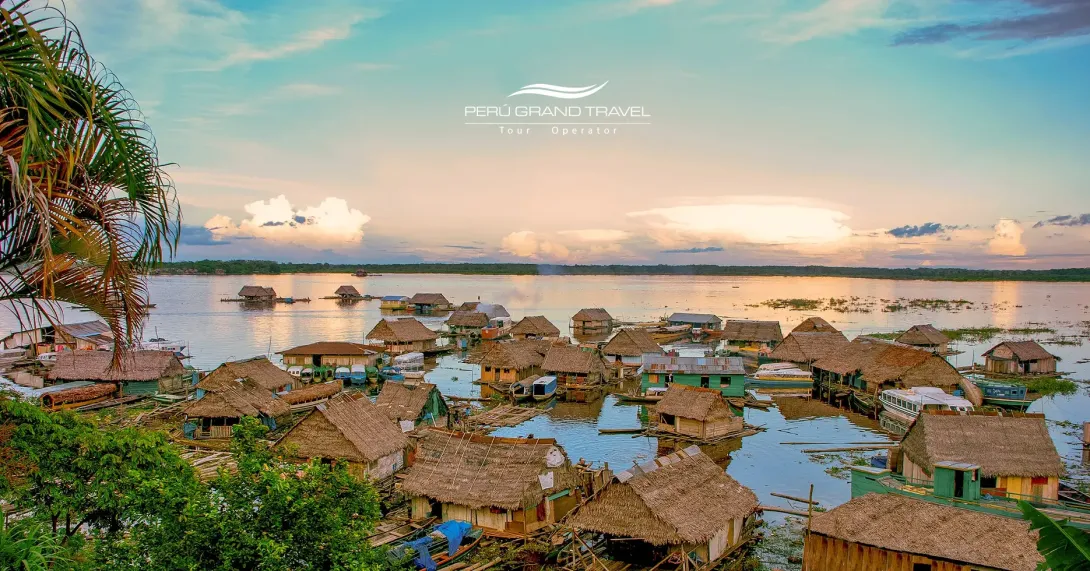
Here, what truly matters is not only navigating the Amazon River or walking through jungle trails. It is also about observing wildlife in its natural habitat, connecting with riverside communities, and exploring places like Belén Market, where the Amazon expresses itself in its most everyday form.
Iquitos requires time and attention. In 3 or 4 days, it is possible to experience a meaningful immersion, as long as the itinerary is not rushed. Choosing between a jungle lodge or a river expedition—or even deciding the season of travel—completely transforms how the destination is experienced.
For this reason, visiting Iquitos is less about accumulating activities and more about understanding its logic. The true value of the journey lies in connecting with the Amazon from within and realizing that here, the environment does not accompany the experience—it defines it.
Why Visiting Iquitos Is Not Tourism—It’s Exposure to a Living Ecosystem
Arriving in Iquitos means accepting one thing from the very beginning: there is no road access. You can only get there by plane or by river. That condition alone changes the way you travel and prepares the visitor to adapt.
The Amazon does not function like a conventional tourist destination. It is a living system where the climate, the water, the timing, and the environment influence every route and every experience.
For that reason, being in Iquitos is not just about doing activities. It is about stepping into a different dynamic, where nature sets the pace and the traveler must learn to observe rather than control.
The most common mistake is trying to experience the jungle with an urban mindset. Seeking constant comfort, exact schedules, or predictable experiences means missing part of the true meaning of the place.
In Iquitos, the journey changes when you understand one simple idea: here, the clock is not in charge. The river is.
What Are the Essential Things to Do in Iquitos?
Not everything offered in Iquitos provides the same value. When you truly understand what to do in Iquitos, you realize that some experiences are simply entertaining, while others allow for a deeper understanding of the Amazon.
What truly matters is not accumulating activities, but choosing those that help you better interpret the environment, its culture, and its way of life with greater depth.
Navigate the Amazon River and its tributaries
Navigating the Amazon is not just a boat ride. It is one of the most important experiences to consider when thinking about what to do in Iquitos, because it allows you to understand how life in the jungle truly works.
From the very first journey by boat, it becomes clear that the river organizes everything: transportation, trade, daily routines, and access to many communities.
For that reason, moving across the water is not just an extra activity. It is a central part of the journey and of the experience of getting to know Iquitos.
Observe wildlife in natural habitat
Ver animales en Iquitos tiene valor porque no está garantizado. La fauna aparece según las condiciones del clima, el momento del día y la paciencia del grupo.
Los delfines rosados, las aves, los monos o los reptiles no responden al visitante. Aparecen cuando el entorno lo permite y cuando se observa con atención.
Aquí, un buen guía no se limita a señalar animales. También ayuda a interpretar sonidos, huellas y pequeños cambios en la selva que el viajero común no suele notar.
Experience indigenous and river communities
Visiting local communities can be one of the most valuable experiences when discovering what to do in Iquitos, as long as it is done with respect and with the right context.
It is not about seeing a cultural attraction. It is about approaching a different way of life, shaped by the river, the rainforest, and a form of organization very different from urban life.
That contact helps you understand how people live, how they adapt to their environment, and how local culture remains deeply connected to nature and tradition.
Explore the Belén market as a cultural system
Belén Market is a key stop for understanding what to do in Iquitos beyond the classic excursions. It does not stand out for being beautiful or comfortable, but because it shows how daily life in the Amazon truly works.
There, local products, food, medicinal plants, and practical knowledge circulate as part of the economy and identity of Iquitos.
Exploring it with an informed perspective changes the experience completely. What at first seems chaotic begins to reveal its own logic.
Understand the role of biodiversity in daily life
In Iquitos, biodiversity is not just something you observe. It is part of everyday life.
The rainforest provides food, medicine, materials, and protection. Many plants and natural resources have a practical use within local daily routines.
When you understand this, the journey stops being focused only on the landscape. It begins to reveal how nature sustains life in the Amazon.
What to Do in Iquitos Step by Step
In Iquitos, an itinerary is not measured by quantity, but by adaptation. Trying to do too much often reduces your understanding of the place.
Here, each day serves a clear purpose: to help you adjust your perspective and understand how the Amazon truly works.
Day 1: Arrival, river logic, and first contact with the environment
The impact is immediate. The heat, the humidity, and the density of the environment shape from the very beginning the experience of understanding what to do in Iquitos.
The first boat transfer is not just a ride. It is a direct introduction to the logic of the place: here, everything happens from the river and at its own pace.
For that reason, the first day is not designed for intense exploration, but for adaptation. Understanding where you are is what truly defines what you will do in the days that follow.
Day 2: Deep jungle immersion
The second day usually changes the traveler’s expectations. The jungle is not understood quickly, nor does it reveal itself immediately.
Walks, boat rides, and long pauses allow for deeper observation. Here, the value is not in speed, but in attention.
At this stage, the guide plays a key role. They help interpret sounds, tracks, and signs that many people would otherwise overlook.
This is the moment when the journey shifts in focus: you stop looking for “something to see” and begin to better understand the environment.
Day 3: Community interaction and cultural interpretation
The third day broadens the experience. The jungle stops being only nature and begins to reveal its human dimension as well.
Contact with riverside or Indigenous communities allows travelers to discover another way of organizing life, shaped by the river, local time, and the resources of the environment.
It is not a cultural performance. It is about observing daily life and understanding how a reality very different from urban life actually works.
That contrast often becomes one of the most valuable parts of the journey, because it allows for a deeper understanding of the relationship between culture, territory, and adaptation.
Day 4: Slow observation and structured return
The last day does not need to add more activities. Its purpose is to help organize what has been experienced.
After several days in the jungle, observation changes. It is no longer just about looking, but about noticing details that previously went unnoticed.
The return journey does not work as an abrupt ending either. It is a transition that allows you to leave Iquitos with a clearer understanding of the environment and the experience itself.
That balance between less intensity and greater understanding is what usually makes an itinerary in Iquitos truly work.
Which Amazon Experience in Iquitos Is Right for You?
Making the wrong choice in the Amazon does not ruin the trip, but it can make the experience more superficial. Understanding what to do in Iquitos also means knowing what kind of experience you want to have.
The difference is not only in the price or the length of the tour, but in the way you relate to the environment and in the level of depth you seek during the journey.
Jungle lodge vs river expedition: operational differences
A jungle lodge offers a fixed base and a more structured experience. For many people looking into what to do in Iquitos, this option feels more comfortable because it allows activities and excursions to be organized with greater predictability.
A river expedition, on the other hand, involves more movement. It changes scenery, expands the area of exploration, and exposes the traveler to more variations in the environment.
Neither option is better in every case. One offers more stability; the other provides a more open, dynamic, and constantly changing experience.
Luxury lodges vs raw immersion: impact on perception
Luxury reduces part of the friction of the environment. For those considering what to do in Iquitos, a high-end lodge can be a good option because it helps manage the heat, humidity, insects, and some of the discomfort that naturally comes with the jungle.
A more direct immersion, on the other hand, keeps those conditions much more present. That can make the experience more demanding, but also more intense and closer to the reality of the environment.
The difference is not only about style. It has to do with each traveler’s level of tolerance and with the kind of experience they truly want to have in the Amazon.
Guided vs independent travel: risk, depth, and efficiency
Exploring the Amazon without a guide often greatly limits the experience. When thinking about what to do in Iquitos, it is worth remembering that the jungle does not always reveal its value in an obvious way to those who do not know the environment.
A local guide does not simply accompany the journey. They also help interpret sounds, tracks, animal behavior, and changes in the landscape that the average traveler might easily overlook.
For that reason, the advantage is not only about safety or comfort. Above all, it lies in the depth of understanding that a good guide can bring to the journey.
When Is the Best Time to Visit Iquitos?
The question is often framed the wrong way. When thinking about what to do in Iquitos, it is not so much about “when is the best time to go,” but rather about what kind of experience you want to have.
The Amazon does not operate with opposite seasons like other destinations. What truly changes is the water level, and that directly influences the activities, access routes, and the overall dynamics of the journey.
High water season vs low water season: access vs density
During the high-water season, the river level rises and allows navigation through wider areas. Flooded zones become accessible, and movement by boat is smoother.
During the low-water season, the water level drops and trails begin to appear. This makes walking easier and can increase the chances of closer wildlife encounters.
It is not about choosing one as better than the other. It is about deciding between more navigation or more exploration on foot, between greater range or greater detail.
Climate behavior and logistical implications
The climate in Iquitos remains fairly stable, although its intensity may vary. When planning what to do in Iquitos, it is important to keep in mind that the heat is constant, humidity is high, and rain can appear at any time.
There is no such thing as a “perfect month.” What does exist are conditions that affect the logistics of the journey, such as transfer times, available routes, and certain activities that may vary.
Those who seek total precision often end up frustrated. On the other hand, those who understand how the environment works are able to adapt better and enjoy the experience more.
What experienced travelers prioritize
The less experienced traveler usually focuses on finding the best weather. The more experienced one prioritizes consistency with the kind of experience they want to have.
If they are looking for navigation and access to flooded areas, they choose the high-water season. If they prefer walking and closer observation, they opt for the low-water season.
It is not about optimizing the weather, but about aligning the season with the type of experience you want to have. That is often the difference between a trip that is simply fine and one that is truly meaningful.
How to Get to Iquitos and Move Efficiently
Flights from Lima and timing strategy
Iquitos has no road access. The only way to get there is by air from Lima.
The flight takes around two hours, but the change is immediate: from city to jungle with no transition.
Choosing the right flight schedule is essential. Arriving early allows you to continue into the jungle on the same day. Arriving late usually interrupts the itinerary and causes you to lose valuable time.
River transport: boats, speedboats, and navigation realities
In Iquitos, the river serves as the main transportation route.
Distances are not measured in kilometers, but in navigation time. This may vary depending on the current, the type of boat, and the conditions of the environment.
Speedboats allow for more direct transfers. Simpler boats offer slower and more detailed journeys.
Movement is neither fixed nor exact. It constantly adapts to the conditions of the river.
Packing for function, not aesthetics
Packing well in the Amazon makes all the difference. Here, it is not about style, but about adapting to the environment.
- Lightweight, long-sleeved clothing (protects against the sun and insects)
- Quick-drying garments (humidity is constant)
- Insect repellent (essential at all times)
- Rain jacket or poncho (rain is frequent and unpredictable)
- Comfortable, durable footwear (for walks on wet or uneven terrain)
- Rubber boots (many tours provide them, but it is important to keep them in mind)
- Sunscreen (even in the jungle, solar radiation remains high)
- Hat or cap (extra protection against the heat)
- Flashlight or headlamp (useful in lodges and on night walks)
- Small waterproof backpack (to protect personal belongings)
- Reusable water bottle (constant hydration is important)
- Basic personal medications (not always easy to find in the area)
Each item serves a specific purpose. Bringing the right gear not only improves comfort, but also allows you to move more freely and make the most of the experience.
What Most Travelers Get Wrong About Iquitos
Mistakes in Iquitos are not always obvious. They do not ruin the trip immediately, but they can make it more superficial. Understanding what to do in Iquitos also means recognizing how the experience is meant to be lived.
The problem is usually not the lack of activities, but the way they are interpreted. In an environment like the Amazon, the traveler’s attitude influences the experience just as much as the itinerary.
Expecting comfort over adaptation
Many travelers arrive with expectations shaped by an urban destination: exact schedules, constant comfort, and a predictable experience.
The Amazon does not work that way. The heat, humidity, and changing conditions of the environment require adaptation from the very beginning.
Accepting that does not mean settling. It means opening yourself to an experience that is more real and more connected to the logic of the place.
Misreading wildlife expectations
One of the most common mistakes is thinking that seeing wildlife depends only on being in the jungle. In reality, observation requires patience, silence, and context.
Animals do not appear on schedule. They depend on the time of day, the conditions of the environment, and the guide’s ability to interpret signs.
For that reason, the value is not in seeing a lot or seeing it quickly, but in understanding that each sighting is special precisely because it is not guaranteed.
Treating communities as attractions
This is one of the most subtle mistakes when thinking about what to do in Iquitos. Some visits to communities may seem like just another cultural activity, when in fact they require a different perspective.
Communities do not exist to entertain visitors. They have their own dynamics, rhythms, and forms of organization that go far beyond tourism.
The experience changes completely when the focus shifts from “observing how they live” to “understanding why they live that way.”
Perspective Real: What Changes When You Engage With the Amazon Instead of Visiting It
The Amazon does not always leave its mark through grand scenes. Sometimes, when discovering what to do in Iquitos, you realize that the most valuable moments happen in silence and are almost imperceptible.
It may be the constant sound of the water, the humidity in the air, or the feeling that everything continues its course without needing your presence. That is when the journey begins to take on a deeper meaning.
A moment that redefines the idea of travel
I remember one morning with no scheduled activity. There was no rush, no long explanations, and no need to fill the time.
We were simply listening: insects, water, leaves moving. It did not seem like much was happening, but in reality, I was understanding more than in any activity.
That kind of moment cannot be forced. It appears when you stop looking for immediate results and begin to truly pay attention.
Subtle mistakes that reduce the depth of the experience
They are not always big mistakes. Very often, they are small habits that travelers carry with them without even noticing.
Trying to rush through excursions, talking too much, or constantly expecting something more striking causes important details to be missed.
The Amazon does not respond well to haste. Those who accept the pauses and observe calmly begin to notice patterns, sounds, and dynamics that would otherwise go unnoticed.
Why cultural connection—not itinerary—is the real value
The jungle is impressive on its own, but understanding what to do in Iquitos means going beyond seeing it only as a landscape.
The experience gains real depth when the human element appears: the communities, everyday practices, and the way the environment is used, interpreted, and lived each day.
That is when the journey changes in scale. It is no longer just about discovering another place, but about understanding another way of life and, in that process, seeing your own with different eyes.
How Iquitos Compares to Other Amazon Destinations in Peru
Comparing Amazon destinations is not only about measuring comfort or ease of access. When evaluating what to do in Iquitos, the important thing is to understand what kind of experience each place offers and what level of immersion it allows.
Not all destinations in the Peruvian Amazon are experienced in the same way. Each one responds to different rhythms, access conditions, and travel expectations.
Iquitos vs Puerto Maldonado: accessibility vs density
Puerto Maldonado is often more accessible for many travelers. Its logistics are clearer, transfers usually feel more direct, and the tourism infrastructure is more visible.
Iquitos, on the other hand, demands a bit more from the very beginning. Access is by air, and much of the experience depends on river transportation and on a more gradual adaptation to the environment.
In return, Iquitos offers a stronger sense of isolation and a more direct connection with the logic of the river and the jungle. One makes access easier; the other intensifies immersion.
Iquitos vs Manu: structure vs expedition
Manu is often perceived as a more controlled and demanding experience. Access is more limited, and itineraries tend to be more clearly defined by conservation and operational conditions.
Iquitos offers greater flexibility. It allows routes, the type of exploration, and the pace of the journey to be adapted more easily according to the traveler’s profile.
The difference is not in which one has more value, but in how each one is experienced. Manu is closer to a structured expedition; Iquitos, to a more adaptable exploration.
Choosing based on intention, not popularity
One of the most common mistakes when thinking about what to do in Iquitos or in other Amazon destinations is choosing based only on fame or reputation.
The best decision comes from a more precise question: what kind of experience do you want to have, and how willing are you to adapt to the environment?
Iquitos usually works better for those seeking a direct connection with the jungle and who accept a higher level of uncertainty. Puerto Maldonado may be a better fit for those who prioritize accessibility, while Manu tends to attract travelers looking for a deeper and more demanding experience.
In the end, it is not about deciding which one is better in absolute terms, but which one best matches your way of traveling.
FAQ – Things to Do in Iquitos
Before traveling to Iquitos, a few questions almost always come up: how to get there, how many days to stay, what to expect from the jungle, and how to organize the experience in the best way.
Here you will find clear and direct answers to understand the essentials of Iquitos before planning your trip.
What is Iquitos famous for?
Iquitos is famous for being the largest city in the world without road access and one of the main gateways to the Peruvian Amazon. Its location deep in the jungle makes it a strategic point for exploring biodiversity, rivers, and local communities.
Is Iquitos worth visiting?
Yes, if you are looking for a real experience in the Amazon. It is not a destination of comfort or quick consumption. It is an experience of adaptation, observation, and connection with an environment that operates under different rules.
How many days do you need in Iquitos?
Between 3 and 4 days at a minimum. This amount of time allows for a gradual immersion into the jungle, combining navigation, walks, and cultural contact without turning the trip into a superficial experience.
What are the best jungle tours in Iquitos?
The most effective options, when deciding what to do in Iquitos, are those that include specialized local guides, river transportation, wildlife observation in its natural habitat, and respectful contact with local communities.
In these kinds of experiences, quality depends more on the approach and the operation than on the price.
Can you explore the Amazon without a guide?
It is not recommended. The jungle is not intuitive. Without a guide, the experience loses depth and the level of risk increases. A guide interprets the environment and helps make the most of every journey.
What animals can you see in Iquitos?
Pink river dolphins, monkeys, birds, reptiles, amphibians, and insects. Wildlife observation depends on the season, the weather, and the guide’s experience. It is not constant or guaranteed.
Is Iquitos safe for tourists?
Yes, as long as you travel with formal operators and follow basic recommendations. Safety is more closely linked to how the trip is organized than to the destination itself.
What is the best month to visit Iquitos?
There is no single ideal month. The high-water season (November to May) favors navigation. The low-water season (June to October) makes walking easier and allows for closer observation.
How do you get to Iquitos from Lima?
Only by air. There are daily flights from Lima, with an approximate duration of two hours.
What should you pack for the Amazon?
Lightweight, long-sleeved clothing, insect repellent, rain gear, suitable footwear for walking, and a flexible mindset. Functionality is more important than aesthetics.
The Amazon Is Not a Place You Visit—It’s a System That Repositions You
Returning from Iquitos does not mean coming back with a checklist of completed activities. Understanding what to do in Iquitos means, rather, returning with a different perspective on travel and on the environment.
The Amazon does not adapt to the traveler. It is the traveler who needs to adjust their pace, expectations, and way of observing in order to truly understand what lies before them.
That is where the difference lies. Those who arrive only to do things collect moments. Those who arrive willing to understand discover a deeper logic.
Then the river stops being just scenery, the jungle stops being a green backdrop, and the communities stop feeling like just another stop along the way.
Everything begins to make sense when the journey is no longer consumed as a series of activities, but is understood as a connected experience.
For that reason, what to do in Iquitos is not reduced to choosing tours or adding visits. It is about entering the logic of the Amazon and allowing the journey to change its meaning.