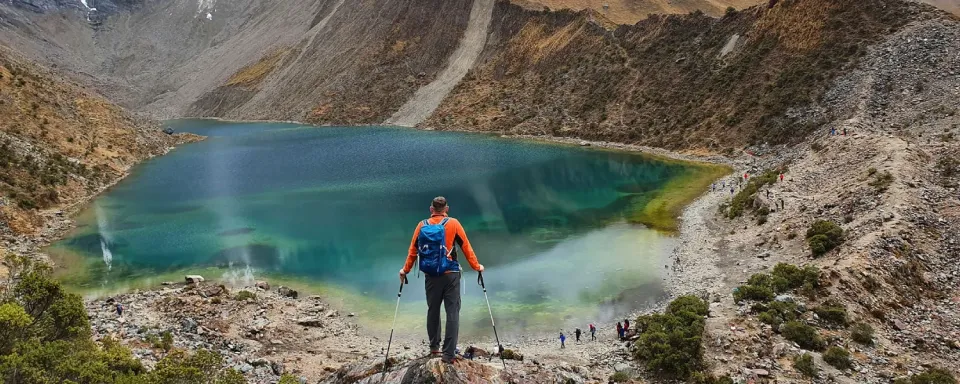


Choosing the best time of year to visit Peru is not just about the weather, but about the kind of experience you want to have. Between May and September, the
From November to March, however, the landscape takes on a different character: the mountains become greener, there are fewer travelers, and the journey can feel more intimate and immersive. April and October, on the other hand, tend to offer a particularly appealing balance between good weather, lower crowds, and greater flexibility. Rather than looking for a perfect month, the key is to find the time that best aligns with your way of traveling through Peru.
When Is the Best Time of Year to Visit Peru? The Short Answer Most Guides Miss
The first time I heard that question, I thought about the weather. Clear skies, crisp photos, and hikes without rain. Later, I realized that was too simple an answer.
Peru isn’t defined by seasons alone. It’s understood in layers. The coast, the Andes, and the Amazon each follow different rhythms. Even within the Andes, destinations like Machu Picchu, Cusco, or the Sacred Valley don’t feel the same in the same month.
The short answer—the one most guides repeat—is that the best time to travel is the dry season, between May and September. And yes, there’s some truth to that. It’s the most stable period weather-wise in the highlands, the best time to visit Machu Picchu with clearer skies, and a season when Cusco tends to feel more accessible for a first trip.
But it’s also the time when everything is more crowded, more structured, and less flexible.
That’s where the question truly shifts. It’s no longer just about when to visit Peru, but about what kind of experience you want to have once you’re there.
I’ve seen travelers arrive in July, with perfect weather, and still feel overwhelmed by the pace and the crowds. I’ve also seen others travel through Peru in February, under heavy clouds and lush landscapes, and describe the journey as more intimate, deeper, more memorable.
That’s why choosing the best time to visit Peru isn’t just a climate decision. It’s a strategic one. One that shapes how you’ll see Machu Picchu, how you’ll experience Cusco, and how deeply you’ll connect with your surroundings.
In the end, the best time of year to visit Peru isn’t a fixed month on the calendar. It’s the moment when the destination and your way of traveling align.
Peru by Seasons: What Actually Changes Beyond the Weather
Reducing Peru to a simple division between the dry season and the rainy season is only scratching the surface. The weather does not just transform the landscape; it also changes the pace of the journey, the logistics, and the way each destination reveals itself to the traveler. The real difference lies not only in whether it rains or not, but in how the experience changes depending on the time of year.
Dry Season from May to September: Clarity, Altitude, and Predictability
The first sign of the dry season appears in the sky: clear, stable, and predictable. During these months, the Andes reveal themselves with a level of sharpness that is hard to match. The mountains stand out with striking clarity, and visibility in destinations like Machu Picchu or the Sacred Valley is usually much more consistent.
That’s why this period is often considered the best time to visit Machu Picchu. However, that clarity also comes with its own nuances. Mornings can be very cold, midday sun can feel intense, and nights are dry—especially in Cusco, where the altitude amplifies every temperature change.
There’s also a key factor to consider: this is the peak travel season. There are more travelers, more planning involved, and less room for spontaneity. It’s a season that works especially well for those seeking structure, predictability, and a clear first introduction to the destination.
Rainy Season from November to March: Density, Color, and Fewer Crowds
During the rainy season, the landscape shifts its language. What feels structured in the dry season becomes depth here. The greens intensify, rivers swell, and the environment gains a richness that completely transforms the way you perceive it.
It doesn’t rain all day. It rains in intervals—sometimes heavily, sometimes like a brief pause. And that detail makes a significant difference, because between showers the landscape breathes differently. There are fewer people, less noise, and more space to experience the journey in a different way.
Many travelers dismiss this season based on perception. However, for certain profiles, this can be the true best time to visit Peru—not for comfort, but for connection. That said, it’s important to consider its limitations: more restricted trekking, variable trail conditions, and less predictable logistics.
Shoulder Months from April & October: The Most Underrated Balance
It is during these months that the destination finds its point of balance. The rains begin to fade or have not yet arrived in full force, and the landscape retains its color while gaining stability. There is neither the saturation of July nor the uncertainty of January. There is more room to travel at a calmer pace.
April and October work as strategic windows, especially for those seeking a smooth experience without disconnecting from the natural environment. These are months that allow you to enjoy the journey with a sense of balance: good visibility, more stable conditions, and a less rigid rhythm.
In practical terms, they are often one of the best options for travelers who want to explore without crowds and gain a deeper understanding of what they are seeing. For that reason, in many cases, this can be the best time to visit the Sacred Valley—especially if what you’re looking for is not just to see it, but to truly understand it.
Best Time to Visit Machu Picchu: Visibility vs. Experience Depth
The image everyone has in mind is the same: Machu Picchu under clear skies, with a blue sky above and the mountain sharply defined. That image is real, and that is why many people believe the best experience depends only on the weather. But the place is not experienced in just one way.
Peak Conditions vs. Peak Crowds
Between May and September, the chances of clear skies are high, and visibility tends to remain stable. This makes the visit to Machu Picchu more predictable and, for many travelers, easier to plan in advance.
That’s why this period is often considered the best time to visit Machu Picchu. However, that same clarity comes at a cost: more visitors, stricter time slots, and tickets that can sell out weeks—or even months—in advance.
As a result, the experience becomes more structured. There is less room to pause, observe at your own pace, or simply stand in silence in front of the landscape. It’s not necessarily a negative aspect, but it does change the way many people experience the site once they arrive.
Morning Mist vs. Clear Views: What You Gain and Lose
During the rainy season, Machu Picchu does not always reveal itself completely. Sometimes it appears and disappears through the mist, and many see that as a disadvantage. I understood it differently the first time I experienced it that way, because it changes the rhythm of the visit.
The mist does not hide—it reveals in fragments. It makes the journey less immediate and more progressive. The city unfolds in front of you, not all at once, and each section appears in its own time, transforming the way the place is perceived.
When it clears, the contrast feels stronger and more real. That’s when the experience stops being just a photo and becomes a sequence. It’s not better or worse—it’s simply another way of seeing Machu Picchu and connecting with its natural surroundings.
Entry Circuits and Seasonality: Why Timing Affects Access
Since access to Machu Picchu has been organized into circuits, the timing of your visit matters more than ever. You are no longer just choosing the day you enter, but also the way you will move through the site and the type of experience you will have inside the complex.
During the high season, there is usually less availability of specific circuits, stricter time slots, and less flexibility to choose viewpoints or pace. In the shoulder or low season, on the other hand, there are more real options for entry and a less fragmented experience.
This directly affects how the site is perceived. It is not the same to experience Machu Picchu as part of a controlled flow as it is to explore it with more space to pause, observe calmly, and interpret what you are seeing during the visit.
Best Time to Visit Cusco Peru: Climate, Altitude, and Cultural Calendar
Cusco is something you move through. Not only because of its geography, but because of how it shapes the rhythm of the journey. Altitude, weather, and the cultural calendar are constantly interacting. That is why choosing the best time to go is not just about picking a random month.
Cold Mornings, Strong Sun: The Dry Season Reality
Between May and September, Cusco seems to operate with precision. The skies remain clear, rainfall almost disappears, and the days unfold with a stability that makes traveling easier. For many travelers, that clarity makes this period the most accessible for a first visit.
However, that same stability has a particular feature that is often underestimated: thermal contrast. Mornings can start near freezing, midday sun can feel intense, and nighttime returns quickly with a drop in temperature. It’s not an especially comfortable climate; it’s one that requires adaptation.
This is where many travelers get it wrong. They assume that good weather means an easy trip, when in reality it means a more predictable environment—not necessarily a more comfortable one. Even so, for first-time visitors to Cusco, this period offers a clear advantage: it allows you to experience the city with fewer interferences and understand its rhythm more clearly from the start.
Festivities That Reshape the City
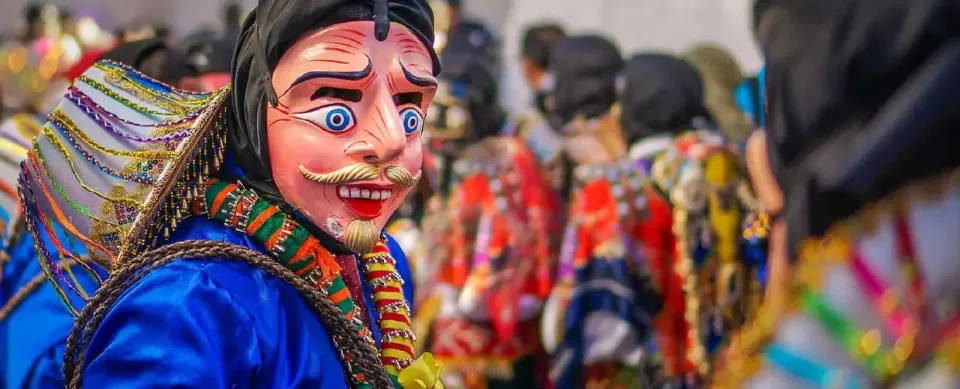
Cusco is also shaped by its calendar. And June marks one of its most intense moments. The city shifts its rhythm, public spaces transform, and the streets begin to respond to a different logic—more ceremonial and more collective.
Processions, celebrations, and symbolic reconstructions of the past redefine the urban experience. Events such as Inti Raymi or Corpus Christi do not function as simple spectacles for visitors; they are active expressions of identity, memory, and cultural continuity.
Traveling during these dates means a different kind of experience. There is higher demand for services and tighter logistics, yes, but also a much deeper cultural understanding. In that context, the journey stops being mere observation and becomes a form of indirect participation.
Rainy Season Trade-Off: Fewer Tourists, More Atmospheric Experience
From November to March, Cusco shifts its rhythm. The rains are not constant, but they are frequent enough to reshape the experience. The flow of travelers decreases, the pace becomes slower, and the city seems to breathe with less pressure.
You notice it as you walk through it. There is more space to explore without rushing and more time to pause and appreciate details that often go unnoticed during the high season. The streets shine after the rain, colors become more vivid, and the urban landscape gains a different kind of depth.
It may not be the most comfortable time for everyone, but it is one of the most authentic. For certain travelers, this period does not diminish the value of Cusco—it redefines it. It makes the journey feel less hurried, more observant, and, in many cases, more human.
Best Time to Visit Sacred Valley: Microclimates and Travel Flow
The change when leaving Cusco is not only geographical; it is also a shift in rhythm. As soon as the road descends, something readjusts: the air feels lighter, the altitude loses intensity, and the surroundings begin to open up with a different sense of calm.
That difference is felt immediately. The Sacred Valley does not demand in the same way Cusco does. It does not impose—it accompanies. Its landscape, scale, and energy allow the journey to become more fluid and less tense.
For that reason, defining the best time to visit the Sacred Valley does not depend only on the weather. It depends on understanding how this place reorganizes the entire experience and how it can reshape the way the journey through the Andes is lived.
Why the Valley Feels Different from Cusco
The shift when leaving Cusco is not only geographical; it is also a change in rhythm. As soon as the road begins to descend, something settles: the air feels lighter, the altitude loses intensity, and the landscape starts to open up with a broader sense of space.
That difference becomes noticeable almost immediately. The Sacred Valley does not demand from the traveler in the same way Cusco does. It has a more serene way of receiving you, as if instead of imposing itself, it accompanies the journey and gives it a new cadence.
For that reason, thinking about the best time to visit the Sacred Valley does not depend solely on the weather. It depends on understanding how this place reorganizes the entire experience and how it can quietly transform the way the Andean world is lived.
Agricultural Cycles and Landscape Transformation
The Sacred Valley is not a static landscape; it is a living and productive territory. Its appearance changes with each time of year because it responds to an agricultural cycle that continues to shape the rhythm of the place. What the traveler observes is not just scenic beauty, but a process in motion.
During the rainy season, the fields turn a more intense green, water becomes more present, and the environment conveys a constant sense of fertility. In the dry season, on the other hand, more golden tones emerge, the land becomes more clearly defined, and the agricultural terraces can be read with a different level of precision.
Both versions of the Valley are valuable, but they do not say the same thing. Each one reveals a different dimension of the territory. Here, the landscape does not serve a decorative purpose—it speaks of work, memory, and an active relationship between the land and the communities that inhabit it.
Logistics: Train Routes, Road Conditions, and Timing
The Sacred Valley not only connects destinations; it also defines the way the journey unfolds. From here, trains depart to Machu Picchu, and many of the most important routes within the Andean itinerary are organized from this point. That is why its logistical role is far more decisive than it may seem at first glance.
And it is precisely here where the time of year begins to matter. During the high season, there is higher demand and stricter schedules; in the low season, there is usually more flexibility, although with some operational variability; and in the rainy season, adjustments in routes, timing, or connections may occur.
These are not drastic changes, but they are significant enough to influence the overall rhythm of the journey. The Sacred Valley acts as a regulator of the trip: when managed well, it provides balance, continuity, and flow; when underestimated, it can fragment the entire experience.
Month-by-Month Breakdown: What You Can Expect Each Time of Year
Dividing Peru by months is not just a way to organize the calendar; it is also a way to anticipate how the journey may feel before it even begins. Each period of the year shapes the weather, the landscape, the logistics, and even the pace at which destinations are experienced.
But that perspective only makes sense when paired with another equally important idea: not all months offer the same experience, and not all travelers expect the same from Peru. That is why understanding the year month by month is not just about choosing a date—it is about choosing the kind of experience you want to have.
January – March: Rain, Green Landscapes, Limited Trekking
This is often the most misunderstood time of the year to travel through the Peruvian Andes. Rainfall is present—especially in the highlands—and although it does not fall constantly, it occurs frequently enough to influence routes, timing, and certain activities.
Trekking, particularly routes such as the Inca Trail, can become less stable or even close temporarily. However, while logistics become more complex, the landscape gains a visual intensity that is hard to find in other months. The Andes become more vivid: deeper greens emerge, low clouds appear, and the scenery takes on greater depth.
There are also fewer visitors. This changes the rhythm of the journey. There is more space, more silence, and a stronger sense of intimacy with the environment. It may not be the most convenient time for complex itineraries, but it can become one of the most authentic experiences for those who value atmosphere over operational perfection.
April – June: Transition and Optimal Conditions
This is where the journey begins to find its best balance. The rains gradually fade, the terrain stabilizes, and the skies start to clear more consistently. April still preserves the deep green of the wet season, while May and June bring a clarity that makes the landscape feel more defined.
In general terms, this is often one of the most efficient periods to travel through Peru. It combines good weather, a balanced landscape, and less crowding than the high season. For many travelers, that balance makes these months the true sweet spot of the year.
July – August: Peak Season and Maximum Demand
During this period, almost everything works well, but it works under pressure. The weather remains stable, visibility is usually high, and the conditions for exploring the country’s main destinations are, in practical terms, ideal. For that very reason, it is also the most in-demand time of the year.
That demand has clear consequences: higher prices, lower availability, and the need to plan well in advance. The experience is usually more predictable and organized, but also more structured. It works very well for those who prioritize certainty in the outcome; less so for those who value flexibility during the journey.
September – December: Gradual Shift and Strategic Travel Window
This part of the year often goes unnoticed—and that is precisely where its value lies. September maintains conditions very close to the dry season, but with fewer travelers. October introduces slight changes without significantly altering the experience, and November and December begin to show signs of rain without fully losing stability.
It is a transition period that is especially useful for those looking to avoid extremes. It does not have the saturation of the high season nor the more pronounced uncertainty of the rainiest months. For that reason, for many travelers, it represents a strategic window: more balance, more flexibility, and a still very manageable experience.
How to Choose Your Ideal Travel Window Based on Your Travel Style
The same time of year can be ideal for one traveler and not the right fit for another. Not because the destination changes in a radical way, but because expectations change, the desired pace changes, and so does the way each person wants to relate to the journey.
That is why choosing the right time is not just about looking for the best weather. It is about aligning the time of year with the kind of experience you want to have in Peru.
For First-Time Travelers Seeking Clarity and Efficiency
If it is your first trip to Peru, the most useful approach is usually to reduce the friction of the journey. Understanding the environment more easily, moving around with fewer interruptions, and avoiding unnecessary variables make the experience feel clearer from the very beginning.
In that case, the dry season, between May and September, usually works best. It offers greater predictability in transportation, better visibility at Machu Picchu, and more stable conditions in destinations such as Cusco and the Sacred Valley. It may not be the most intimate version of the journey, but it is one of the clearest and easiest to understand for someone visiting Peru for the first time.
For Cultural Immersion and Local Connection
Here, the criteria shifts. It is no longer about seeing more, but about understanding more deeply what is happening in each place and how the environment is experienced beyond what is immediately visible.
The transition months—and even the rainy season—tend to favor this type of experience. There are fewer tourists, more genuine interaction, and more space to observe local dynamics at a slower pace. Not everything is comfortable, but it feels more real and closer.
From this perspective, the idea of the best time to visit Peru stops being a fixed rule. It is redefined according to the level of connection each traveler seeks with the destination.
For Photography and Landscape Depth
Photography does not depend only on clear skies; it also depends on contrast, atmosphere, and the depth of the surroundings. Each season offers a different way of reading the landscape, and that is directly reflected in the kind of image you can create.
During the dry season, defined lines, clear skies, and more direct light tend to dominate, highlighting the shape of the landscape. In the rainy season, on the other hand, dynamic clouds, more intense colors, and a stronger sense of visual volume begin to appear.
There is no universally best option. What exists is the type of image you want to capture and the way you want to interpret the surroundings through photography.
For Luxury and Seamless Logistics
When a journey is designed to flow without interruptions, the time of year becomes even more decisive. The dry season offers greater operational control: fewer delays, better coordination of services, and a lower margin of error—something especially valuable in itineraries where every detail matters.
Even so, the shoulder months—April and October—often offer an additional advantage. They maintain a high-quality travel experience, but without the pressure or rigidity of peak demand. In this type of trip, the goal is not just to move from one place to another, but to make everything work naturally, without visible effort.
What Most Travelers Get Wrong About Timing a Trip to Peru
Most travelers do not get it wrong because they lack information, but because of the way they interpret it. Peru does not punish a poor choice of dates, but it does make mistakes in perspective more visible when expectations are not aligned with what the journey can actually offer.
Confusing “Good Weather” with “Best Experience”
The most common mistake is assuming that clear skies guarantee a better trip. In reality, that only ensures visibility—not necessarily a richer or more meaningful experience.
I have seen flawless itineraries in July that, even under perfect conditions, feel flat. And I have also seen trips during the rainy season that, despite their inconveniences, leave a much deeper impression. The weather defines the conditions; it does not, by itself, define the meaning of the journey.
Ignoring Altitude Adaptation Windows
Cusco is not an immediate destination; it is a process of adaptation. Arriving and trying to carry out the itinerary without giving your body time to adjust to the altitude is one of the most costly mistakes of the trip.
Headaches, fatigue, or low energy may not ruin the experience, but they can certainly limit it from the very beginning. And that depends less on the month you travel than on how you organize your first days. In Cusco, the best time is not defined only by the weather, but also by how you manage the altitude.
Overlooking Regional Climate Differences
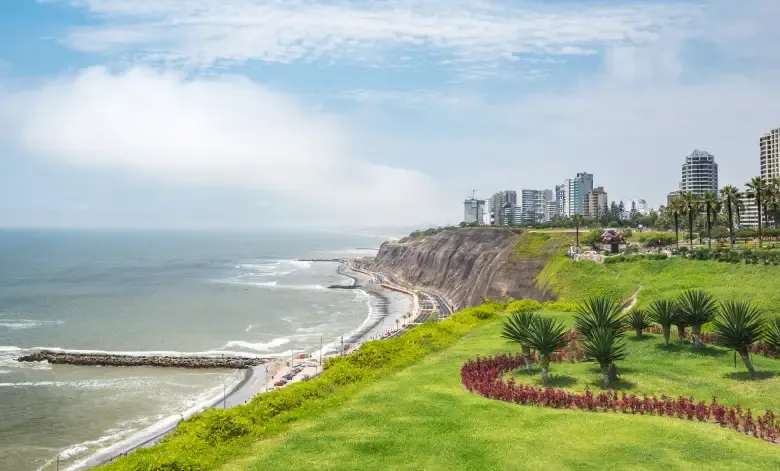
Another common mistake is assuming that all of Peru follows the same climate pattern. It does not. While Cusco may be in the dry season, Lima can wake up covered in mist; and while the Andes receive rain, the Amazon follows its own cycle.
That difference changes key decisions: what clothes to pack, how to distribute your days, and what to expect from each region. A well-designed itinerary does not simply follow the weather—it knows how to interpret it according to the territory.
Perspectiva Real: What Changes When You Travel With Intention, Not Just Timing
The first time I designed a trip thinking only about the weather, everything worked perfectly on paper. There were clear skies, precise schedules, and clean photos. But even then, something didn’t quite fit. It wasn’t a technical issue, but a deeper kind of disconnect that was harder to define: the trip had been correct, but not truly meaningful.
Years later, I returned at a different time of year. It wasn’t perfect or especially predictable, but it had a different depth. In the Sacred Valley, a conversation with a local family completely changed the rhythm of the day. In Cusco, an unexpected festival altered the itinerary. In Machu Picchu, the mist forced me to wait—and in doing so, to observe in a different way. None of it had been planned, and that was precisely where the value lay.
That’s when I understood something that rarely appears in guidebooks: when you choose the timing based only on conditions, you optimize the itinerary; when you choose with intention, you transform the experience. Traveling to Peru is not just about moving from one place to another, but about stepping into a different logic—one where time does not always move in a straight line and where the most important things are not always immediately visible.
That completely changes the way you decide when to travel. The date stops being just a climate decision and becomes a personal one. It is not only about avoiding the rain, but about understanding what kind of experience you are willing to live when the journey stops following your plans and begins, truly, to reveal itself.
Conclusion: Timing Is Not About Weather. It’s About Alignment
The initial question seems simple: what is the best time of year to visit Peru? The answer, however, rarely is. There is no universally perfect month; there are different contexts, each with its own advantages, limitations, and ways of experiencing the country.
The dry season offers clarity. The rainy season brings depth. The shoulder months tend to provide balance. But none of these factors alone defines the quality of the journey. What truly defines it is the alignment between what you expect and what the destination can offer at that moment.
Peru does not change to adapt to the traveler. It is the traveler who decides how to encounter Peru and from what perspective to experience it. And it is precisely at that point—where expectation and experience align—that the best time to travel is defined.
FAQ – The Best Time of Year to Visit Peru
What is the best time of year to visit Peru overall?
The best time to visit Peru is between May and September, during the dry season, when there are clear skies and stable conditions in the Andes. However, April and October offer a better balance between good weather, fewer tourists, and greater flexibility.
What is the best time to visit Machu Picchu for clear views?
The best time to visit Machu Picchu for good visibility is between May and September. During these months, rainfall is minimal and the sky is usually clear, which enhances the panoramic views.
Is it better to visit Peru in the dry season or rainy season?
It depends on the type of experience you are looking for.
The dry season offers stability and easier logistics.
The rainy season (November to March) offers greener landscapes, fewer tourists, and a more immersive experience.
What is the best time to visit Cusco Peru considering altitude and weather?
The best time to visit Cusco is between May and September because of its dry weather. However, it is also important to consider altitude adjustment, regardless of the month you choose.
When is the best time to visit Sacred Valley for fewer crowds?
April and October are the best months to visit the Sacred Valley, with fewer tourists, good weather, and landscapes balanced between greenery and clarity.
Does it rain all day during the rainy season in Peru?
No. In most cases, the rain is intermittent, especially in the afternoon or at night. This allows you to carry out activities during the day with relative normality.
What are the worst months to visit Peru and why?
There are no “bad” months, but January and February can be more challenging in the Andes due to heavier rainfall and possible trekking limitations, such as the closure of the Inca Trail in February.
When is Peru the most crowded and expensive?
Between July and August, during the high season. In these months, there is higher tourist demand, higher prices, and lower availability of services.
Is April or October a good time to visit Peru?
Yes. Both months are considered among the best times to travel, as they combine good weather, fewer tourists, and greater flexibility in planning.
How does weather vary between Lima, Cusco, and the Amazon?
The weather in Peru varies by region.
Lima is usually humid and cloudy in winter (June to September).
Cusco has well-defined dry and rainy seasons.
The Amazon is warm and humid throughout the year, with variations in rainfall intensity.