

Discover the soul of the Andes. Explore the best textile museums in Cusco to find authentic Incan art, luxury weavings, and 2026's most exclusive cultural secrets.
I remember walking down the narrow, cobblestone street of Avenida El Sol just as the morning mist was lifting. The scent of roasting coffee from a nearby café mingled with the crisp Andean air. I pushed open a heavy wooden door and felt the temperature drop slightly, surrounded by the quiet dignity of ancient walls. I wasn’t just entering a building; I was stepping into a living, breathing archive of the human spirit.
When you visit a textile museums in Cusco, you aren’t just looking at old clothes. You are witnessing a “woven language” that has survived empires, conquests, and time itself. As your “Anfitrión Cosmopolita,” I’ve spent years exploring the many museums in Peru, but none touch the soul quite like a dedicated textile museum in Cusco.
If you are currently planning your next Machu Picchu travel package, you must understand that these threads are the very fabric of our identity. Let’s explore why this experience is the ultimate privilege for the modern traveler.
What makes a textile museum in Cusco the heart of Andean identity?
To understand the Andes, you must understand the loom. In every textile museums in Cusco, you will see that for the Incas, textiles were more valuable than gold. They were status symbols, religious offerings, and historical records. When I run my fingers near the display cases (careful not to touch!), I can almost feel the vibration of the backstrap loom.
A textile museum in Cusco acts as a bridge. It connects the ancestral techniques of the Sacred Valley with the sophisticated aesthetics of 2026. This isn’t a dead art form. By visiting, you support the craftsmen who still use natural dyes like cochineal and volcanic minerals to create colors that no machine can replicate. It’s one of the most profound things to do in Cusco if you seek depth over selfies.
What are the best textile museums in Cusco to explore?
If your time in the imperial city is limited, you must be selective. While we cover a broader artistic spectrum in our guide to the 5 museums in Cusco, I have curated a specific list of the finest textile museums in Cusco that every sophisticated traveler should experience.
1. Centro de Textiles Tradicionales del Cusco | CTTC
Located on the prestigious Avenida Sol, the CTTC is the crown jewel of textile museums in Cusco. It is part museum, part working cooperative.
- The Experience: You will walk on polished hardwood floors while observing master weavers from surrounding communities actively working on their looms. The museum section beautifully details the timeline of Andean textiles, from the pre-Inca Paracas culture to the present day.
- The Privilege: This is the ultimate place to purchase an authentic, ethically sourced piece of art. The quality here is museum-grade, making it the perfect stop for collectors.
2. Museo Maximo Laura
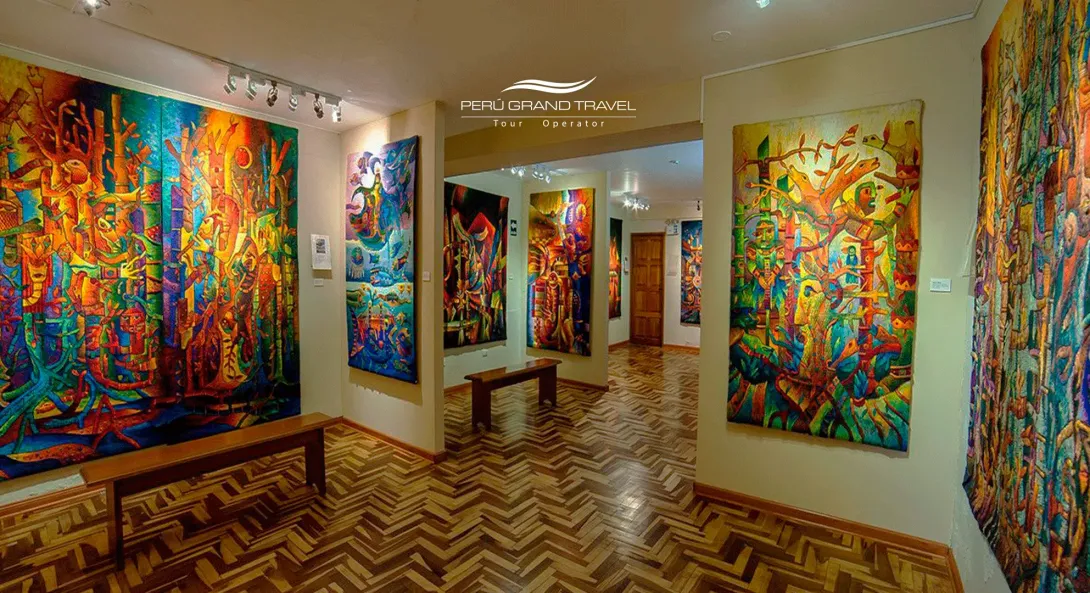
Tucked away near the Plaza de Armas, this is not a traditional historical museum, but rather a contemporary gallery dedicated to the work of Maximo Laura, one of South America’s most celebrated textile artists.
- The Experience: Prepare your senses. Laura’s tapestries are three-dimensional, incredibly vibrant, and blend ancestral Andean motifs with contemporary artistic vision. It feels like walking into a kaleidoscope of Peruvian mythology.
- Why Visit: It proves that the textile arts in Peru are not just historical artifacts, but a living, evolving form of high art.
3. Museo Sulca Textiles
Situated in a beautiful colonial house, this textile museum in Cusco is a hidden gem for those who want to understand the rigorous process behind the garments.
- The Experience: Sulca offers fantastic, interactive exhibits detailing the entire process: from shearing the vicuña and alpaca to the boiling of natural dyes (like cochineal for red and ch’illca for green) and the final weaving.
- The Privilege: They have a remarkable collection of replica pre-Columbian textiles, allowing you to see how ancient cultures dressed before the ravages of time faded their colors.
ADVICE GRAND
Visit in the late morning when the natural light hits the galleries. The way the shadows fall across the complex “Pallay” (patterns) reveals the three-dimensional nature of Incan weaving that you might miss under artificial lights.
US, UK & Aussie Travelers Ask: Where can I buy authentic textiles after visiting the museums?
Our English-speaking guests—who appreciate fine craftsmanship and fair trade—frequently ask where to buy genuine pieces after being inspired by the textile museums in Cusco.
It is crucial to differentiate between the mass-produced, synthetic souvenirs sold in street markets and authentic, hand-woven alpaca or sheep wool textiles. The best place to purchase is directly within the museum shops, particularly at the Centro de Textiles Tradicionales del Cusco (CTTC). When you buy there, 100% of the profits support the specific artisan and their community.
ADVICE GRAND
If you are looking for high-end fashion, seek out boutiques that sell “Baby Alpaca” or “Vicuña.” Vicuña is the finest, most exclusive animal fiber in the world—so luxurious it was once reserved exclusively for the Inca Emperor!
Frequently Asked Questions | FAQ
To ensure your cultural itinerary is flawless, here are the answers to the most common questions regarding the textile museums in Cusco:
1. Do I need to book tickets in advance for the textile museums in Cusco?
Generally, no. Museums like the CTTC and Museo Maximo Laura welcome walk-ins. However, if you are traveling with Perú Grand Travel, your private guide will handle all entrance logistics seamlessly.
2. Are the textile museums in Cusco suitable for children?
Absolutely. The bright colors and live weaving demonstrations (especially at the CTTC) are highly visual and engaging for younger travelers, making it a wonderful family activity.
3. How much time should I allocate for a textile museum in Cusco?
To truly appreciate the artistry without rushing, we recommend dedicating 45 minutes to an hour for each museum. They are the perfect morning activity before enjoying a gourmet Andean lunch.
4. Can I take photos inside a textile museum in Cusco?
Usually, photos are allowed in the demonstration areas but restricted in the historical galleries to protect the ancient dyes from light damage. Always ask your host first!
5. Do they offer weaving workshops?
Yes, some textile museums in Cusco offer short workshops (2-3 hours) where you can try your hand at basic spinning or weaving.
Weave Your Own Andean Legacy Today
My friend, to walk through the textile museums in Cusco is to read the unwritten history of the Andes. It is a sensory journey that connects you directly to the hands, hearts, and history of the Peruvian people. Taking the time to understand this craft elevates your vacation from a simple sightseeing trip to a profound cultural immersion.
🚨 URGENT NOTICE FOR 2026 TRAVELERS:
The world has awakened to the exquisite luxury of Peruvian culture. As we approach the prime travel season (May through October), the demand for our bespoke, culturally immersive itineraries is at an all-time high. The finest private guides—the ones who can truly translate the language of the textiles for you—are booking up rapidly.
Do not leave your cultural experience to chance. You deserve the exclusivity, the seamless logistics, and the deep local connections that only a true Cosmopolitan Host can provide.
Explore our exclusive travel packages today. Let our luxury travel designers curate a flawless itinerary that intertwines the finest textile museums in Cusco with private train rides and gourmet dining. Your Andean masterpiece is waiting to be woven—reserve your privilege before our 2026 calendar is full!