

The Pukara Lithic Museum is one of the most important archaeological museums in southern Peru. Located in the town of Pukara, it preserves extraordinary stone
What Is the Pukara Lithic Museum?
The Pukara Lithic Museum is dedicated to the preservation and exhibition of monumental stone carvings produced by the ancient Pukara culture (ca. 500 BC – 200 AD).
Its collection includes ceremonial sculptures, anthropomorphic figures, and zoomorphic representations carved from volcanic stone.
The museum houses an exceptional collection of carved lithic pieces made from volcanic stone, including anthropomorphic figures, feline representations, and ritual sculptures believed to be linked to fertility, water worship, and ceremonial practices. Many of these works are considered precursors to the artistic and religious iconography later seen in Tiwanaku and Inca cultures.
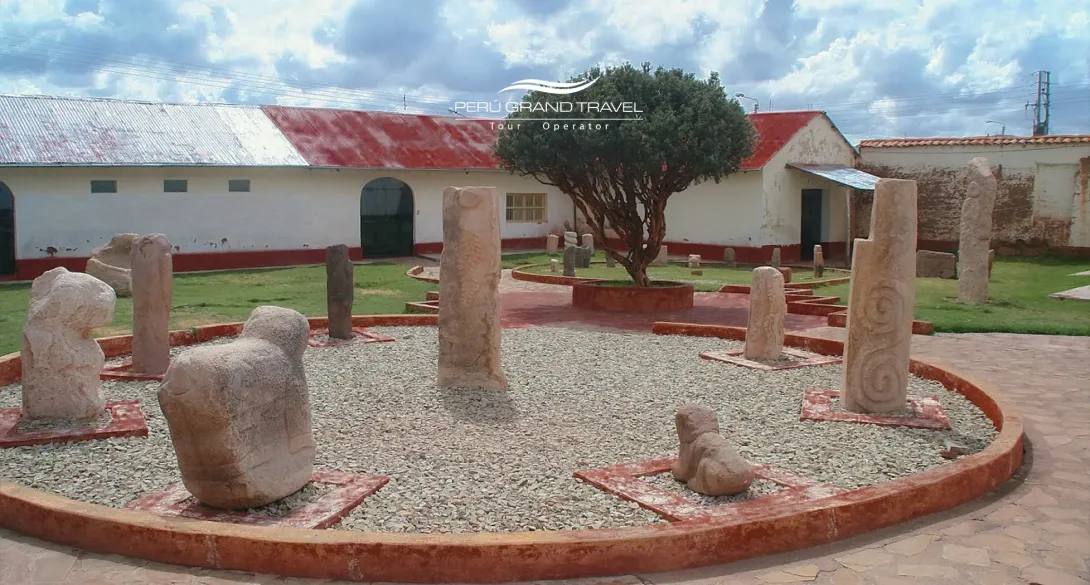
Unlike conventional indoor museums, the Pukara Lithic Museum is designed around an open courtyard, allowing visitors to walk among massive stone monoliths in a setting that echoes their original ceremonial context. This layout creates a direct connection between art, landscape, and Andean cosmology, offering a deeper and more immersive cultural experience.
Today, the Pukara Lithic Museum stands as one of southern Peru’s most important yet lesser-known cultural landmarks, offering valuable insight into the origins of Andean stone art and early religious expression near the Lake Titicaca region.– 200 AD).
Its collection includes ceremonial sculptures, anthropomorphic figures, and zoomorphic representations carved from volcanic stone.
History of the Pukara Culture
Long before the rise of the Inca Empire, a powerful and sophisticated civilization flourished in the highlands of southern Peru. The history of the Pukara culture reveals the origins of Andean ceremonial life, monumental stone art, and religious symbolism that would shape later civilizations of the Andes. Understanding Pukara is key to understanding the deep roots of Andean culture itself.
Origins of One of the First Andean Civilizations
The Pukara culture developed between approximately 500 BC and 200 AD in the northern region of the Lake Titicaca basin, at high altitudes exceeding 3,800 meters above sea level. Despite the challenging environment, Pukara society achieved a high level of organization, becoming one of the earliest complex civilizations in the Andes. Its strategic location allowed it to control trade routes and ceremonial networks connecting the highlands with surrounding regions.
Pukara emerged as a major ceremonial center rather than a purely urban settlement. Large platforms, temples, and public spaces indicate that the site attracted pilgrims, religious leaders, and artisans from across the region. This early concentration of religious authority helped Pukara establish cultural influence well beyond its immediate territory, laying the groundwork for later Andean civilizations.
Cultural and Religious Importance
Religion was the central pillar of Pukara society, deeply influencing its art, architecture, and social structure. The culture is best known for its monumental stone sculptures, which represent powerful symbolic figures associated with fertility, water, animals, and sacred forces of nature. These sculptures were likely used in rituals intended to ensure agricultural abundance and cosmic balance.
Pukara’s religious iconography became a foundational reference for later Andean cultures, particularly Tiwanaku, which adopted and reinterpreted many of its symbols. This continuity highlights Pukara’s role as a spiritual and artistic ancestor within Andean civilization. Through its stone art and ceremonial traditions, the Pukara culture established concepts of sacred space and ritual expression that would endure in the Andes for centuries.
Highlights of the Pukara Lithic Museum Collection
The collection of the Pukara Lithic Museum offers a rare window into the earliest traditions of Andean stone art. Each piece reflects a society where religion, nature, and power were expressed through carefully carved volcanic stone. Walking through the museum is not just a visual experience—it is a journey into the spiritual and symbolic world of the ancient Andes.
Monumental Stone Sculptures
The most striking elements of the museum are its monumental stone sculptures, some weighing several tons. These monoliths were carved with remarkable precision, featuring stylized human faces, animal forms, and hybrid figures. Their scale suggests they were created not as decorative objects, but as powerful symbols meant to dominate ceremonial spaces.
Archaeologists believe these sculptures once stood in temples or ritual plazas, where they served as guardians, deities, or representations of ancestral forces. Their durability and imposing presence reflect the importance of stone as a sacred medium in early Andean belief systems.
Ritual and Ceremonial Artifacts
Many of the sculptures preserved in the museum were likely used in religious ceremonies central to Pukara society. These artifacts point to a culture deeply connected to ritual life, where ceremonies were performed to ensure fertility, agricultural success, and harmony with natural forces such as water and mountains.
The careful placement and repetition of certain figures suggest structured ceremonial practices led by religious elites. These rituals reinforced social cohesion and strengthened the spiritual authority of Pukara as a major ceremonial center in the high Andes.
Iconography and Symbolism
The iconography found in the Pukara Lithic Museum reveals a complex symbolic language. Recurrent motifs—such as feline features, geometric patterns, and stylized facial expressions—represent power, protection, transformation, and the relationship between humans and the natural world.
These symbols did not disappear with the decline of Pukara. Instead, they influenced later civilizations, particularly Tiwanaku and, indirectly, the Inca. This continuity makes the museum’s collection especially valuable for understanding how Andean religious art evolved over centuries.
Architectural Layout of the Pukara Lithic Museum
The architectural design of the Pukara Lithic Museum is intentionally simple and symbolic. Built around a traditional Andean courtyard, the museum allows visitors to walk freely among massive stone sculptures in an open-air environment. This layout mirrors the original ceremonial settings where these monoliths once stood.
By integrating architecture with landscape, the museum reinforces the Andean worldview in which art, nature, and cosmology are inseparable. The open courtyard creates a powerful sense of space and silence, encouraging contemplation and offering a deeper connection to the spiritual legacy of the Pukara culture.
Why Visit the Pukara Lithic Museum?
- Discover one of the oldest sculptural traditions in the Andes
- Understand the roots of Andean religious symbolism
- Experience a lesser-known but culturally rich destination near Lake Titicaca
- Perfect stop on routes between Cusco and Puno
Location and How to Get There
Visiting the Pukara Lithic Museum is both convenient and scenic, making it an ideal cultural stop when traveling through southern Peru. Its location along a major Andean route allows travelers to combine history, landscapes, and archaeology in a single journey.
Where Is the Pukara Lithic Museum Located?
The Pukara Lithic Museum is located in the town of Pukara, approximately 110 kilometers (68 miles) north of the city of Puno. It sits along the main highway that connects Cusco and Puno, a route frequently traveled by visitors exploring the southern Andes and the Lake Titicaca region.
Pukara itself is a small Andean town with deep historical roots, situated near important archaeological remains of the ancient Pukara culture. This proximity allows visitors to experience both the museum and the landscape where the civilization originally flourished.
Best Ways to Visit
There are several convenient ways to include the Pukara Lithic Museum in your itinerary, depending on your travel style and schedule:
- Private transport from Puno or Cusco, offering flexibility and the opportunity to explore nearby sites at your own pace.
- As part of the Ruta del Sol (Sun Route), a popular cultural journey that includes multiple historical stops between Cusco and Puno.
- Guided cultural tours through southern Peru, ideal for travelers seeking deeper historical context and expert interpretation of the site.
Thanks to its accessible location, the Pukara Lithic Museum is an easy yet enriching addition to any cultural itinerary in the high Andes.
Best Time to Visit the Pukara Lithic Museum
The museum can be visited year-round, but the dry season (May to September) offers clearer skies and better travel conditions.
Practical Tips for Visiting
- Allocate 45–60 minutes for the visit
- Bring a guide or visit with a knowledgeable tour operator for deeper context
- Photography is allowed; respect signage and sculptures
- Combine the visit with nearby archaeological remains
Pukara Lithic Museum vs Other Archaeological Museums in Peru
While Peru is home to world-class archaeological museums in major cities, the Pukara Lithic Museum offers a very different and highly distinctive experience. Rather than presenting artifacts removed from their original setting, this museum preserves the cultural legacy of Pukara in the very landscape where the civilization was born.
Large urban museums often focus on extensive collections and broad historical narratives. In contrast, the Pukara Lithic Museum delivers a more intimate and immersive encounter. Visitors walk among monumental stone sculptures in an open courtyard, surrounded by the Andean environment that once shaped the beliefs, rituals, and artistic expression of the Pukara culture. This direct connection between place, art, and history creates a deeper emotional and intellectual impact.
For culturally curious travelers, historians, and archaeology enthusiasts, the museum stands out for its authenticity and sense of discovery. It is not crowded, not commercialized, and not detached from its origins. Instead, it invites reflection and understanding, making it especially appealing to travelers seeking meaningful cultural experiences beyond Peru’s most famous sites.
Frequently Asked Questions About the Pukara Lithic Museum
What are the main exhibits at the Pukara Lithic Museum?
The Pukara Lithic Museum is best known for its monumental stone sculptures carved by the ancient Pukara culture. The main exhibits include large monoliths, anthropomorphic and zoomorphic figures, and ritual stone carvings made from volcanic rock. These pieces reflect early Andean religious beliefs, symbolism, and ceremonial practices.
What are the operating hours for the Pukara lithic artifact display?
The Pukara Lithic Museum generally operates during standard daytime hours, opening in the morning and closing in the late afternoon. Schedules may vary on holidays or during local festivals, so it is recommended to confirm hours locally or through a tour operator before visiting.
How can I book a guided tour at the Pukara Lithic Museum?
Guided tours can usually be arranged on-site with local guides or booked in advance through cultural tour operators that include Pukara as part of their itinerary. Many travelers visit the museum as part of a guided route between Cusco and Puno.
How much does admission cost for the Pukara stone tool collection?
Admission fees to the Pukara Lithic Museum are generally modest and affordable. Prices may vary for national and international visitors, and they are subject to change. It is best to carry small cash and check current rates upon arrival.
Where is the Pukara Lithic Museum located in Peru?
The museum is located in the town of Pukara, approximately 110 kilometers (68 miles) north of Puno, along the main highway connecting Cusco and Puno in southern Peru.
Are there guided tours available at the Pukara lithic museum?
Yes, guided tours are available, either independently with local guides or as part of organized cultural tours. A guided visit is highly recommended, as it helps visitors understand the symbolism, history, and religious significance of the stone sculptures.
What are the opening hours of the Pukara Lithic Museum?
The museum typically opens in the morning and closes in the afternoon. Since hours can change seasonally, travelers are advised to verify the schedule locally or through their tour provider.
What is the best way to get to the Pukara lithic museum from Cusco?
The most convenient way to reach the museum from Cusco is by private transport or as part of the Ruta del Sol (Sun Route) tour, which includes several cultural stops between Cusco and Puno. Public buses traveling toward Puno also pass through Pukara.
Are there any online shops selling replicas from the Pukara Lithic Museum?
Currently, there are no widely known official online shops selling replicas directly from the museum. However, locally made crafts inspired by Andean stone art can sometimes be found in regional markets or artisan shops in southern Peru.
Where can I find lodging near the Pukara lithic museum?
Lodging options near the museum are limited and mostly small local guesthouses. Many travelers prefer to stay in Puno or include Pukara as a stop during their journey between Cusco and Puno, where a wider range of hotels is available.
Final Thoughts: The Timeless Stone Legacy of Pukara
The Pukara Lithic Museum stands as a powerful reminder that the roots of Andean civilization run far deeper than the Inca Empire alone. Through its monumental stone sculptures and symbolic art, Pukara reveals an early society that understood stone not merely as material, but as a sacred medium for expressing faith, authority, and connection to the natural world.
Visiting the museum is an invitation to slow down and reflect—to walk among silent monoliths that once shaped rituals, beliefs, and communal identity in the high Andes. Its setting, scale, and authenticity offer a rare sense of continuity between past and present, landscape and culture.
For travelers seeking more than iconic landmarks, the legacy of Pukara offers depth, meaning, and perspective. It is a timeless chapter of Peru’s ancient history, preserved in stone and still resonating across the Andean plateau today.
More information:
- Visit our English website: Peru Grand Travel
- Visit our Spanish website: Viajes Machu Picchu Tours
- Visit our Portuguese website: Machu Picchu Pacotes