

Discover the most important festivals in Peru, month by month. From the majestic Inti Raymi in June to the vibrant Candelaria in February, plan your trip with our ultimate 2026 guide and experience Peruvian culture!
Peru doesn’t celebrate culture on special occasions only—it celebrates it every single month. From quiet religious ceremonies to massive street festivals filled with music, color, and food, festivals in Peru follow a rhythm that marks the passing of the year and gives each season its own personality.
In this pillar guide, I’ll take you through Peru’s festival calendar month by month, so you can clearly see what happens, when it happens, and why it matters. Think of it as planning the year with a local friend who knows when the streets come alive—and when to arrive to experience Peru at its very best.
Festivals in January: Why Start the Year Celebrating in Peru?
Starting your year with Festivals in Peru allows you to witness the seamless blend of Catholic tradition and local civic pride right from the first week of January. This month is characterized by the warmth of our summer on the coast and the vibrant energy of New Year’s rituals that promise prosperity and new beginnings across the territory.
New Year’s Day – January 1st
We celebrate the first day of the year with rituals of renewal. To kick off the new year and the festivals in Peru, in many Andean communities, this is the time when the Varayoc (local leaders) transfer power. It’s a day to share with family, enjoy traditional foods, and participate in the famous “yellow traditions,” according to which wearing yellow attracts good luck for the coming months.
Three Kings Day – January 6th
This celebration marks the end of the Christmas season. In places like Cusco and Lima, you will see processions where images of the infant Jesus are returned to their traditional places, often accompanied by music and the “Three Kings” riding through the streets.
Anniversary of Lima – January 18th
Our “City of Kings” celebrates its foundation with grand serenades, gastronomic fairs, and cultural performances in the Plaza Mayor. It is the perfect time to explore Lima’s colonial balconies and enjoy a pisco sour as the capital displays its finest metropolitan elegance.
Festivals in February – Do You Know Peru’s Carnivals?
February is the month of unbridled joy. Within the festivals in Peru, it is the peak of the rainy season in the Andes, which means the earth is blooming, and the people are thanking the Pachamama with dance. It is wet, it is loud, and it is unforgettable.
Candelaria Festival in Puno – February 2nd
This is the big one. The Fiesta de la Candelaria is not just a party; it is a UNESCO Intangible Cultural Heritage.
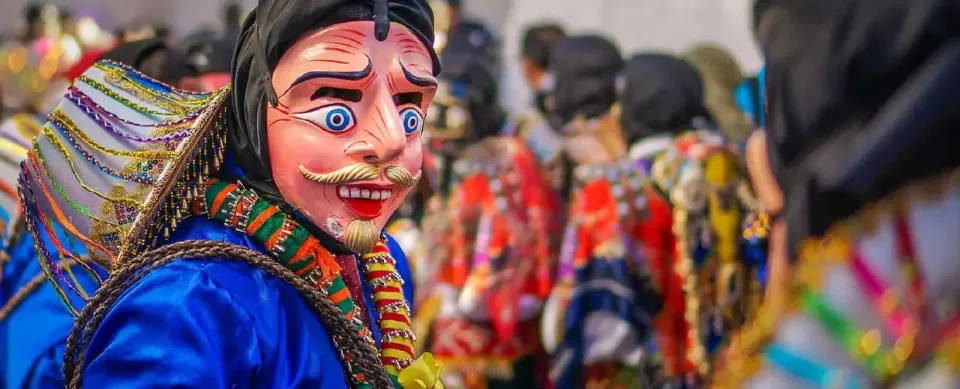
The Spectacle: Imagine 40,000 dancers and 5,000 musicians taking over the streets of Puno on the shores of Lake Titicaca. The highlight is the Diablada (Dance of the Devils). The masks are terrifyingly beautiful works of art—bulging eyes, twisted horns, and embroidery that weighs up to 20 kilos per dancer.
The Feeling: At 3,800 meters above sea level, your heart will pound—partly from the altitude, but mostly from the thundering vibration of hundreds of tubas and drums echoing off the lake.
Pisco Sour Day – First Saturday of February (Approx. Feb 7th)
We dedicate a whole day to our national spirit.
The Taste: Fountains in Lima have been known to flow with Pisco Sour instead of water on this day. It is a celebration of citrus and strength. It is the perfect excuse to learn the difference between the aromatic Italian grape and the robust Quebranta. Expect free tastings in almost every plaza.
Carnival in Cusco & Cajamarca – (Variable, usually mid-Feb)
Cajamarca: Known as the “Capital of Carnival,” this is a battle of joy. The “Ño Carnavalón” (King Momus) is paraded through town before being symbolically buried. Expect to be covered in paint, talcum powder, and water.
Cusco’s Cortamonte: In the neighborhoods, locals dance around a Yunza—a tree decorated with gifts (buckets, blankets, clothes). Couples take turns chopping the tree with an axe until it falls, and the crowd rushes to grab the prizes.
A Traveler’s Warning: February is water-fight season. If you walk the streets, you are a target for water balloons thrown by children from balconies. Do not get angry; get a raincoat and join the fun!
Festivals in March: What Historical Treasures are Celebrated in Autumn?
In the festivals in Perú, march blends historical remembrance with religious preparation, offering quieter but meaningful celebrations.
Foundation of Trujillo – March 5th
Trujillo commemorates its Spanish foundation with cultural performances, exhibitions, and events that highlight its colonial heritage and pre-Columbian roots.
Palm Sunday in Cusco – (Variable, e.g., March 29th)
This marks the beginning of Holy Week, and in Cusco, it is unique in the world.
The Lord of Earthquakes: We do not just wave palms; we carry the Taitacha Temblores (Lord of Earthquakes). This statue of Christ has blackened skin from centuries of incense smoke and pollen.
The Atmosphere: The procession is solemn, smelling of Palo Santo and the distinct crimson ñucchu flowers thrown by the faithful from balconies, creating a carpet of red petals that symbolizes the blood of the Andes.
Festivals in April: When Does the Perfect Season for Machu Picchu Begin?
April is when the rainy season fades, and conditions improve across the Andes. Subtly, it also marks the beginning of a better season to visit Machu Picchu, with clearer skies and greener landscapes. And it sets the stage for the upcoming festivals in Peru, especially in Cusco.
Important: While not a “festival” per se, April marks the insider’s opening of the prime Machu Picchu season. The skies clear up, revealing the sharp peaks of the Andes, making it the photographer’s favorite month to capture the sunrise without the freezing crowds of June.
Holy Thursday and Good Friday – (Variable, e.g., April 2nd & 3rd)
Ayacucho: If you seek religious intensity, go here. The candlelit processions at dawn are hauntingly beautiful, with thousands of devotees walking in silence.
Cusco’s “12 Dishes”: On Good Friday, the city smells of soup and seafood. Tradition dictates we fast from red meat but feast on the “12 Dishes” (12 platos)—a marathon of soups, fish, and desserts honoring the apostles. It is a culinary challenge you will want to accept.
International Museum Day – April 18th
While celebrated globally, Peru’s museums—from the Larco in Lima to the Museo Inka in Cusco—often offer special events and night tours. As an “Anfitrión Cosmopolita,” I recommend visiting the private collections that house our most precious pre-Columbian gold and textiles.
Festivals in May: How Does the Harvest Season Influence Our Traditions?
May is a month of gratitude to the earth and the cross. The Festivals in Peru during this time are deeply tied to the agricultural calendar and the beginning of the clear-sky season, offering some of the most photogenic mountain rituals you will ever see.
Fiesta de las Cruces (Festival of the Crosses) – May 3rd
Across the highlands, communities carry large, decorated crosses to the tops of sacred hills (Apus) to bless the coming harvest. It is a festival of music, heavy lifting, and community spirit.
Lord of Qoyllur Rit’i (Variable Date in May/June)
At Festivals in Peru, this is perhaps the most spiritual pilgrimage in the Andes. Thousands of people walk to the Sinakara glacier. It’s an intense, powerful, and deeply moving experience.
Did you know? The Ukukus (half-man, half-bear) are the only ones allowed to climb the glacier to bring down sacred ice for the community.
Festivals in June: Is This the Most Important Month for Cusco?
June is, without doubt, the most significant month for Andean identity, hosting the most iconic of all Festivals in Peru: the Inti Raymi. For those of us born in Cusco, June is a month of constant music, parades, and a renewed sense of pride in our Inca heritage.
Offering to Pachamama – June 1st
The month begins by paying rent to the landlord: Mother Earth. Shamans perform ancient rituals with coca leaves, animal fat, and chicha (corn beer), burying these offerings to ask for permission and safety for the upcoming festivities.
Corpus Christi – June 4th (and the Octave)
One of the most important festivals in Peru, this is a heavyweight procession—literally. Fifteen massive statues of saints and virgins come down from their steep neighborhood churches to “visit” each other in the Cathedral.
The Taste of June: You cannot leave without trying Chiriuchu. It is a cold, festive platter featuring guinea pig, chicken, seaweed, fish eggs, toasted corn, and cheese. It sounds like an odd mix, but it is the savory, complex flavor of Cusco’s history on a plate.
Did you know? The name Chiriuchu comes from two Quechua words: “chiri”, which means cold, and “uchu”, which means chili pepper. Thus, we can understand it as “cold food with a spicy touch”.
Flag Day – June 7th
Commemorating the Battle of Arica. It is a patriotic day, marked by parades of schoolchildren and military personnel reaffirming their loyalty to the red and white flag, filling the plazas with martial music.
Inti Raymi (Cusco) & Festival of San Juan (Iquitos) – June 24th
The biggest day of the year.
Inti Raymi (Cusco): The Festival of the Sun. It is a theatrical masterpiece where the Inca Emperor calls out to the Sun God from the fortress of Sacsayhuaman. The beating of drums, the blowing of conch shells (pututus), and the rainbow colors of the four suyos (regions) create a spectacle that vibrates in your chest.
Festival of San Juan (The Jungle): In Iquitos and Pucallpa, the vibe is tropical. The jungle throws a massive party by the river to celebrate the water. Everyone eats Juanes—rice tamales wrapped in bijao leaves—and jumps into the river for a “blessed” bath.
National Ceviche Day – June 28th
A day to honor our UNESCO-recognized dish. Every restaurant competes to serve the freshest catch. My recommendation? Try a classic Limeño Ceviche with sole, or an Andean Trout Ceviche with tumbo fruit passion.
Did you know: June alone hosts more major festivals than any other month in Peru.
Festivals in July: How Do We Celebrate Our National Pride?
July is the month of “Patria” (Motherland). Festivals in Peru during July are marked by red and white colors, military parades, and a shared sense of independence. It is also a significant month in our modern history, and the discovery of our greatest archaeological treasure.
Discovery of Machu Picchu – July 7th
While locals knew of its existence, this date marks Hiram Bingham’s arrival in 1911 to the wider world. There are cultural galas in Aguas Calientes, folk music, and special lighting ceremonies at the citadel. It is a festive time to be in the town below the ruins.
Virgin of Carmen in Paucartambo – July 16th
Where: Paucartambo (4 hours from Cusco).
The Magic: This is my personal favorite of the Festivals in Perú. Masked dancers perform on the white balconies and clay rooftops of the town. The “Saqras” (devils) tease the crowd, while the “Qhapaq Negros” sing songs of such longing they might make you weep. The festival ends with a drive to Tres Cruces to watch the sun rise over the Amazon basin—a view that looks like the edge of the world.
National Holidays (Fiestas Patrias) – July 28th & 29th
Our Independence Day. The entire country turns red and white.
The Atmosphere: On the 28th, families gather for grand lunches (usually Pollo a la Brasa or Ceviche). On the 29th, the Great Military Parade stops the nation. It is a time of extreme national pride.
Traveler Note: Expect everything to be booked; planning is essential as Peruvians travel massively internally.
Festivals in August: What Are the Key Civic and Religious Dates?
August is a month of civic anniversaries and devotion to our saints. The Festivals in Peru during August allow you to see the regional pride of Arequipa and the deep religious fervor of Lima’s faithful.
Battle of Junín – August 6th
Commemorating a pivotal cavalry battle for independence. In the freezing pampas of Junín, there are reenactments where you can hear the thundering hooves of horses and feel the cold wind that shaped our history.
Anniversary of Arequipa – August 15th
The “White City” throws a party that rivals any in the country.
The Corso: The Corso de la Amistad, “The Course of friendship” is a massive parade that lasts hours, featuring floats and the beauty queens of Arequipa.
The Food: This is the time to eat. Rocoto Relleno (spicy stuffed peppers) and Adobo (pork stew) are served in the “picanterías” with communal tables and overflowing glasses of Chicha de Jora.
Saint Rose of Lima – August 30th
She is the Patron Saint of the Americas.
The Tradition: Thousands flock to her sanctuary in downtown Lima to throw letters with petitions into a deep wishing well. Watching the devotion of people dropping rose petals and letters is a moving display of hope.
Festivals in September: How Do We Celebrate Global Connection?
September is a calmer month, ideal for those who prefer to experience Festivals in Peru through the lens of international exchange and spring beauty. It is a time for travelers to connect with the professional side of our hospitality.
International Tourism Day – September 27th
As a destination of choice, Peru celebrates this day with special tours, free museum entries, and forums on sustainable travel. It is a day where we, as your hosts, reaffirm our commitment to showing you the best of our world. We take this day to look you in the eye and say “Tupananchiskama” (Thank you for visiting us).
Did you know? Tupananchiskama It is a beautiful Quechua word that means “until we meet again” or “until life brings us together again,” and is used as a profound form of farewell that holds the hope and promise of a future reunion, reflecting the continuity of bonds beyond temporary separation.
Festivals in October: What is the “Purple Month” in Lima?
October is arguably the most atmospheric month in our capital. Known as the “Mes Morado,” it hosts one of the largest religious festivals in Peru and the world, transforming the gray streets of Lima into a sea of purple devotion.
Battle of Angamos – October 8th
A national holiday honoring Admiral Miguel Grau, our greatest naval hero. It is a day of patriotic reflection and military honors.
Anniversary of Ica – October 25th
The land of vineyards and dunes celebrates its foundation. It is a perfect time to visit the Huacachina oasis and taste the best pisco and wine the region has to offer.
Lord of Miracles – October 28th
The main date of the Feast of Saint Jude Thaddeus in Lima is October 28th and extends to the following two Sundays, when the image of the saint is paraded through the main streets of the historic center
Day of Creole Song & Halloween – October 31st
A night of duality. While the youth celebrate Halloween, the heart of Lima vibrates with Música Criolla—guitars, cajones, and waltzes that tell the story of the coast. Do not miss the chance to hear a peña in Barranco on this night.
Festivals in November: How Do We Honor Our Ancestors?
November is a month of profound connection between the living and the dead. The Festivals in Peru during the first two days of the month are a beautiful, touching display of the Andean view that death is simply another stage of life.
All Saints Day – November 1st
A day to celebrate the living saints among us. In Cusco, the tradition is culinary: we eat Lechón (roasted suckling pig) that is crispy on the outside and tender on the inside, accompanied by Tamales.
Day of the Dead – November 2nd
Unlike the somber tone in some cultures, here it is a picnic with our ancestors.
The Tradition: Families visit cemeteries not to cry, but to share a meal and beer with the departed.
The Tanta Wawa: You must try the Tanta Wawa (Baby Bread)—sweet breads shaped like swaddled babies or horses, decorated with colorful candies. They represent the cycle of life and are gifted between friends and family.
Festivals in December: Why is Christmas Unique in the Andes?
The year concludes with a mixture of religious solemnity and the warmth of the holiday season. Festivals in Peru in December are particularly special in Cusco, where the artisan tradition takes center stage in a way that feels like a fairy tale.
Feast of the Immaculate Conception – December 8th
A national holiday is celebrated with beautiful processions. In the Colca Valley, the celebration is particularly stunning, with dancers wearing the region’s distinctively embroidered, colorful costumes against the backdrop of the canyon.
Battle of Ayacucho – December 9th
The final battle that secured South American independence. Ayacucho, the “City of Churches,” hosts huge reenactments on the Quinua pampa. It is a celebration of liberty and Latin American brotherhood.
Santurantikuy Fair – December 24th
In the Plaza de Armas of Cusco, the largest arts and crafts fair in the country takes place for one day only.
The Treasure: Artisans travel from remote villages to sell moss, grasses, and the famous “Niño Manuelito” (Andean Baby Jesus). The craftsmanship of these clay figures—often depicted with a thorn in his foot or a tear on his cheek—is world-class.
Christmas & New Year’s Eve – December 25th & 31st
Christmas is a midnight celebration with Panetón and hot chocolate. For New Year’s Eve, the tradition is to run around the block with a suitcase to ensure a year of travel—a ritual I personally follow every year! This brings an end to the festivals in Peru, and we are now preparing to start the next year.
Frequently Asked Questions About Festivals in Peru
How many festivals are celebrated in Peru each year?
Peru celebrates more than 3,000 festivals annually across its three regions (coast, highlands, and jungle). There’s always something to celebrate somewhere in the country.
Which is the best month to see festivals if I have limited time?
June is the most saturated month for festivals in Peru, especially in Cusco. If you want to see the maximum amount of culture in one week, the week leading up to June 24th is unbeatable.
Do festivals affect travel logistics?
Yes. During the main festivals in Peru (such as Inti Raymi, Candelaria, or Independence Day), the demand for flights and hotels skyrockets. It’s essential to book transportation and accommodation several months in advance.
Do public services close during these dates?
On national holidays (like July 28 or December 25), banks and many shops will close. However, the tourism industry—hotels, trains, and major restaurants—operates at full capacity to serve our guests.
Can travelers participate in festivals?
Many festivals in Perú allow participation, whether by joining a dance or taking part in a public ritual. However, it’s always best to ask locally or follow your guide’s instructions to understand the boundaries of each tradition.
What is the most famous festival in Peru, and how is it celebrated?
The most famous festival in Peru is, without a doubt, the Inti Raymi (Festival of the Sun), a massive theatrical re-enactment of the ancient Inca winter solstice ceremony held every June 24th in Cusco.
Before Your Trip – Why Planning Your Trip Around Festivals in Peru Changes Everything
As you can see, our land is a permanent stage. Festivals in Peru are our way of telling the world who we are, where we came from, and why we are so proud of our heritage. There is a celebration for every traveler: the explorer, the gourmand, the devotee, and the dreamer.
At Peru Grand Travel, we don’t just want you to see these festivals; we want you to feel them. From securing the best seats for Inti Raymi to finding the most authentic peña in Lima, we are here to ensure your journey is as impeccable as a perfectly tailored suit.
Which month shall we choose for your first celebration in Peru?
We invite you to explore our offers at festivals! Your experience in Peru is just one step away! Contact us now and start living the unique experience you’ve always dreamed of.
More information:
- Visit our English website: Peru Grand Travel
- Visit our Spanish website: Viajes Machu Picchu Tours
- Visit our Portuguese website: Machu Picchu Pacotes