

Discover the Magic of the Archaeological Complex of Chinchero: Incan Treasures and Colonial Blends await you in the Peruvian Andes.
Immerse yourself in the millennial legacy of the heart of the Peruvian Andes with the Archaeological Complex of Chinchero. This fascinating site, nestled on the outskirts of Cusco, is a cultural treasure that blends the grandeur of the Inca civilization with a colonial touch. Venture into a land steeped in history, where ancient ruins and a rich cultural heritage intertwine to offer a unique and unforgettable experience.
Chinchero, with its archaeological remnants and imposing landscapes, is much more than a conventional tourist destination. It’s a journey through time to the roots of a enduring civilization, a living testament to the architectural mastery of the Inca and an encounter with the essence of Peruvian history.
History of Chinchero
The history of the Archaeological Complex of Chinchero dates back to pre-Columbian times when this enclave was a significant cultural, religious, and agricultural center of the Inca Empire. It is believed to have been founded by the Inca emperor Yupanqui, becoming a key point for agricultural production due to its terraced fields and ingeniously designed irrigation system.
After the arrival of the Spanish conquistadors, Chinchero underwent a significant transformation. Churches were built on the foundations of ancient Inca temples, marking the beginning of a unique cultural fusion between indigenous traditions and colonial influences.
Cultural resistance and the preservation of ancestral traditions have been a distinctive feature of Chinchero over the centuries. Its proud inhabitants keep alive the textile craftsmanship inherited from their Inca ancestors, passing down skills and techniques from generation to generation.
Today, the Archaeological Complex of Chinchero stands as a silent witness to Inca greatness and the intricate history of the Spanish conquest. It is a place where the past intertwines with the present, inviting visitors to delve into the depths of a rich and diverse history that endures into modern times.
How to Get to Chinchero?
Reaching the mystical Archaeological Complex of Chinchero is a journey that will immerse you in the breathtaking landscapes of the Peruvian Andes. From the city of Cusco, the journey to Chinchero, about 28 kilometers away, offers various options for travelers.
- Road Route from Cusco
The most common and accessible way to reach Chinchero is through the road connecting Cusco to Urubamba. From the center of Cusco, you can take a taxi, private transport, or even public transportation such as shared vans or minibusses, which frequently make this journey.
- Scenic Route from the Sacred Valley
Another scenic route is from the Sacred Valley of the Incas. Travelers can choose a route passing through iconic places like Pisac or Urubamba, enjoying spectacular views of the Andean landscapes before reaching Chinchero.
- Travel Agencies
For a more enriching experience, some tour operators offer guided tours from Cusco or the Sacred Valley that include a visit to Chinchero, providing detailed information about the site and its surroundings.
It is important to consider weather conditions and the season when planning the trip, as altitude and climate can influence the experience. Additionally, it is recommended to check in advance for transportation schedules and availability to ensure a smooth arrival at this historic and cultural corner of the Peruvian Andes.
What to See in Chinchero?
The Archaeological Complex of Chinchero is a true treasure trove of historical and cultural wonders that captivate those who visit. While exploring this site, visitors encounter a fascinating blend of Inca remains and Spanish colonial influence, offering a enriching and unique experience.
- Inca Archaeological Ruins
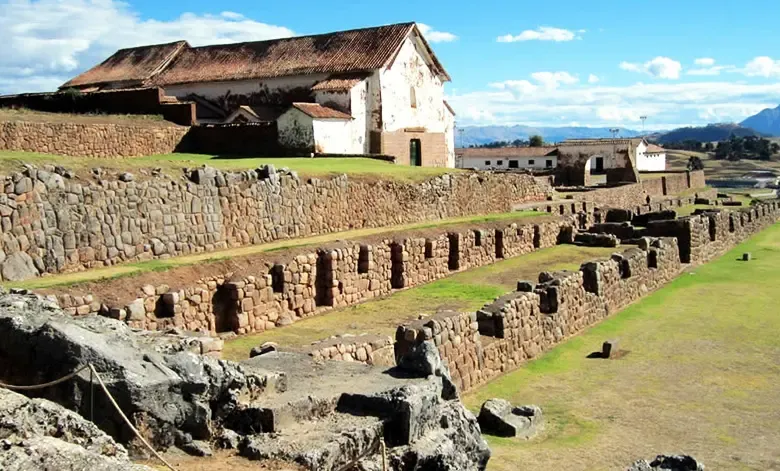
The Inca ruins of Chinchero are the heart of this complex. The impressive stone structures, terraced agricultural fields, and remnants of ancestral temples reveal the skill and advanced engineering of this pre-Columbian civilization.
- Colonial Church of Chinchero
On the foundations of ancient Inca temples stands the colonial church of Chinchero, a striking example of the fusion between Inca architecture and Spanish influence. Visitors can appreciate the beauty of its construction and the historical richness it houses.
- Artisan Market
Chinchero’s artisan market is a must-visit. Here, locals display and sell their colorful weavings, textiles, and crafts, keeping alive the textile tradition inherited from their Inca ancestors. Visitors have the opportunity to acquire unique and authentic pieces as a souvenir of their visit.
- Natural Landscapes
In addition to its historical sites, Chinchero offers stunning natural landscapes. The surroundings of the complex provide panoramic views of the Peruvian Andes, turning every moment into an unforgettable postcard.
Exploring Chinchero is diving into a journey through time, where history, culture, and natural beauty intertwine to offer a enriching and captivating experience for visitors.
Admissions, Hours of Operation, and Fees
Access to the enigmatic Archaeological Complex of Chinchero offers visitors the opportunity to immerse themselves in the rich history of this region. To fully enjoy this destination, it is important to take into account details about admissions, hours of operation, and fees:
- Admissions and Hours
The Archaeological Complex of Chinchero is open to the public every day of the week, from Monday to Sunday.
The opening hours are from 8:00 a.m. to 5:00 p.m., allowing visitors to explore its historical and cultural wonders during this period.
- Entrance Fees
Entry to the archaeological site of Chinchero is included in the Partial Cusco Tourist Ticket 3, which has a cost of 70 Peruvian soles.
Peruvian citizens and local residents can enjoy differentiated rates, subject to the regulations of the Ministry of Culture of Peru. It is recommended to check the updated fees at the time of the visit.