

Explore The Cathedral of Puno, a jewel of Mestizo Baroque. Learn about its history, altitude tips, and why it's a must-see among the grand cathedrals in Peru.
Welcome, my dear traveler. If we were standing in the Plaza de Armas of Puno right now, the first thing to steal your breath wouldn’t be the altitude (though at 3,827 meters, it commands respect). It would be the facade of the Cathedral of Puno.
In a region defined by the deep blues of Lake Titicaca and the stark beauty of the Altiplano, this building stands as a testament to resilience and artistry. Unlike the opulent, gilded churches of Cusco or Lima, the Cathedral of Puno is darker, stronger, and fiercely indigenous. It is a prime example of “Mestizo Baroque”—a style where Spanish structure meets Andean soul.
As your host, let me guide you through the stone carvings, the history, and the quiet spirituality of this sacred place. Whether you are passing through on your way to the floating islands or staying for the Virgin of Candelaria festival, this cathedral is the anchor of the city. Let’s step into the history of the Altiplano.
What is the history of the Cathedral of Puno?
The Cathedral of Puno (Basilica Cathedral of Saint Charles Borromeo) is relatively young compared to other cathedrals in Peru, but its story is intense.
Built in the 18th century (completed in 1757), it sits on the site of an older, smaller church known as the “Iglesia de la Villa.”
- The Architect: It was designed by the Peruvian architect Simón de Asto. His name is important because he wasn’t just copying European styles; he was interpreting them through an Andean lens.
- The Purpose: It was built to serve the growing mining population and to assert the Catholic presence in a region deeply connected to the earth deities (Pachamama).
A Survivor of Fire and Time
The cathedral has withstood centuries of harsh weather, political changes, and even a fire in 1930 that damaged the interior. Yet, the stone facade remains untouched, a symbol of the enduring faith of the Puno people.
For a broader look at the religious architecture of the country, I invite you to read our pillar guide on Cathedrals of Peru.
DID YOU KNOW?
The Stone: The cathedral is built from volcanic stone, likely andesite. Its dark, reddish-brown hue is unique among Peruvian cathedrals, giving it a warm glow at sunset that photographers love.
The Cathedral of Puno vs. The World: A Study in Contrast
When travelers ask, “Where is the biggest Catholic cathedral in the world?” (the answer being St. Peter’s in the Vatican or Seville for Gothic volume), they are often looking for scale. But here in the Altiplano, size isn’t the metric that matters. Identity is.
While the Cathedral of Cusco stands as the “Grand Dame” of the Andes—a massive statement of conquest built atop an Inca palace—the Cathedral of Puno tells a different story. It is a Basilica Minor (a title granted by Pope Paul VI in 1963) that trades sheer volume for intricate, localized artistry.
The Mestizo Difference
What makes Puno stand out among other cathedrals in Peru? It is the “Mestizo Baroque” style.
- Cusco: Represents power. The architecture is heavy, imposing, and filled with gold to impress.
- Puno: Represents adaptation. The facade here is a conversation between cultures. If you look closely at the portal, you will find carvings of papayas and pineapples next to saints—fruits that don’t even grow at this altitude! You will see sirens playing the charango (Andean guitar). It is intimate, artistic, and deeply local.
Architectural Journey
If you are traveling the popular route from Cusco to Puno, paying attention to this shift is fascinating. You move from the Imperial, gilded style of the north to the starker, stone-focused beauty of the south.
IMPORTANT FACT
The Glow: Unlike the gray limestone of Cusco or the beige adobe of Lima, the Cathedral of Puno is built from a distinct reddish-brown volcanic stone (andesite). During the “Golden Hour” just before sunset, the stone absorbs the light and seems to glow from within, creating a warmth that defies the cold Puno air.
To help you understand the unique position of this cathedral, here is a quick comparison with its more famous cousins.
For more on the sacred sites of the region, check our dedicated guide on Churches in Peru 2026.
What time does the Puno Cathedral open?
Unlike museums with strict schedules, the Cathedral of Puno is an active house of worship.
- Mass Times: Usually open early in the morning (6:00 AM – 8:00 AM) and in the evenings (5:00 PM – 7:00 PM) for mass.
- Tourist Visits: The best time to visit for sightseeing is generally between 10:00 AM and 12:00 PM, or just before the evening mass.
- Entrance Fee: Unlike Cusco, entry is often free, though a small donation is appreciated to help maintain the structure.
ADVICE GRAND
Respect the Silence: Because it is free and open, many locals use it for quiet prayer throughout the day. Please remove your hat, keep your voice low, and avoid using flash photography during services.
Who is this experience for? | Traveler Profile
Visiting the Cathedral of Puno appeals to the sophisticated traveler who looks beyond the obvious.
- The Art Lover: You will spend twenty minutes just staring at the facade, finding the hidden Andean symbols (papayas, monkeys, and pumas) carved into the stone.
- The Spiritual Seeker: There is a palpable energy here. It is a place to light a candle and offer a prayer for your journey.
- The Photographer: The contrast of the dark stone against the often piercingly blue sky of Puno creates incredible images.
It pairs perfectly with a morning boat trip to Lake Titicaca. Start with the expansive nature of the lake and end with the grounded history of the plaza.
For ideas on what else to pair this with, read our guide on Things to Do in Puno 2026.
What festivals happen at the Cathedral? The Stage of the Andes
The Cathedral of Puno is not merely a silent witness to history; once a year, it becomes the pulsating heart of one of the biggest cultural explosions in South America.
In early February, during the Virgin of Candelaria festival (recognized by UNESCO as Intangible Cultural Heritage), the Plaza de Armas transforms from a quiet square into a stadium of faith and folklore.
- The Solemn Beginning: It starts inside. A high mass is held, honoring the “Mamita Candelaria.” The cathedral is packed to the rafters with devotees holding candles, the scent of incense thick in the air, and the murmur of prayers creating a hum of anticipation.
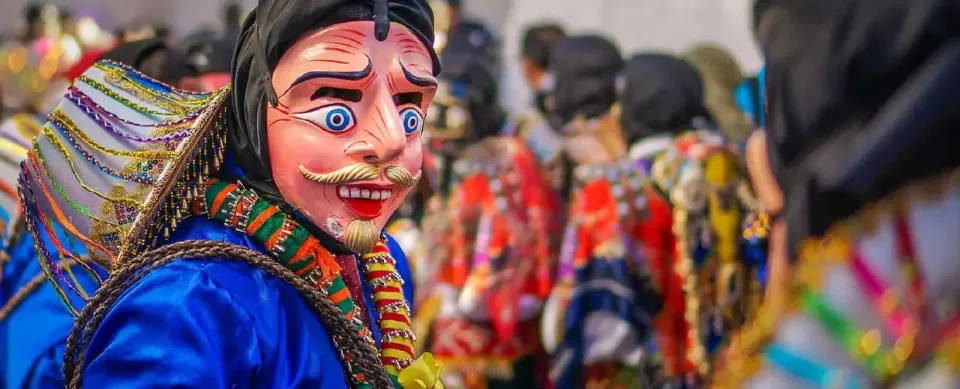
- The Explosion of Joy: The moment the statue of the Virgin is carried out through the massive wooden doors of the Cathedral, the silence shatters. Thousands of musicians blast their brass instruments, and tens of thousands of dancers—dressed in costumes that weigh up to 20 kilos—begin their rhythmic march.
- The Contrast: It is a visual masterpiece. You have the stoic, dark stone facade of the 18th-century church standing as a backdrop to the swirling, neon-bright colors of the Diablada (Devil Dancers). The ancient stone seems to vibrate with the stomping of feet and the beat of the drums.
If you can time your visit for February, you won’t just see a building; you will see the Cathedral acting as a living participant in the culture, bridging the gap between the divine and the human.
Want to dive deeper into this experience? Read our complete guide to the spectacle here: Virgin of Candelaria 2026.
What is the altitude of Puno, and how does it affect your visit?
Puno sits at an elevation of 3,827 meters (12,556 feet) above sea level, making it one of the highest cities in the world; therefore, visiting the Cathedral of Puno requires a slow pace and proper acclimatization. As your host, I must emphasize that the “Grand Class” way to travel is to listen to your body.
When you walk toward the Cathedral of Puno, you might find yourself out of breath. This is normal! The air here has about 40% less oxygen than at sea level.
- Take it slow: The walk from the lake to the Plaza de Armas is uphill.
- Stay hydrated: Water is your best friend in the Altiplano.
- Advice Grand: Plan your visit to The Cathedral of Puno for your second day in the city. Spend your first day resting and enjoying a light meal to let your heart adjust to the sky-high altitude.
How to dress for visiting the Cathedral?
Puno is cold. The high altitude means the air is thin and the wind can bite.
- Layers: Even if it is sunny outside, the interior of the thick-walled cathedral will be cool. Wear a warm jacket or a high-quality alpaca sweater.
- Modesty: As with all churches in Peru, avoid shorts or sleeveless tops (though in Puno, you’ll likely want to be covered up for warmth anyway!).
- Comfortable Shoes: The plaza is cobblestoned. Leave the heels at the hotel.
Tips for visiting Puno and the Cathedral
As your host, I want your experience to be flawless.
- Acclimatize: Puno is higher than Cusco. Do not rush. Walk slowly around the cathedral. If you feel dizzy, sit in the pews and rest.
- The Light: The best photos of the exterior are taken in the late afternoon when the sun hits the facade directly, making the reddish stone glow.
- Combine it: The cathedral visit takes about 30-45 minutes. Combine it with a visit to the Dreyer Museum nearby or a walk down Jirón Lima for coffee.
For a broader look at Peruvian festivities, don’t forget to check our 7 Most Famous Peruvian Festivals guide.
IMPORTANT FACT
The Altitude: Puno is at 3,827 meters (12,555 feet). The Cathedral stairs might leave you breathless literally and figuratively. Take your time.
Frequently Asked Questions | FAQ
What is the history of the Cathedral of Puno?
It was built in the mid-18th century (completed in 1757) by architect Simón de Asto. It replaced an older church and stands as a prime example of the Mestizo Baroque style, blending Spanish design with indigenous symbols.
What time does the Puno Cathedral open?
It is generally open daily for morning mass (approx. 6 AM – 8 AM) and evening mass (5 PM – 7 PM). Tourist visits are best during mid-morning or mid-afternoon when services aren’t in session.
Is the Cathedral of Puno free?
Yes, the entrance is typically free for visitors, though a small voluntary donation is recommended to support maintenance.
What is unique about the architecture?
The facade is carved in “Mestizo Baroque,” featuring indigenous elements like local flora (cantuta flowers) and fauna (sirens playing Andean instruments) integrated into Christian iconography. The dark volcanic stone gives it a distinctive look.
Is Puno worth visiting?
Absolutely. Beyond the Cathedral, it is the gateway to Lake Titicaca, the Uros floating islands, and the incredible Sillustani burial towers. It offers a unique cultural landscape found nowhere else in Peru.
Can you take photos inside?
Photography is usually permitted when the mass is not in session, but always check for signs or ask the caretaker. Avoid using flash to respect the space and artwork.
Is Puno safe for tourists?
Yes, Puno is generally safe for American and international tourists. As in any city, keep your belongings close in crowded areas like the Plaza de Armas during festivals.
Is the Cathedral of Puno the main church in the city?
Yes, it is the mother church of the Diocese of Puno and the most important religious building in the region.
How much time should I spend at the Cathedral?
Allocate at least 45 minutes to appreciate both the exterior carvings and the interior altars of The Cathedral of Puno.
The Stone Heart of the Altiplano
My friend, the Cathedral of Puno, is more than a religious site. It is an anchor. It has stood watch over the city through rebellions, festivals, and the quiet passage of time.
Visiting it is a moment of connection—not just with the divine, but with the hands that carved the stone centuries ago.
At Peru Grand Travel, we believe that luxury is about understanding the soul of a place. We are ready to guide you to the shores of Titicaca and the doors of this magnificent temple.
Are you ready to discover the secrets of Puno?
Contact us today, and let’s plan your journey to the roof of the world.
We invite you to explore our Peru packages. Your experience in Peru is just one step away. Contact us now and start living the unique adventure you’ve always dreamed of.
More information:
- Visit our English website: Peru Grand Travel
- Visit our Spanish website: Viajes Machu Picchu Tours
- Visit our Portuguese website: Machu Picchu Pacotes