

Discover the wild and vibrant Carnival in Lima, Peru. From water fights to traditional Yunzas. Learn when to go, what to expect, and how to survive the splash zone.
Welcome, my dear traveler. If we were sipping a Pisco Sour on a rooftop in Miraflores right now, watching the sun dip into the Pacific, I would tell you that Peru has two faces. There is the serious, majestic face of Machu Picchu and the sacred temples. And then, there is the mischievous, vibrant face of February. I am talking about Carnival in Lima, Peru.
To the uninitiated, it might look like chaos. Water balloons flying from balconies, people covered in colorful paint, and trees being chopped down in the middle of a dance floor. But to the sophisticated observer—and I know you are one—it is a celebration of life, abundance, and community. It is a time when the usually reserved Limeños let their hair down (and get it wet).
As your host, let me guide you through the splashes and the laughter. Let’s unravel the mystery of this celebration and how you can experience it with both joy and savvy. Let’s dive in (literally).
When is the Carnival in Lima, Peru? | Mark Your Calendar
The Carnival in Lima, Peru, is not a single day; it is a season. It aligns with the Catholic calendar, taking place in the weeks leading up to Ash Wednesday and Lent.
- The Season: Generally, every Sunday in February is “play day.”
- The Big Days: The main festivities usually peak around mid-to-late February. In 2026, keep your eyes on the weekends.
A Sunday Ritual
If you are walking through the neighborhoods of Barranco or Chorrillos on a Sunday afternoon in February, be alert. This is when the Carnival in Lima, Peru, truly comes alive. Families gather, buckets are filled, and the streets become a playful battlefield.
If you are planning your trip, arriving in February guarantees you will see a side of Lima that few guidebooks explain properly. It is hot, it is humid, and it is incredibly fun.
DID YOU KNOW?
The Heat Factor: February is the peak of summer in Lima. The water fights originally started as a way to cool down in the days before air conditioning! It is a practical tradition that turned into a party.
Is Carnival celebrated in Peru like in Brazil?
This is the question I get asked most often. “Is Carnival in Lima, Peru, like Rio?”
The short answer is: No. And that is a good thing.
While Rio is about spectacle, feathers, and massive organized parades, Carnival in Lima Peru, is about participation.
- In Brazil, you watch the show.
- In Peru: You are the show.
The Street Vibe
Here, the celebration is more organic. It happens on the street corners, in the neighborhood plazas. It is less about expensive tickets and more about community connection. However, Lima does have its elegant side. Private clubs often host “White Parties” or costume balls that rival any European gala.
Comparing the Carnival in Lima, Peru, to others helps you manage expectations. You won’t find Sambadromes here, but you will find a raw, authentic joy that is infectious.
What happens during the Carnival in Lima, Peru? | The Splash Zone
Let’s get into the details. What exactly goes on?
Historically, Carnival in Lima, Peru, was a very wet affair. We call it “Los Juegos con Agua” (The Water Games).
The Weapons of Choice
- Globos (Balloons): Filled with water. If you see a group of kids giggling on a balcony, walk on the other side of the street!
- Baldazos (Buckets): For the serious players.
- Betún (Shoe Polish) & Paint: In some areas, getting painted is part of the fun.
The Modern Twist
In recent years, the municipality has tried to regulate the water usage (for conservation), so the Carnival in Lima, Peru has evolved. Now, you will see more cultural parades, especially in the Historic Center, featuring traditional dancers from the highlands bringing the Andean carnival spirit to the capital.
CONSEJO GRAND
Dress Code: If you venture out on a Sunday in February, do not wear your favorite silk shirt. Wear quick-dry clothes and waterproof shoes. Or better yet, embrace it. Getting splashed is considered good luck!
The Historic Center of Lima, a UNESCO World Heritage site, provides a stunning backdrop for carnival in lima peru. While the wild water games are now restricted in certain heritage zones to protect the architecture, the spirit of the Limeño carnival survives through cultural parades.
You might see Pasacalles (parades) featuring:
- The Son de los Diablos: A traditional Afro-Peruvian dance that dates back to the colonial era, specifically performed during Carnival.
- Water and Foam: Be prepared! Even in the most sophisticated areas, a stray water balloon or a spray of “serpentina” (foam) is a sign of good luck and summer joy.
What should a luxury traveler expect during Carnival in Lima?
Many of my clients ask: “Can I experience carnival in lima peru without getting soaked?” The answer is yes, but with a caveat. Part of the charm is the spontaneity.
The Sophisticated Way to do Carnival:
- Private Beach Clubs: Head south to the exclusive beach enclaves of Punta Hermosa or Asia. Here, carnival in lima peru is celebrated with sophisticated parties, world-class DJs, and the best seafood in the world.
- Rooftop Watching: Book a table at a rooftop bar in Barranco. You can watch the colorful parades and the joy of the water games from a safe, elevated distance with a Pisco Sour in hand.
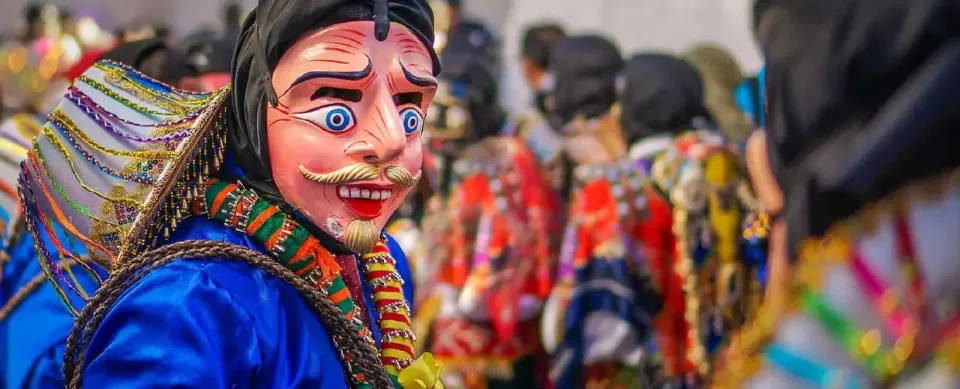
- Private Tours: At Peru Grand Travel, we organize “Carnival Cultural Encounters” where we visit the workshops of traditional mask makers and costume designers, providing a VIP look at the artistry behind the chaos.
Where is the best carnival in Peru?| Beyond Lima
While Carnival in Lima, Peru, is a fantastic urban experience, as your expert host, I must tell you that the party gets even wilder in the Andes. Lima is often the gateway to these regional explosions of culture.
Cajamarca: The King of Carnivals
If Lima is the appetizer, Cajamarca is the main course. It is known as the “Capital of Peruvian Carnival.”
- The Vibe: Massive parades, “paint wars” where everyone wears white just to get colored, and the famous “Ño Carnavalón” character.
Cusco: The Elegant Play
In Cusco, the carnival takes on a more traditional, slightly more reserved tone compared to the chaos of Cajamarca, but it is deeply ritualistic. The “Compadres and Comadres” celebrations are unique.
However, many travelers start with the Carnival in Lima, Peru, before flying to these destinations. It sets the mood perfectly.
For a deep dive into the regional differences, I strongly recommend reading our comprehensive pillar guide on Carnival in Peru. It breaks down every major celebration in the country.
What is a Yunzada? | The Tree of Gifts
You cannot talk about Carnival in Lima, Peru, without mentioning the Yunza (also known as Cortamonte). This is the heart of the community celebration.
The Ritual
Imagine a tree planted artificially in the middle of a street or park.
- The Decoration: It is laden with gifts—plastic buckets, blankets, clothes, sometimes even cash—draped like ornaments.
- The Dance: Couples dance around the tree to the rhythm of a traditional band.
- The Chop: Each couple takes a swing at the trunk with an axe or machete. The couple that finally fells the tree becomes the “Godparents” (Mayordomos) for next year and must provide the new tree.
Where to see it in Lima?
While banned in some central districts, the Yunza is very much alive in the outskirts and traditional neighborhoods of Lima. It is a migration of Andean culture to the coast. Witnessing a Yunza during the Carnival in Lima, Peru, is a privilege; it is watching a community bind itself together for another year.
IMPORTANT FACT
Safety First: If you attend a Yunza, stay behind the safety line when the tree is wobbling! It is all fun until gravity takes over.
How long does Yunza typically last?
If you are planning to attend a Yunza during the Carnival in Lima, Peru, clear your schedule. This is not a 2-hour event.
- The Start: Usually begins in the afternoon, around 3:00 PM, with food and socializing.
- The Peak: The tree cutting happens slowly. It is teased out. It creates suspense.
- The End: The party continues long after the tree falls, often until the early hours of the morning with beer, food, and music.
It is a marathon, not a sprint.
Other Carnivals in Peru: The Competition
While we are focusing on Carnival in Lima, Peru, it is impossible to ignore its siblings. Understanding them helps you appreciate why Lima’s version is a melting pot of all these influences.
Ayacucho: The City of Songs
Here, the carnival is declareda National Cultural Heritage. It is defined by the comparsas (troupes) singing songs in Quechua that are often satirical, mocking politicians and society. It is witty, poetic, and beautiful.
Puno: The Festival of Candelaria
This happens in February, too. It is less of a “carnival” in the playful sense and more of a massive religious devotion mixed with dance. It is the biggest festival after Rio.
Why mention them? Because Lima is a city of migrants. During Carnival in Lima, Peru, you will see neighborhoods organizing “Ayacuchano” or “Puneño” style parties. You don’t always have to leave the capital to taste the rest of the country.
What is the most famous festival in Peru?
Is it the Carnival in Lima, Peru? Not exactly.
The most famous internationally is Inti Raymi in Cusco (June).
However, in terms of participation and nationwide joy, Carnival takes the crown. It is the only festival that is celebrated in every single town, from the coast to the jungle.
Understanding this hierarchy helps you plan. If you want imperial history, go in June. If you want living, breathing, splashing culture, come for Carnival in Lima, Peru, in February.
What day is el Carnaval? | The Moving Target
Because it depends on Easter, the dates shift every year.
- 2026 Prediction: Ash Wednesday is mid-February, so the peak of Carnival in Lima, Peru, will be the weekends immediately preceding it.
- The Main Sunday: The Sunday before Ash Wednesday is usually the wildest.
If you are booking your Carnival in Lima, Peru, trip, aim for the middle of February to be safe.
Frequently Asked Questions | FAQ
Does Peru celebrate Carnival?
Yes, passionately. It is one of the most vibrant times of the year, especially in the highlands and the Carnival in Lima Peru, celebrated throughout February.
What happens during el Carnaval in Lima?
Expect water fights, colorful paint, traditional dances, and the famous “Yunza” tree-cutting rituals in the neighborhoods. It is a mix of urban play and Andean tradition.
Is it safe for tourists?
Generally, yes, but be prepared. If you walk on the streets on a Carnival Sunday, you will get wet. It is part of the game. Watch your electronics and cameras!
What festivals do they celebrate in Peru besides Carnival?
The biggest ones are Inti Raymi (June), Fiestas Patrias (July), and Semana Santa (Easter). But Carnival in Lima, Peru, is the most playful.
Can girls wear shorts in Peru during Carnival?
Absolutely. It is summer (February). However, be aware that wearing less clothing might make you a more tempting target for water balloons!
How far does $100 go in Peru during Carnival?
$100 goes a long way. It can cover a fantastic dinner for two, taxi rides across the city, and plenty of beers to enjoy the Carnival in Lima, the festivities.
Conclusion: Are You Ready to Get Wet?
My friend, Carnival in Lima Peru, is not for the faint of heart. It is for the traveler who wants to touch the reality of a place. It is for the one who doesn’t mind a little paint on their shirt if it means a story for a lifetime.
Whether you are watching a Yunza fall or dodging a water balloon in Barranco, you are participating in a tradition that celebrates life in the desert.
At Perú Grand Travel, we can guide you to the safe, organized, and culturally rich celebrations. We know where the private parties are, and we know which balconies offer the best views (and safety from buckets!).
Are you ready to join the party?
Contact us today, and let’s plan your summer escape to Lima.
For a broader look at all the festivities in the country, don’t forget to visit our main guide: Carnival in Peru.
We invite you to explore our Peru packages. Your experience in Peru is just one step away. Contact us now and start living the unique adventure you’ve always dreamed of.
More information:
- Visit our English website: Peru Grand Travel
- Visit our Spanish website: Viajes Machu Picchu Tours
- Visit our Portuguese website: Machu Picchu Pacotes