

Discover the magic of the Cajamarca Carnival. From the historic Yunza to the best 2026 dates, plan your luxury Peruvian adventure with the experts at Perú Grand Travel.
Welcome, my dear traveler. If you are looking for the true heartbeat of the Peruvian Andes, you have found it. As your Anfitrión Cosmopolita, I have witnessed many spectacles around the globe, from the sleek fashion weeks of São Paulo to the historic galas of New York. Yet, nothing quite matches the raw, unbridled joy and sophisticated tradition of the Cajamarca Carnival.
Imagine a city where the air is filled with the scent of jasmine and celebratory chicha, where every street corner is a stage for vibrant costumes, and where the “Bon Vivant” spirit is embraced by everyone, from local artisans to the most distinguished hosts. Today, I want to take you on a sensory journey through the “Capital of Peruvian Carnival” and show you why this is a privilege every traveler deserves to experience at least once.
What is the Cajamarca Carnival, and why is it so famous?
The Cajamarca Carnival is a legendary celebration that transforms the northern highlands of Peru into a whirlwind of music, dance, and colorful tradition every February. It is widely regarded as the most famous carnival in Peru, as it strikes a perfect balance between ancient Andean rituals and colonial Spanish influences.
Unlike other festivals that might feel purely performance-based, the carnival of Cajamarca is deeply participative. The entire city lives and breathes the party. It’s not just a show for tourists; it’s a living expression of the Cajamarquino identity. From the arrival of Ño Carnavalón (the King of Carnival) to the deeply moving traditional songs called Coplas, it is a masterpiece of intangible heritage.
Is Cajamarca Carnival worth visiting?
Without a doubt. While some may worry about the “chaos” of water and paint, a luxury traveler knows that with the right host, this experience is pure gold. It offers a unique opportunity to see Peru at its most vibrant, authentic, and joyful.
What are the official dates for the Cajamarca Carnival in 2026?
If you are planning your adventure, you must mark your calendar carefully for the carnival cajamarca fechas. While the spirit of carnival lingers throughout February, the “Days of Central Celebration” are usually Saturday, Sunday, Monday, and Tuesday before Ash Wednesday.
For 2026, the peak festivities are expected to take place in mid-February. I always advise my guests to arrive a few days early. The atmosphere in the city builds like a crescendo, starting with neighborhood rehearsals and ending in the grand explosion of the Gran Corso (the main parade).
ADVICE GRAND
To truly enjoy the Cajamarca Carnival with the exclusivity you deserve, I recommend booking your luxury accommodation and private transportation at least 6 to 8 months in advance. The city reaches 100% occupancy very quickly!
What is the history behind the Cajamarca Carnival? | From Earth Rituals to Street Parties
The history of the Cajamarca Carnival is a fascinating tapestry woven from centuries of cultural exchange. It traces its roots back to the ancient indigenous harvest rituals, celebrations of the earth (Pachamama), and the vibrant traditions of the Spanish conquistadors.
Ancient Foundations
Long before the Spanish arrived, the people of Cajamarca celebrated the fertile earth in February. This was a time of thanks, music, and dance to appease the spirits and ensure a bountiful harvest. The seeds of the Cajamarca Carnival were sown in these ancient celebrations of abundance.
The Spanish Influence
When the Spanish brought their own traditions of masked revelry and feasting before the penitence of Lent, these merged with the existing indigenous customs. The European penchant for parades and theatrical characters found fertile ground here.
The Modern Evolution
What started as a local community celebration evolved over centuries into a highly organized, massive event. Today, the Cajamarca Carnival is a testament to this fusion:
- Neighborhood Competitions: Barrios (neighborhoods) meticulously prepare for months. They compete for the most talented dance troupes (Patrullas), the most beautiful Carnival Queen, and the most creative Yunza (decorated tree). This friendly rivalry injects a palpable energy into the celebration.
- The Spirit of “No se mata la alegría”: The carnival’s motto, “Joy is not killed,” perfectly encapsulates its essence. It’s a communal release, a defiance against hardship, and a celebration of life itself.
IMPORTANT FACT
A National Title: In 2002, the Peruvian Congress officially declared Cajamarca the “Capital of Peruvian Carnival.” This isn’t just a flattering nickname; it’s a recognition of the sheer scale, authenticity, and cultural depth that the Cajamarca Carnival offers to Peru.
Why do so many people travel to Cajamarca on this date?
People travel here to witness the Cajamarca Carnival because it is a “Total Experience.” It’s the combination of the high-altitude landscape, the colonial architecture, the world-class gastronomy, and the infectious rhythm of the Coplas that makes it a magnetic destination.
How does it compare to other Carnivals in Peru?
When we look at Carnival Peru as a whole, each region has its charm, but Carnival Cajamarca stands in a league of its own.
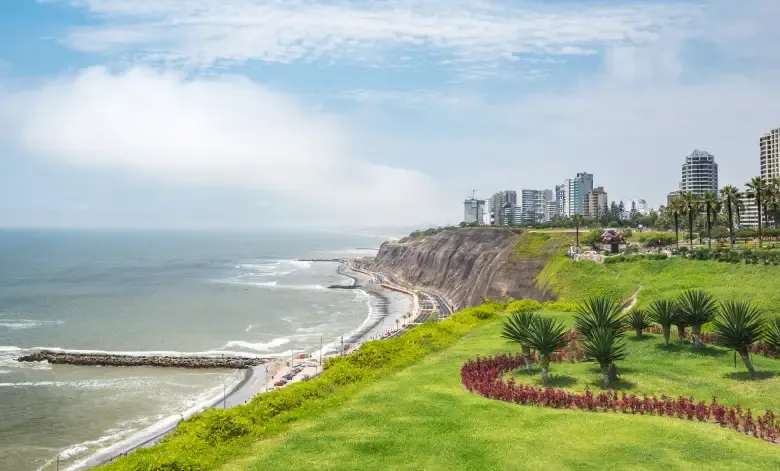
While the carnival in Lima, Peru, is a wonderful coastal summer experience, the Cajamarca Carnival is where you find the raw soul of the Andes. It is one of the most significant festivals in Peru that defines our national identity.
What are the traditional dances performed during the Cajamarca Carnival? | The Soul of the Music
Music and dance are not mere entertainment during the Cajamarca Carnival; they are the very heartbeat of the celebration. The city doesn’t just dance; it sings its history. While we don’t have the elaborate samba parades of Brazil, Peru offers a raw, participatory rhythm that draws you in.
The “Patrullas”: The Neighborhood Heroes
These are the stars of the parades, the pride of each barrio.
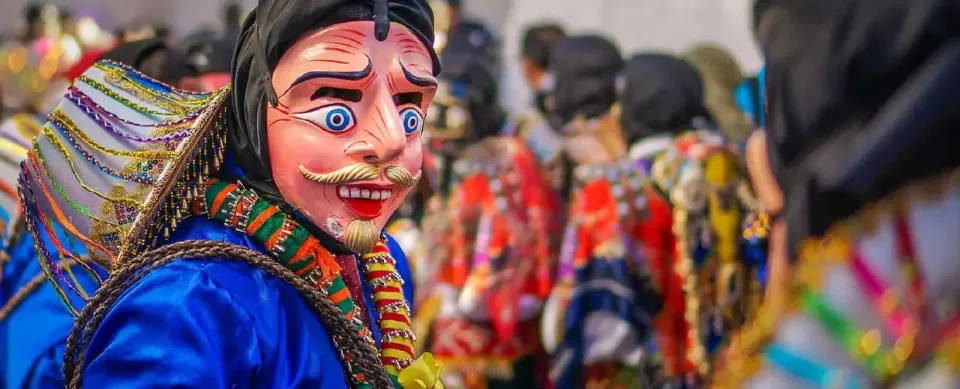
- The “Manolo” Costume: Picture this: a multi-colored suit made of thousands of ribbons that shimmer and flow with every movement. Topped with a large, ornate hat that can be as tall as the dancer, adorned with flowers and streamers.
- The Dance: It’s a rhythmic hop, a playful bounce that keeps the ribbons in constant, mesmerizing motion. It’s energetic and infectious, designed to lift the spirits of everyone watching.
The “Comparsas”: Thematic Storytellers
Similar to the Patrullas, Comparsas are dance groups, but often with a more focused theme.
- Historical Narratives: Some groups reenact historical events important to Cajamarca or Peru.
- Satirical Characters: Others embody local archetypes or playfully mock politicians and societal norms through dance and movement.
The “Copla”: The Unfiltered Voice of the People
While not a dance, the singing of Coplas is the most authentic expression of the Cajamarca Carnival.
- What are they? These are short, rhyming verses, often improvised, that capture the spirit of the moment. They can be witty, flirtatious, satirical, or even a gentle jab at the tourists (in the friendliest way possible!).
- The Power of Unity: To hear a whole neighborhood singing a Copla in unison, their voices echoing in the colonial plazas, is to understand the profound power of community. It is a shared narrative that binds everyone together.
DID YOU KNOW?
A single “Manolo” costume for the carnival of Cajamarca can take months to hand-sew and can weigh several kilograms due to the density of the ribbons!
How long does the Yunza typically last? | the tree of gifts
You cannot talk about carnival in Lima, Perú, or Cajamarca Carnival without mentioning the Yunza (or costamonte). It’s a ceremony that celebrates the communal spirit and the playful excess of the season.
The Ritual of the Tree
Imagine a tree planted artificially in the middle of a street or plaza, a vibrant beacon adorned with gifts-plastic buckets, blankets, clothes, toys, sometimes even cash. This is the Yunza.
- The Dance: Couple danc around the tree to the rhythm of a traditional band, often a “charanga” or “comparsa”.
- The Chop: Each couple takes turns chopping the trunk with an axe or machete. It’s a slow, teasing process. The anticipation builds as it begins to sway.
- The Fall: The couple that finally fells the tree becomes the “godparents” (mayordomos) for next year’s festivals. They have the honor and the responsibility of providing the new tree, ensuring the cycle of celebration continues.
Where to witness the Yunza
While the Cajamarca Carnival is the most famous for its widespread Yunzas, this tradition also extends to other regions of Peru and is often incorporated into other regions of Peru and is often incorporated into other local festivals. If you are in Peru during February, keep an eye out for these communal parties.
DID YOU KNOW?
Embrace the Spectacle: Even if you don’t participate in the tree chopping, the communal dance, and the excitement of the gift-laden tree are infectious. It’s a beautiful glimpse into Peruvian community spirit during Carnival in Peru.
Is there a Luxury Experience in the Cajamarca Carnival?
You might think, “Paint and water? That doesn’t sound very luxurious.” And you’d be right if we were talking about simply joining the fray. But luxury, my friend, is about access, comfort, and curated moments.
The VIP View: Elevate Your Experience
The main parade, the “Corso,” and the dances through the streets are the heart of the Cajamarca Carnival. But experiencing it from street level can be overwhelming—and wet!
- Our Access: We can secure balconies overlooking the main parade route. Imagine watching the vibrant Patrullas and Comparsas from above, with a glass of fine wine in hand, enjoying a catered spread of local delicacies. You are safely above the splash zone, yet close enough to feel the infectious energy of the Cajamarca Carnival.
Private Haciendas: Your Sanctuary Amidst the Joy
Cajamarca’s beauty extends beyond its plazas. The surrounding countryside is dotted with colonial haciendas.
- Escape the Noise: We can arrange for you to stay in a meticulously restored hacienda, like Hacienda San Vicente. These properties offer a peaceful, pastoral retreat with impeccable service, gourmet dining, and a serene atmosphere—a perfect sanctuary to recharge after a day immersed in the festive heart of the Cajamarca Carnival.
Thermal Baths: The Ultimate Detox
After days of dancing, singing, and perhaps a few too many chichas, your body will thank you for a visit to the famous Baños del Inca.
- Ancient Waters: These natural thermal springs were once the exclusive domain of the Inca Emperor Atahualpa. The legend says he bathed here to purify himself before his controversial encounter with the Spanish.
- The Relaxation: Sink into the naturally hot, mineral-rich waters. It is the perfect way to soothe tired muscles and detoxify your senses after the exhilarating, and sometimes exhausting, Cajamarca Carnival.
Yes, you can do the Cajamarca Carnival with style, comfort, and an insider’s perspective. It’s not about avoiding the fun; it’s about enhancing it.
Why should you choose Perú Grand Travel to host your Carnival journey?
You might be thinking, “Carnival sounds wonderfully chaotic, but how does luxury fit into a street party with paint and water?” That is precisely where Perú Grand Travel excels.
You see, we believe that “Peru is not just a destination; it is a privilege.” When you travel with us for the Cajamarca Carnival, you aren’t just a tourist joining the fray; you are our guest of honor. We are your personal hosts, orchestrating your experience from the moment you arrive.
We Understand the Logistics That Others Overlook
The Cajamarca Carnival is exhilarating, but it’s also demanding. We understand the intricate dance of timing your arrival, securing the best vantage points, and ensuring your comfort amidst the revelry.
- The Security: We know which areas are safest for observation and how to navigate the city during peak hours.
- The Timing: We plan your schedule so you can immerse yourself in the Cajamarca Carnival’s energy without missing key events, yet still have moments of tranquility.
- The Need for Calm: We know that after a day of being fully immersed in the vibrant, sensory overload of the Cajamarca Carnival, you want a hot stone massage and a quiet, impeccably served dinner where you can recount the day’s adventures. We arrange these moments of respite.
We are the Hosts Who Ensure You Live the Privilege
We don’t just book hotels; we open doors to exclusive experiences. We know the local families who offer the most authentic Yunza participation, the chefs whose Chicha de Jora is legendary, and the quiet corners of the city where you can catch your breath before diving back into the celebration.
We are the ones you call when you want everything to be perfect. We manage the details so you can focus on the joy, the connection, and the unforgettable memories of the Cajamarca Carnival. We ensure you experience the privilege of Peru with the exclusivity and warmth you deserve.
Practical Advice for the Carnival Explorer
To make sure your carnival cajamarca experience is perfect, keep these points in mind:
- Protect Your Skin: At this altitude, the sun is incredibly strong. Even on cloudy days, high-SPF protection is a must.
- Hydration: Between the altitude and the excitement, drinking plenty of water (and perhaps a bit of the local Chicha de Jora) is essential.
- Clothing: Dress in layers. Cajamarca can be warm in the sun but quite chilly once the sun sets.
- The “Play” Rule: If you are on the street, you are part of the game. If you prefer to stay dry, stay on your private balcony!
IMPORTANT FACT
Cajamarca is located at approximately 2,750 meters (9,000 feet) above sea level. It is significantly lower than Cusco, making it an excellent destination for those concerned about severe altitude sickness.
What are the must-try foods during Carnival?
The carnival in Cajamarca is a feast for the palate. The region is famous for its dairy and its traditional Andean soups.
- Frito Cajamarquino: Fried pork served with seasoned potatoes and a local variety of ceviche.
- Caldo Verde: A fragrant herb-based soup (usually including paico and rue) served with local cheese and potatoes. It is the ultimate morning-after remedy!
- Manjar Blanco: Don’t leave without trying the local dulce de leche; it is the smoothest and most authentic in the country.
Is it safe for tourists right now?
Cajamarca is traditionally one of the safest and most welcoming regions of Peru. During the carnival cajamarca, the local government increases security significantly to ensure that the joy remains respectful. As your host, we provide private security and expert guides who know exactly which areas are safe and which to avoid, ensuring your peace of mind is never compromised.
The Grand Finale: The Burial of Ño Carnavalón
The carnival of Cajamarca ends with a touch of satirical drama. On Ash Wednesday, the city gathers for the “Burial of Ño Carnavalón.”
The “widows” (usually men in drag) weep loudly as the king’s will is read—a document filled with jokes and critiques of local politicians and social figures. It is a moment of catharsis where the city laughs at itself before entering the quiet period of Lent. It is the final act in a play that lasts a whole month, and it is a spectacle that perfectly encapsulates the Peruvian sense of humor.
Frequently Asked Questions | FAQ
When is the best time to book for Cajamarca Carnival 2026?
As soon as possible. For a luxury experience, you should aim to book at least 6 months in advance to secure the best boutique hotels and private logistics for the Cajamarca Carnival.
Is the Cajamarca Carnival safe for luxury travelers?
Yes, especially when managed by an expert host like Perú Grand Travel. We provide private transport, exclusive viewing areas, and 24/7 assistance to ensure your safety and comfort during the carnival in Cajamarca.
What should I wear to the carnival in Cajamarca?
For the street, wear comfortable clothes you don’t mind getting a bit of paint or water on. For your private evening events, “Smart Casual” is the way to go—impeccably dressed but ready for the highland chill.
How long does the Yunza typically last?
The Yunza can last several hours, often accompanied by live music and dancing, ending only when the tree is finally cut down.
What is the biggest festival in Peru?
While Inti Raymi and Candelaria are massive, the carnival of Cajamarca is often called the “largest festival” in terms of city-wide participation and communal joy.
How far does $100 go in Peru/Cajamarca during Carnival?
In Cajamarca, $100 can cover several high-end meals or a full day of private guided exploration. It offers incredible value compared to international festivals like Rio.
Conclusion: A Toast to Your Next Adventure
My dear friend, we have walked through the streets of Cajamarca together, feeling the rhythm of the Coplas and the weight of the “Manolo” ribbons. We have seen that the Cajamarca carnival is not just a party; it is a privilege. It is an invitation to see the soul of Peru at its most authentic.
At Peru Grand Travel, we are ready to guide you. We have the ponchos, the balconies, and the local connections to ensure your carnival is unforgettable (and safe).
Are you ready to paint the town red (and blue, and yellow)?
Contact us today, and let’s plan your journey to the happiest party in Peru.
For more inspiration on Peruvian festivities, do not forget to visit our guide on Festivals in Peru 2026.
We invite you to explore our offers at festivals! Your experience in Peru is just one step away! Contact us now and start living the unique experience you’ve always dreamed of.
More information:
- Visit our English website: Peru Grand Travel
- Visit our Spanish website: Viajes Machu Picchu Tours
- Visit our Portuguese website: Machu Picchu Pacotes