

The Ayacucho Museum in Peru is not just a place where ancient objects are kept. It is a space that helps visitors better understand the history of Peru and
As you walk through it, you encounter traces of pre-Columbian cultures such as the Wari, the impact of the colonial period, and more recent memories linked to the internal conflict. All of this forms part of a single, connected story.
Its value is not only found inside the museum. It also lives outside—in the temples, the streets, and in the daily life of the communities that continue to give meaning to this heritage.
For that reason, visiting this museum should not be seen as just another tourist stop. It is a way to look at Ayacucho more carefully and understand that its history is still alive.
Why the Ayacucho Museum in Peru is more than a museum
It is best to visit the Ayacucho Museum without assuming it will be just another walk through display cases and wall texts. At first glance, it may seem like any other museum, but its value lies in something different.
This space does not simply exhibit objects. Its real contribution is the way it helps visitors understand a complex, sometimes difficult, but essential history to comprehend Ayacucho and Peru.
Rather than presenting separate time periods, the museum shows how different historical moments overlap and remain present in the city’s memory. For that reason, it is not recommended to visit it in a rush, but with the willingness to interpret what each room is trying to explain.
The silent narrative behind Ayacucho’s identity
Ayacucho cannot be understood through a single stage of its history. It is a city where the pre-Columbian past, the colonial legacy, and contemporary reality coexist in a visible way.
This combination becomes clearer inside the museum. There, Wari culture does not appear only as an ancient memory, but as part of a cultural foundation that still influences Andean identity. The colonial period, in turn, is not presented as something finished, but as a process that remains present in religion, architecture, and many traditions. Added to this is Ayacucho’s more recent history, shaped by the internal conflict, which is also part of the city’s memory.
For that reason, this is not a museum to be visited in a linear or hurried way. It is best explored with attention, understanding that each room helps interpret how different moments in history remain connected.
Where is the Ayacucho Museum and how do you get there?
Getting to the museum is easy, but understanding its context requires a bit more attention. It is located in the city of Ayacucho, also known as Huamanga, one of the places with the richest historical heritage in Peru.
However, the experience does not end with finding it on the map. For the visit to have more meaning, it is worth exploring the surrounding area as well and understanding how the museum connects with the living history of the city.
Navigating the City of Ayacucho with purpose
Ayacucho is not a city to explore in a hurry. It is easy to walk around, but truly understanding it requires stopping and observing.
The museum is not separate from the city; it is part of it. That is why getting there can also become part of the experience.
To visit it with more meaning, it helps to keep the following in mind:
- From the Plaza de Armas, it can be reached on foot without difficulty.
- The streets preserve a colonial character that helps place visitors within the city’s historical context.
- The temples of Ayacucho, found throughout the city, complement what the museum helps interpret.
Exploring Ayacucho without context can leave only a superficial impression. Walking through it with more attention, on the other hand, makes it easier to understand how its history is still present in the urban landscape.
Access routes, timing, and local logistics
Access to the museum is usually easy, but there are a few details worth considering before the visit. Opening hours may change depending on the season, especially during religious dates, when the rhythm of the city also shifts.
During Holy Week, for example, Ayacucho receives more visitors and its usual pace changes completely. There is also the option of taking guided visits with local guides, which can greatly enrich the experience, since they provide not only information but also context.
For that reason, this is not a museum that should be visited in a hurry. It is a place that calls for time, attention, and a slower pace.
What will you actually see inside the Ayacucho Museum?
When visiting the museum, the key question is not only what there is to see, but what can be understood in each part of the journey.
Rather than simply moving from one room to another, it is better to experience it as a set of meanings that gradually connect. Each space contributes a part of the story, and only by bringing them together does a fuller understanding emerge.
Pre-Columbian cultures and Wari legacy
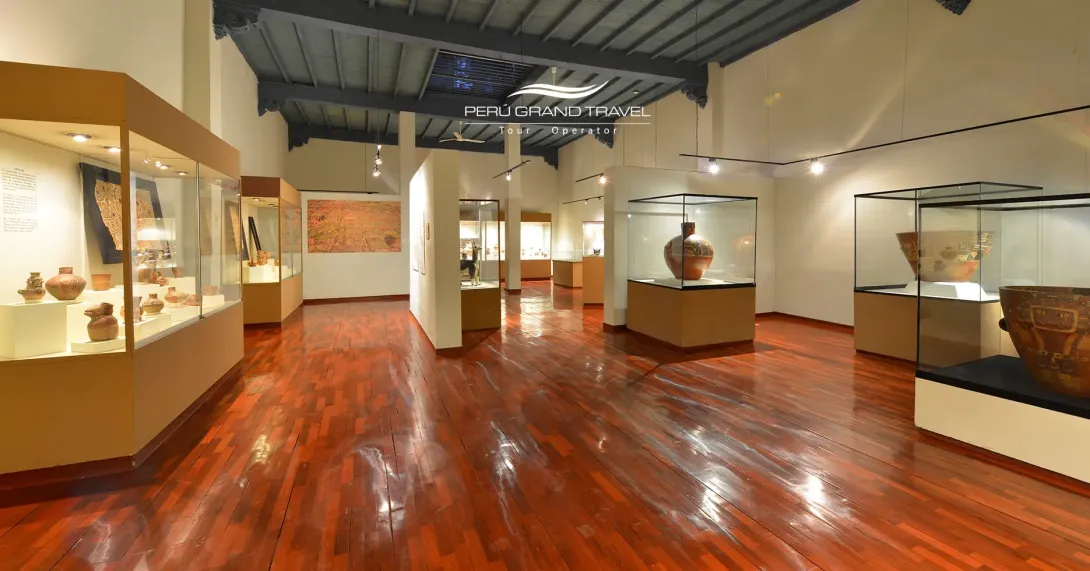
Before the Inca world, Ayacucho had already been an important center in the organization of Andean territory. That dimension becomes easier to understand when observing the legacy of the Wari culture inside the museum.
The pieces on display are not there only for their aesthetic value. The ceramics, archaeological remains, and other findings reveal a society with planning, urban organization, and a complex political structure.
For that reason, this part of the visit is essential. It helps explain that the history of Peru does not begin with the Incas, but much earlier, with cultures that had already developed advanced ways of life and organization.
Colonial transformations and religious art
The transition to the colonial period is not presented as a simple change, but as a process shaped by tensions and adaptations. This idea becomes clear in the religious pieces preserved in the museum.
Many of these works express not only faith, but also cultural blending. There are Christian images with Andean features, European symbols reinterpreted from a local perspective, and forms of art that are not exact copies, but transformations.
For that reason, visiting the museum helps to better understand the temples of Ayacucho. What is later seen in the city’s churches begins to make more sense when this context is understood first.
Memory, conflict, and contemporary Peru
The final part of the visit is often the most difficult, and also one of the most important. The museum addresses the period of Peru’s internal armed conflict with seriousness and without embellishment.
Through documents, photographs, and contextual information, this section makes it possible to understand a period that deeply marked Ayacucho and the country. Its goal is not to impress, but to help visitors understand.
For that reason, after leaving this part of the museum, the visit does not feel finished. Instead, it leaves an open reflection on recent history, memory, and the way it still shapes the territory being explored.
How to visit the Ayacucho Museum step by step
Getting into the museum is usually not difficult. What truly matters is leaving with a clearer understanding of what Ayacucho represents.
For that reason, the visit does not depend only on how much time is spent inside, but on the way it is experienced. With attention and context, the experience can become much more meaningful.
When to go and how long to stay
There is no perfect time to visit it, but there is a better way to do it. The most advisable approach is not to treat it as a quick stop within an overly packed itinerary.
To make the most of the experience, it is worth setting aside between one and a half and two hours. It is also often a good idea to visit it at the beginning of a stay in the city of Ayacucho, since that helps make better sense of everything that comes afterward. And for those looking for a quieter visit, it is worth avoiding the busiest times.
This is not a museum that tries to attract attention easily. It is a place that asks for time, concentration, and a willingness to understand.
Guided vs independent visit: what changes
Here, the choice between a guided visit and exploring on your own is not only a matter of convenience, but also of how deeply you want to understand the museum.
It is possible to walk through it alone, but doing so with a local guide usually offers a more complete experience. A good guide does not simply repeat facts. They help interpret the relationships between the pieces, connect what is seen inside the museum with the reality of the city, and provide a cultural perspective that often does not appear in the room texts.
For that reason, without a guide, the visit may remain at the level of observation. With a guide, on the other hand, the experience becomes more meaningful and reveals a much clearer historical and cultural structure.
How to read what you see
One of the most common mistakes is to look at each piece separately, as if it had meaning on its own. In this museum, the visit works better when it is understood that each object forms part of a broader context.
The pieces speak of forms of social organization, beliefs, historical change, and cultural tensions. For that reason, it helps to ask what they were used for, what they reveal about their time, and how they relate to other elements of the visit.
It is also useful to connect what is seen inside the museum with what appears outside it: the temples of Ayacucho, the streets of the city, and many practices that are still alive today. In that way, the visit stops being a simple observation of objects and becomes a more complete reading of the territory and its history.
What most travelers misunderstand about Ayacucho
Ayacucho is often seen as a quiet destination, even one with a slow pace. However, that impression does not reflect its full complexity.
The museum helps change that perspective. It allows visitors to understand that, behind that apparent calm, there is a deep, dynamic history full of nuances that are still present in the city.
The difference between seeing and understanding
At first glance, Ayacucho can be explored through its churches, plazas, and whitewashed streets. But truly understanding it requires looking beyond what is immediately visible.
After visiting the museum, many elements of the city stop seeming like mere parts of the landscape. A church begins to be read as the result of historical change and cultural adaptation. A festival reveals continuity more than spectacle. Even a street can be understood as part of an accumulated memory.
Ayacucho Temple, rituals, and symbolic layers
Ayacucho is known for the large number of churches that shape its urban landscape. However, this characteristic should not be seen only as a tourist attraction, but as a deep expression of its history and cultural organization.
The temples of Ayacucho do not only have religious value. They have also influenced social life, celebrations, and the way the city has built its identity over time.
After visiting the museum, it becomes easier to understand why many religious images have local features, why certain Catholic practices preserve pre-Hispanic elements, and why the city’s rituals reflect a complex cultural blend.
In this sense, the museum does not only complement a visit to the temples. It helps interpret them with greater depth.
What to combine with your visit: beyond the museum
Leaving the museum does not mean the experience is over. Rather, it marks the beginning of a different way of looking at the city.
After the visit, Ayacucho begins to be read with greater attention. Its streets, temples, and everyday spaces stop being just settings and become part of a history that can still be interpreted.
Walking through the historic center of the City of Ayacucho
After visiting the museum, walking through Ayacucho’s historic center takes on a different meaning. What once may have seemed simply beautiful or traditional begins to reveal a deeper logic.
The Plaza de Armas stops being just a meeting point and comes to be understood as a central part of the city’s urban history. The colonial mansions reveal old social differences, and the public spaces help show how the city gradually took shape over time.
For that reason, a walk through the center no longer feels like just a stroll. It becomes a way of reading the city with greater attention.
Parks in Ayacucho and urban pauses that reveal culture
In many itineraries, the parks in Ayacucho remain in the background. However, they can also be part of a visit that pays closer attention to local life.
These spaces make it possible to observe everyday scenes without the filter of tourism, and they help reveal how traditional customs coexist with more contemporary dynamics. They also show a rhythm of city life that rarely appears in guidebooks.
For that reason, their value does not lie so much in offering a specific activity, but in creating the opportunity to pause and look at Ayacucho more calmly.
Local gastronomy as an extension of history
Eating in Ayacucho should not be seen only as a break during the trip, but as another part of the cultural experience.
Its dishes are not simply local recipes. They also reflect a history shaped by ancient ingredients, colonial influences, geographic conditions, and customs that have been preserved over time.
After visiting the museum, gastronomy begins to be understood in a different way. It is no longer seen only as something to taste, but as another expression of the region’s memory and identity.
Perspectiva Real: what changes after you visit the Ayacucho Museum
Not every museum changes the way a destination is experienced. This one can, but only when it is visited with enough time and with the willingness to look more carefully.
Its value lies not only in what it displays, but in the way it helps visitors better understand the city and its history. To truly make the most of it, it is worth adjusting the pace of the trip and giving it a more reflective place within the journey.
The mistake of rushing through history
Many travelers enter the museum with the idea of seeing everything in a short time. However, that approach often limits the experience.
History is not understood by accumulating rooms or objects seen, but by the ability to pause, connect, and reflect. A quick visit may create the feeling of having known the place, but a slower visit allows for a deeper understanding.
What local guides see that you don’t
A guide does more than provide additional information. They also help visitors see the museum in a different way.
Sometimes, a detail that might otherwise go unnoticed—a symbol, a shape, or a pattern—takes on a different meaning when someone with experience interprets it within its context. That ability does not come from improvisation, but from a deep knowledge of the history and culture the museum seeks to explain.
A shift in how you experience Peru
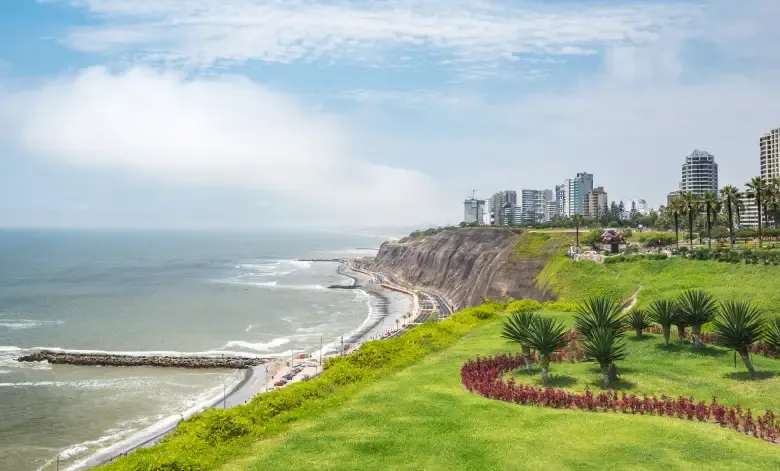
After visiting this museum, the way other destinations in Peru are understood also begins to change. Places such as Cusco, Lima, or even the Amazon start to be perceived with greater depth.
This happens because the journey stops being seen as a simple sum of isolated places and begins to be understood as part of a connected history. Within that network of historical and cultural processes, Ayacucho holds a particularly revealing place.Is the Ayacucho Museum worth visiting? A critical conclusión
Not every trip responds to the same intention. Some people prefer to see many places, while others want to understand what each destination reveals.
In that sense, the Ayacucho Museum may not be an essential stop for those who simply want to travel quickly through Peru. But it does become essential for those who want to better interpret its history, its memory, and the cultural depth that sustains the country.
Who should visit (and who might not connect)
This is not a museum designed for a quick or superficial visit. It tends to have greater value for those who prefer to understand the context rather than simply add more places to their itinerary.
It is especially recommended for people interested in history, Andean culture, and the social processes that have shaped Ayacucho and Peru. It also connects more naturally with those who see travel as a way of interpreting a place, not just observing it.
It may not be the ideal experience for those looking for something light or purely visual. And that also makes sense. Some places are not meant to adapt to the visitor’s pace, but to invite the visitor to change the way they look.
The real value: beyond tourism
The value of the museum is not limited to the pieces it preserves, but lies in the way it helps rethink what one believed was understood about Peru.
After the visit, other destinations begin to be seen with greater depth. Cusco is no longer perceived only as an Inca legacy, Lima as a city defined solely by its colonial period, and the Amazon as a space reduced to nature alone. Everything begins to be understood as part of the same story, connected by broader cultural, social, and historical processes.
FAQ – Ayacucho Museum in Peru
Where is the Ayacucho Museum located?
It is located in the city of Ayacucho (Huamanga), in the historic center, a short distance from the Plaza de Armas.
How much time is needed to visit the museum?
Between 1 hour and 30 minutes and 2 hours is the right amount of time to understand the content without going through it superficially.
Is it recommended to visit the museum with a guide?
Yes. A local guide helps interpret the historical and cultural context, not just observe the pieces.
What kind of collections does the Ayacucho Museum have?
It includes pre-Columbian pieces, especially from the Wari culture, colonial religious art, and documentary material about Peru’s internal conflict.
Does the museum address the internal armed conflict?
Yes. It presents documented information about this period, offering historical context without a tourism-oriented approach.
Is it suitable for all types of travelers?
It is more recommended for those who want to understand the history and culture of Peru in greater depth.
What is the best time to visit the museum?
In the morning or during less crowded hours, so the visit can be experienced more calmly.
Can the museum be visited during Holy Week?
Yes, but the city of Ayacucho receives a large number of visitors during those dates, which may affect the experience.
What other places can be visited near the museum?
The historic center, the temples of Ayacucho, and several parks in Ayacucho that help visitors understand the local rhythm of the city.
Why include the Ayacucho Museum in a trip to Peru?
Because it helps explain historical and cultural processes that give deeper meaning to other destinations in the country