




The Maras and Moray Tour is a full-day excursion from Cusco that combines archaeology, Andean scenery, and a salt-producing tradition that continues to this day. The tour first visits Moray, known for its circular terraces of Inca origin, continues on to the town of Maras, and ends at the salt flats, where hundreds of terraced pools are filled with salt water from a natural spring before returning to Cusco.
Overview
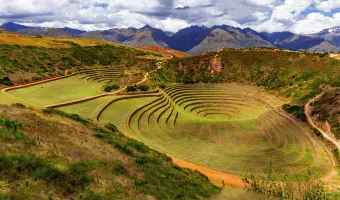
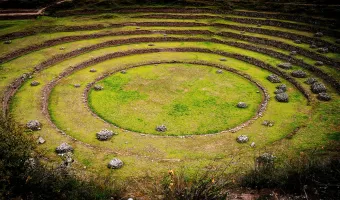
Moray is one of the most unique archaeological sites in the Sacred Valley due to its series of circular terraces built within natural depressions. Its design has been linked to agricultural management and the adaptation of crops to different microclimatic conditions.
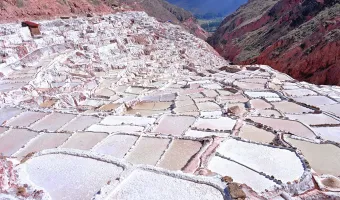
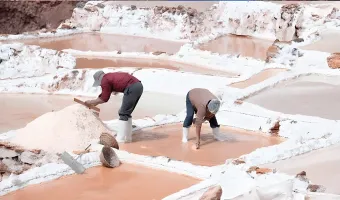
The route continues to Maras, a traditional town of colonial origin, before descending to the Maras Salt Mines. There, a network of stepped pools is fed by saltwater and is still used by local families for artisanal salt production.
Visiting both Moray and the Maras Salt Mines offers insight into two distinct ways of adapting to the Andean landscape: agricultural management and salt production.
Highlights
- Explore the circular terraces of Moray.
- Visit the traditional town of Maras.
- See the active Maras Salt Mines and their terraced salt pools.
- Learn about Inca agricultural practices and traditional salt production.
- Enjoy views of the Sacred Valley and surrounding Andean landscapes.
- Round-trip transportation from Cusco with a professional guide.
Itinerary
Maras – Moray – Salineras (7 hrs Tour) – in group
On this day we will visit beautiful Inca towns with their colonial houses, on this unique and pleasant tour we will be able to appreciate the treasures that this sacred land hides. We will start the day visiting the experimental agricultural terraces of Moray. Groups of circular terraces that measure up to 150 meters deep. According to historians, these constructions constituted an important Inca agricultural laboratory. Since their platforms are built with their respective irrigation channels and each of them constitutes a microclimate. What draws most attention is the large difference in average annual temperature between the top and bottom of the depressions, a difference of up to 15°C.
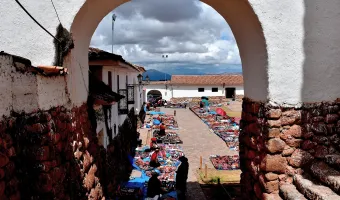
Next we will go to the colonial town of Maras, a town that still preserves its Andean traditions and customs. We will be able to appreciate its beautiful architecture and its houses with colonial-style stone doorways.
Finally we will visit the Salineras De Maras. These mines continue to be exploited today, where farmers have worked every day since Inca times. At the end of the tour we will return to Cusco, where we will drop you off at your hotel.
Overnight: Hotel in Cusco (not included)
Meals included: none
Included
What's Included
Day 1
- Transportation
- Tour Guide
Not Included
- Entrance Tickets
- Drinks except those mentioned in the itinerary
- Meals
- Snacks
- Phone calls
- Extra spending money
- Tips/gratuities
- Travel insurance
What to Bring
- Valid passport or ID
- Small daypack
- Refillable water bottle (at least 1–1.5 liters)
- Warm layers for cold temperatures
- Waterproof jacket or rain poncho
- Comfortable hiking pants
- Sturdy hiking shoes or boots
- Sun hat and warm hat
- Gloves
- Sunscreen and sunglasses
- Snacks or energy bars
- Trekking poles, especially for uneven or steep sections
- Personal medications
- Extra cash in Peruvian soles
- Toilet paper or tissues
- Fully charged phone or camera
Pricing
FAQ's
1. What places are included in the Maras, Moray and Salt Mines tour?
The tour visits Moray, the town of Maras and the Maras Salt Mines before returning to Cusco.
2. How long does the Maras and Moray tour take?
The tour lasts approximately 7 hours, including transportation from and back to Cusco.
3. Is Moray included in the Cusco Tourist Ticket?
Yes. Moray is included in Circuit III of the Cusco Tourist Ticket, together with Pisac, Ollantaytambo and Chinchero.
4. Is the entrance to the Maras Salt Mines included in the Cusco Tourist Ticket?
No. The Maras Salt Mines require a separate entrance fee managed independently from the Cusco Tourist Ticket.
5. What is special about Moray?
Moray is known for its concentric terraces built within natural depressions. The site is commonly associated with Inca agricultural experimentation and the management of different growing conditions.
6. Are the Maras Salt Mines still active?
Yes. The salt pools are still used for traditional salt production by local families in the Maras area.
7. Can visitors walk inside the salt pools?
No. Visitors observe the salt mines from designated paths and viewpoints; access inside the production pools is restricted.
8. Is the Maras, Moray and Salt Mines tour difficult?
No. The tour is generally considered easy and involves short walks rather than demanding hiking. Comfortable footwear is still recommended because some surfaces can be uneven.
RECOGNITION
Awards & Certifications
Recognition that comes from the travellers who chose our Peru travel packages, and from the bodies that audit how our Peru travel agency works — from TripAdvisor to ISO quality and environmental standards.



This is more than a vacation—it is an immersive, emotion-filled voyage through nature, culture, and ancient mysteries. Reserve your grand Peru adventure today and create memories to cherish for a…
$2,655
With expert local guides and top-tier service every step of the way, your dream adventure is fully taken care of. Book today and secure your spot on this unforgettable journey!
$1,456
Discover Peru in 10 days, traveling from Lima to Cusco and Puno while experiencing the country through its food, history and local culture.Start in Lima with a Peruvian food experience, then fly to…
$1,270